 Kyungjae Lee
2025.05.02
Kyungjae Lee
2025.05.02
[NAACL 2025 Best Paper Award] BiGGen Bench: A Principled Benchmark for Fine-grained Evaluation of Language Models
 Image 1. LG AI Research's BiGGen Bench Study Selected as Best Paper at NAACL 2025[1]
The study titled “The BiGGen Bench: A Principled Benchmark for Fine-grained Evaluation of Language Models with Language Models”[1] was presented at NAACL 2025, one of the most prestigious conferences in natural language processing, and was awarded the Best Paper Award, an honor given to only one paper among more than 2,000 submissions.
This recognition carries substantial significance. Of the 2,000+ papers submitted to NAACL 2025, roughly 1,400 were accepted—and only one received the Best Paper distinction. The selection of our work underscores the research value and practical impact of BiGGen Bench. This award joins the legacy of past NAACL Best Paper recipients such as ELMo (2018) and BERT (2019)—two groundbreaking studies in the history of language models.
Using BiGGen Bench, we also evaluated EXAONE 3.5, LG AI Research’s LLM released in December. Excluding reasoning models, EXAONE 3.5 demonstrated top-tier performance among recent non-thinking models, achieving an average score of 4.189. The recognition of BiGGen Bench by a top-tier academic conference and EXAONE 3.5's strong performance on the benchmark further validate our progress and commitment to excellence.
At NAACL 2025, we delivered an oral presentation on the BiGGen Bench study and had the opportunity to engage in valuable discussions with global researchers. This post takes a closer look at the motivations and methodology behind BiGGen Bench.
At LG AI Research, we are investigating self-improvement mechanisms in LLMs, guided by the following key research questions:
And can a language model evolve through structured feedback?”
This led us to design and test a framework for automated self-improvement, built around a loop of generation, evaluation, and feedback. However, we soon confronted a fundamental trade-off in evaluation. Human experts can deliver highly reliable and nuanced assessments, but the process is labor-intensive and difficult to scale. LLM-based evaluators allow for scalable automation, but face challenges in accuracy, consistency, and interpretability.
To bridge this gap, we proposed a framework in which humans first define detailed evaluation rubrics across domains and task types, and then LLMs perform evaluations based on those guidelines. This hybrid approach allows for automated yet trustworthy evaluation and serves as the foundation for sustainable self-improvement in LLMs.
To overcome these challenges, we introduce BiGGen Bench, a new benchmark designed to comprehensively evaluate nine core abilities of LLMs. One of the key features of BiGGen Bench is its granular scoring logic, which is tailored to question types and designed to reflect subtle human judgment. For instance, when evaluating math problems, BiGGen Bench emphasizes logical reasoning and accuracy of computation, rather than relying solely on subjective helpfulness ratings.
Specifically, BiGGen Bench evaluates LLMs across the following nine competencies: Instruction Following, Grounding, Planning, Reasoning, Refinement, Safety, Theory of Mind, Tool Usage, Multilingualism.
These are assessed through 77 task types and 765 test items, offering a multidimensional, high-resolution evaluation framework. See Image 2 for an overview.
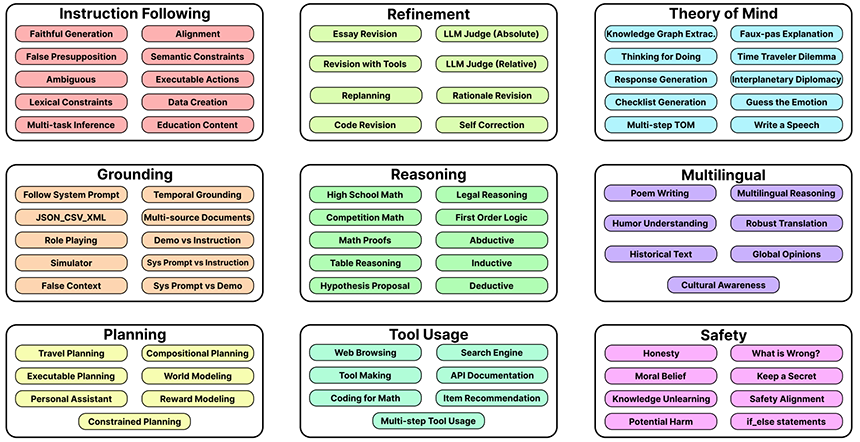
Image 2. The 77 Task Types Included in BiGGen Bench[1]
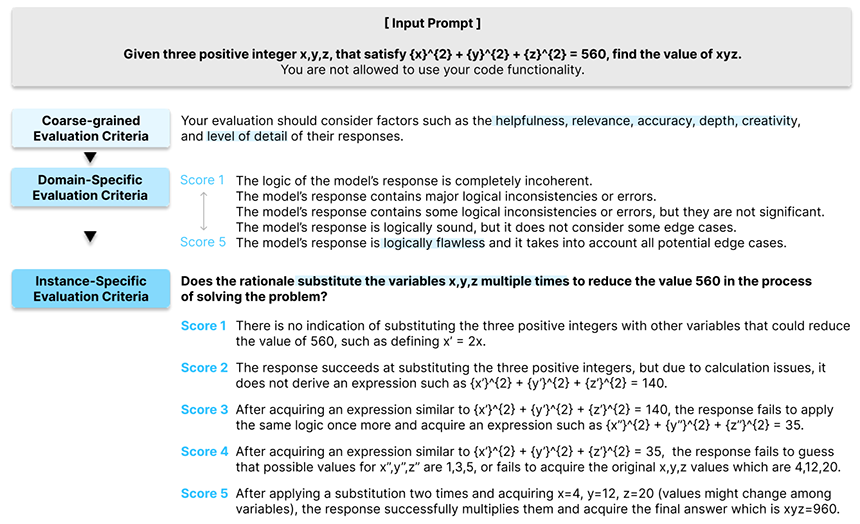
Image 3. An example BiGGen Bench instance. Human annotators craft task-specific scoring rubrics using a 5-point scale[1]
- Impact of Model Size: Performance generally increased with model size, consistent with previous findings that larger models tend to yield better outcomes through scaling.
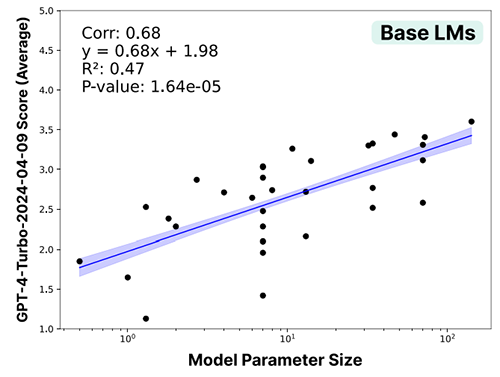
Image 4. Performance trends of base LMs by model size[1]
- Pre-trained vs. Post-trained Models: Post-trained models significantly outperformed pre-trained models on Instruction Following tasks. However, the performance gap was less pronounced for Reasoning and Tool Usage, suggesting that post-training particularly enhances instruction adherence, but has limited effect on other abilities.
- Open-source vs. Proprietary Models: Proprietary models substantially outperformed open-source ones in Multilingualism, Reasoning, Theory of Mind, Planning, and Tool Usage. This indicates that open-source models may require further optimization in these critical areas.
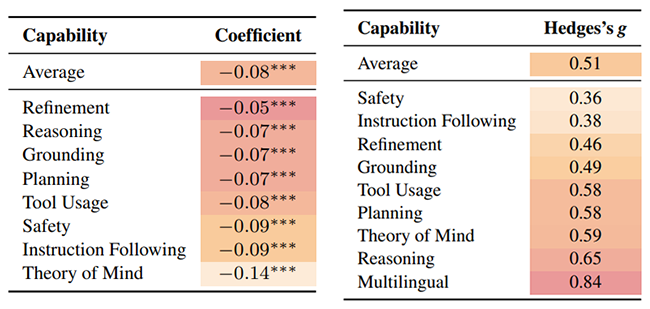
Image 5. (Left) Performance gap between pre-trained and post-trained models. (Right) Gap between open-source and proprietary models[1]
Looking ahead, we are advancing techniques that support faster, more reliable diagnosis of model capabilities, with a focus on domain-specific evaluation protocols for industrial applications. By establishing high-speed feedback loops, we aim to dramatically reduce the time required to iterate and improve LLMs.
Our evaluation framework goes beyond binary correctness, focusing instead on logical soundness, factuality, and completeness of reasoning steps. We believe this approach is essential to realizing the next generation of trustworthy, self-improving AI.
LG AI Research remains committed to shaping this new evaluation paradigm—where LLMs are automatically assessed and iteratively improved through feedback. We will continue to develop technologies that enhance evaluation accuracy and reliability, while expanding the benchmark’s adaptability across diverse domains and complex tasks.
- 참고
[1] Kim, Seungone, et al. "The BiGGen Bench: A Principled Benchmark for Fine-grained Evaluation of Language Models with Language Models." In NAACL (2025).
[2] Zheng, Lianmin, et al. "Judging LLM-as-a-Judge with MT-Bench and Chatbot Arena." Thirty-seventh Conference on Neural Information Processing Systems Datasets and Benchmarks Track (2023)
[3] Li, Xuechen, et al. "Alpacaeval: an Automatic Evaluator of Instruction-following Models." URL https://github. com/tatsu-lab/alpaca_eval (2023).
[4] Chan, Chi-Min, et al. "ChatEval: Towards Better LLM-based Evaluators through Multi-Agent Debate." The Twelfth International Conference on Learning Representations (2024).
[5] Ye, Seonghyeon, et al. "FLASK: Fine-grained Language Model Evaluation Based on Alignment Skill Sets." The Twelfth International Conference on Learning Representations (2024).
[6] Kim, Seungone, et al. "Prometheus 2: An Open Source Language Model Specialized in Evaluating Other Language Models." In EMNLP (2024).
[7] URL https://github.com/prometheus-eval/prometheus-eval