How AI Sees Through Companies
1. Introduction on LLM and AI Agent
In the complex and unpredictable world of financial markets, what fresh answers can AI bring to investors?
In recent years, large language models (LLMs) have advanced at an unprecedented pace, bringing revolutionary change to the field of artificial intelligence. No longer confined to simple chatbot functions, LLMs have evolved to a stage where they can think and reason, tackling complex problems that even humans find difficult to solve. This explosive progress is accelerating the rise of innovative applications across a wide range of domains.
Although the term “AI Agent” carries a variety of meanings today, its essence is the power to act and decide independently in solving problems. Finance, with its relentless flood of data and the constant demand for precise judgment, is a natural arena where these capabilities can shine. Because the numbers, reports, and news that matter vary greatly depending on each company’s unique characteristics, simply feeding all available data into an LLM is not enough to effectively address such multifaceted problems.
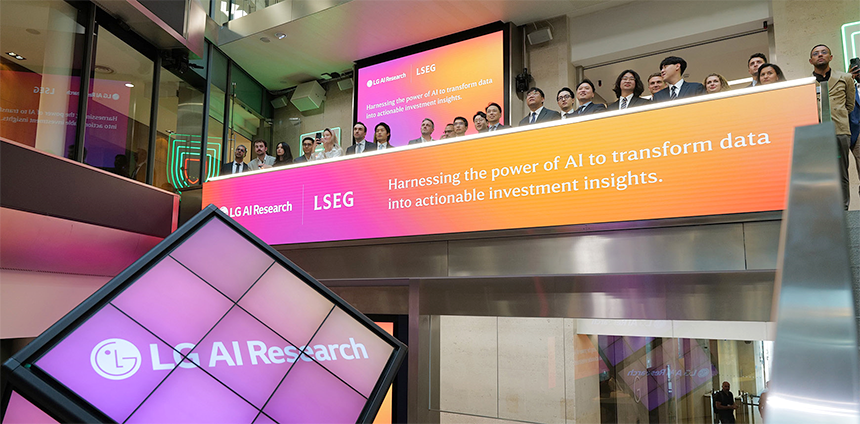
To address these challenges, LG AI Research’s Data Intelligence Lab has developed EXAONE BI(Business Intelligence)—a solution that integrates vast amounts of text data, numerical data, and feature-engineered variables to analyze companies, generate forecasts, and provide clear, interpretable explanations of the results. Partnering with London Stock Exchange Group (LSEG), we deliver daily outlook scores for all U.S.-listed equities, accompanied by explanatory commentary.
ⓒLSEG
At its foundation, EXAONE BI is powered by LG AI Research’s proprietary corporate analysis agent, GanphA. By transforming this core analysis and prediction engine into a form usable in practice, EXAONE BI brings advanced AI capabilities directly into the realities of financial markets.
2. From Research to Real-World Impact: AI ETF LQAI
At Data Intelligence Lab, our time-series forecasting research has translated into tangible business results. Working closely with affiliates such as LG Electronics, LG Innotek, and LG Household & Health Care, we created models that precisely forecast market demand, driving significant cost-efficiency gains. Our expertise has also been recognized worldwide: in 2022, we secured a top placement in the M6 Forecasting Competition, underscoring our leadership in predictive analytics. (Reference : The future of forecasting and the M6 competition conference)
Beyond forecasting, the Data Intelligence Lab is driving progress in solving complex optimization problems. Partnering with affiliates such as LG Innotek, LG Chem, and LG Electronics, we have delivered optimization solutions in fields ranging from parameter tuning to naphtha scheduling to PCB board design—directly enhancing operational efficiency and profit structures across businesses.
We went further—we brought our accumulated expertise into the market. Leveraging time-series forecasting technology, we built a model to predict the prices of U.S.-listed large-cap stocks and to construct optimal portfolios through advanced portfolio optimization. On the strength of the model, and in collaboration with Qraft, we successfully listed LQAI (LG QRAFT AI-Powered US Large Cap Core ETF) on the New York Stock Exchange (NYSE). From August of last year to August of this year, LQAI outperformed its benchmark, SPY, by 600 basis points, demonstrating its excellence.
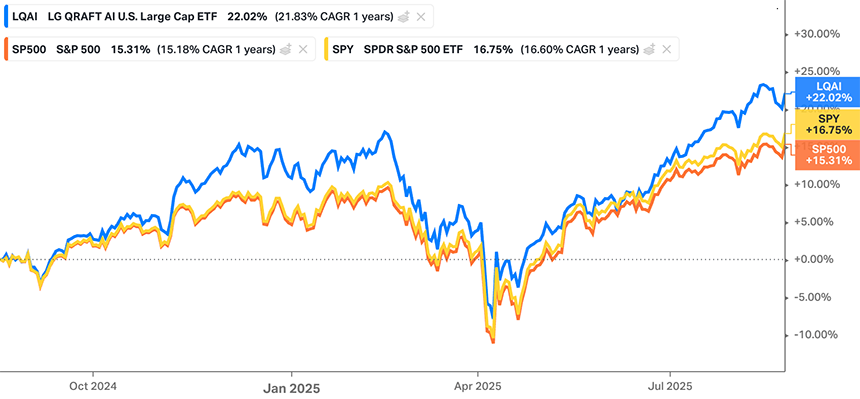
Image 1. performance comparison between the LG QRAFT AI U.S. Large Cap ETF (LQAI),
the S&P 500 Index (SP500), and the SPDR S&P 500 ETF (SPY) over 1-year period (Source: koyfin.com)
LQAI distinguishes itself from other AI-driven ETFs through its Holdings Report. At four-week intervals, the system automatically generates detailed commentary explaining the rationale behind each rebalancing, offering investors a deeper perspective on the dynamics of the U.S. equity market. From stock selection to portfolio construction to report generation, the entire process is executed end-to-end by AI, with no human intervention required.
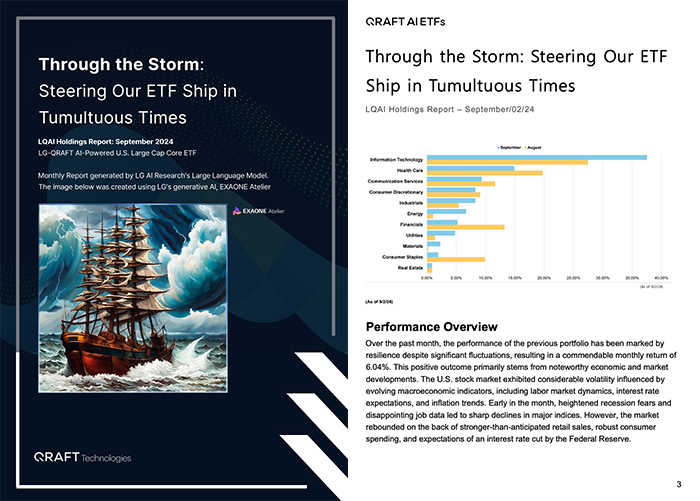
Image 2. LQAI Holdings Report for September 2024 rebalancing
Source: LG AI Research - LQAI Holdings Report
3. The Company Analysis Agent
3.1. What is 'AEFS(AI-Powered Equity Forecast Score)'?
The AEFS(AI-Powered Equity Forecast Score) provides daily four-week forward-looking outlook scores and commentary for roughly 5,000 U.S.-listed stocks, along with all sectors and industries up to Level 3 under the Thomson Reuters Business Classification (TRBC). Each update combines two elements: a score that reflects the overall market outlook for the next four weeks, and a commentary that explains in detail the reasoning and context behind the score.
3.2. Why Do We Need AI Agents in Finance?
The U.S. stock market features an incredibly diverse range of companies. Classified according to S&P Global's GICS(Global Industry Classification Standard), they can be divided into 163 sub-industries, while similarly, under LSEG's TRBC(The Refinitiv Business Classification), they are categorized into 154 industrie.
The textual information relevant to real estate stocks will differ from that applied to information technology stocks. More importantly, distinctions must also be made within the same sector across different industries. Consider Nvidia and Microsoft: both belong to the IT sector, yet their business models diverge sharply. Microsoft operates in the software and services industry, deriving most of its revenue from cloud services and infrastructure. Nvidia, by contrast, is part of the semiconductor and semiconductor equipment industry, with high-performance GPUs for data centers as its primary revenue driver.
Suppose a large-scale fire disrupted production at TSMC’s foundry. Such an event would pose a critical issue for NVIDIA, yet have only minimal short-term impact on Microsoft. Conversely, news concerning Microsoft’s Copilot market share is of little consequence to NVIDIA. These examples illustrate that even within the same sector, the information that matters differs by industry and by company. At Data Intelligence Lab, we address this complexity through company analysis agents. EXAONE BI, our financial forecasting solution, is designed to understand both industry- and company-specific characteristics, analyze and interpret the most relevant information, and generate actionable investment insights.
3.3 How the Agents Work Together
EXAONE BI is not a single artificial intelligence but is designed as a team of collaborating expert agents. While the system contains a wider set of agents, four in particular form its core.
At the core of this system are four specialized agents, each contributing a distinct capability. The AI Economist gathers diverse external data—ranging from news and corporate disclosures to macroeconomic indicators—to build a four-week forward-looking forecast. The AI Analyst takes these forecasts and combines them with internal metrics to uncover key drivers and flag potential anomalies. This analysis is then evaluated by the AI Decision-Maker, which weighs alternative scenarios and distills them into a single, actionable outlook score. Complementing these functions, the AI Journalist conveys the entire reasoning process in clear, accessible language, producing reports that make the insights transparent and understandable.
Each agent is responsible for aspects of perception, reasoning, and action, while also drawing on past outcomes and specialized tools to increase the precision of its work. Much like human experts with complementary skills, the agents build on one another’s outputs—refining, expanding, and strengthening the analysis step by step until a complete corporate assessment and commentary emerge.
This architecture enables EXAONE BI to function as far more than a score-generating system. It acts as a true corporate analysis agent, delivering not only forward-looking outlooks but also the clear evidence and well-grounded explanations that make those outlooks meaningful.
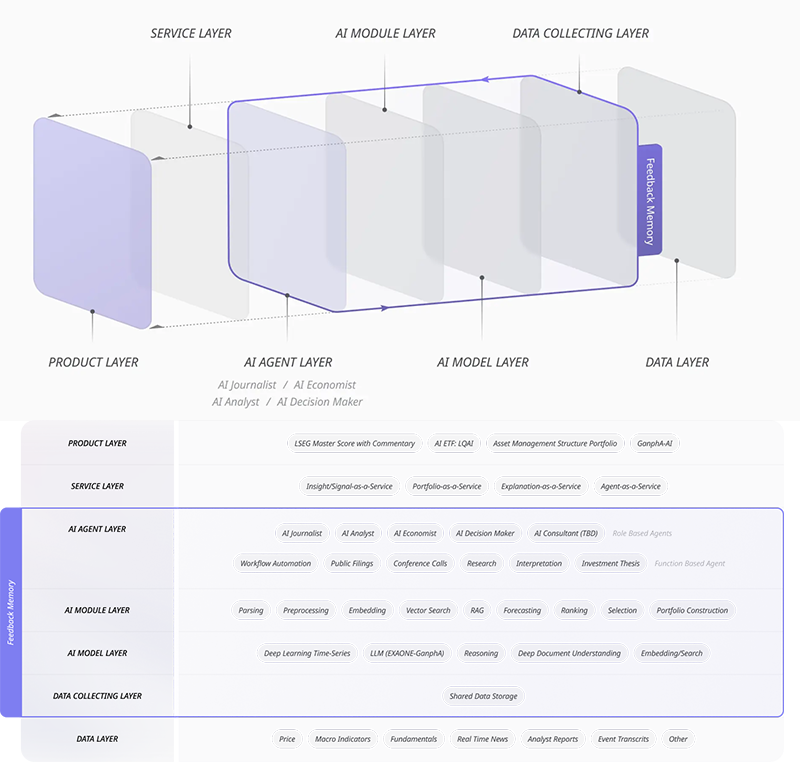
Image 3. EXAONE BI Showroom (https://showroom.exaone.ai/ko/solutions?tab=aibi)
3.4. Data Sources that Power EXAONE BI
Analyzing a company requires drawing on a wide range of information sources. We examine news coverage, SEC filings such as 10-K, 10-Q, 8-K, and S-1 reports, quarterly earnings releases, and numerical data tied to stock performance. To place these signals in context, we also incorporate macroeconomic indicators and government publications, including CPI reports and FOMC statements. Together, these inputs form the foundation for a deep, multidimensional view of a company.
The corporate analysis agent uses this foundation to capture both a company’s underlying characteristics and the market environment around it. From there, it adapts to the situation by selecting the most relevant inputs and predictive models to forecast future stock performance. This end-to-end process powers the creation of the AEFS(AI-Powered Equity Forecast Score), which pairs forward-looking outlook scores with clear explanations of the reasoning behind them.
3.5. The Automated Pipeline
Like the LQAI ETF introduced earlier, the AEFS(AI-Powered Equity Forecast Score) operates entirely without human intervention. Every step of the process—from analysis to prediction to generation—is handled by AI. This cycle runs daily: once the U.S. stock market closes, data is collected, processed, and transformed into AEFS, which are then delivered to users five hours before the market reopens.
For example, the system produced AEFS for Palantir Technologies Inc.(PLTR) and Kezar Life Sciences, Inc.(KZR). PLTR received a score of 92, while KZR received a score of 12, and four weeks later both stock prices moved in line with these forecasts. A score alone—such as 92—might not immediately inspire confidence for individual or institutional investors. But AEFS provides more than numbers: it pairs each score with clear, evidence-based reasoning, enabling users to trust the outlook with far greater conviction.
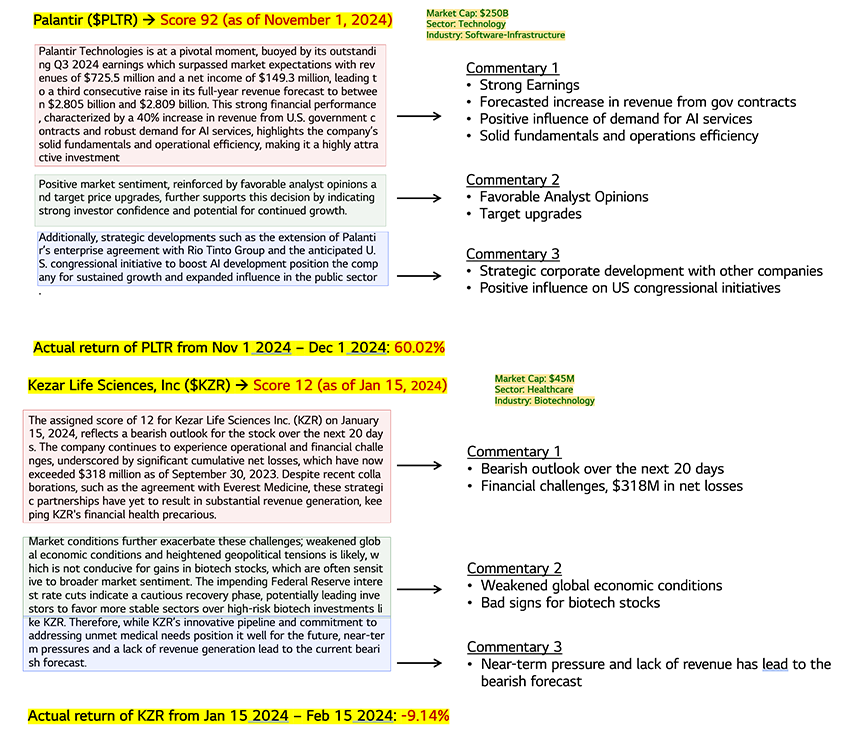
Image 4. Samples of LSEG AI-Powered Equity Forecast Score
3.6. Validating Performance
For any predictive system, credibility rests on rigorous testing. The AEFS(AI-Powered Equity Forecast Score) has been evaluated across multiple dimensions to ensure that its outlook scores are not only statistically meaningful but also practically valuable. These validations confirm that AEFS provides investors with a genuine and reliable source of alpha.
-
1. Directional prediction accuracy (Hit Rate)
The most direct test of AEFS’s power is whether its scores can correctly anticipate the direction of stock price movements. Using 50 as the neutral benchmark, scores above this level imply upward movement while scores below suggest declines. We analyzed AEFS outputs between January 2021 and December 2024, measuring hit rates across score ranges.
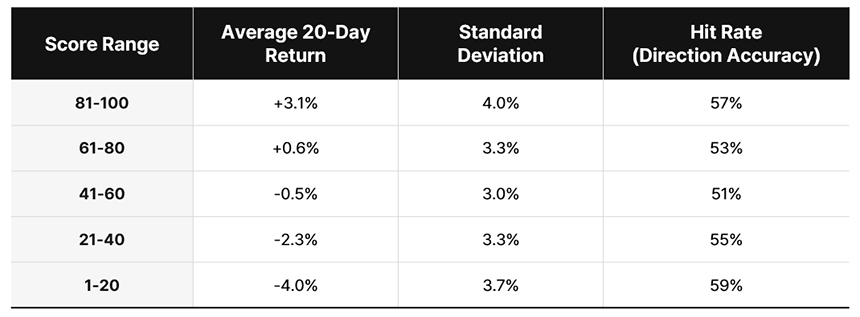
Image 5. Predictive Performance of AEFS Scores Across Score Ranges
The results were striking. At the highest scores (81–100), stocks returned an average of +3.1% over 20 days with a 57% directional accuracy. At the lowest scores (1–20), returns averaged –4.0% with 59% accuracy. While a hit rate below 60% may sound modest at first glance, it is important to recognize the context: predicting equity direction four weeks ahead is typically no better than a coin toss. Against that baseline, AEFS’s results demonstrate a clear statistical edge—evidence of true predictive skill rather than chance.
-
2. Independence from quantitative factorsNext, we examined whether AEFS merely replicates the behavior of well-known quantitative factors such as momentum or volatility. Correlation tests show that AEFS scores are largely independent of these signals. This independence matters: it proves that AEFS is not simply another version of existing models but a new lens on market behavior. Low correlation combined with demonstrated predictive accuracy means that AEFS offers investors complementary insights that can diversify portfolios and strengthen performance.
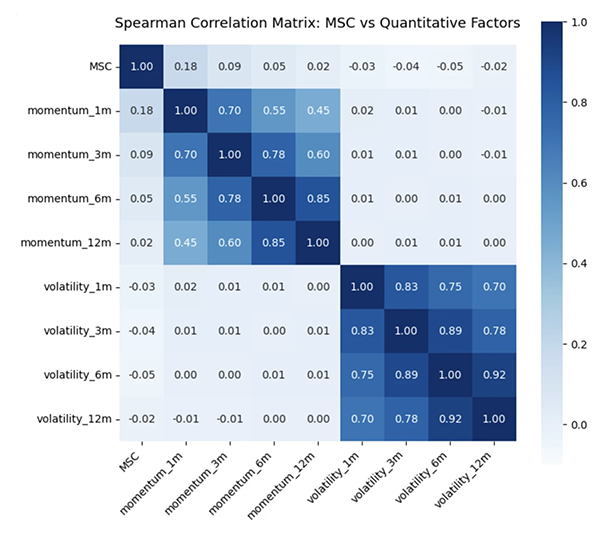
Image 6. Spearman Correlation Matrix of AI-Powered EFS vs. Quantitative Factors
-
3. Portfolio performance verificationThe ultimate validation of any model lies in portfolio results. To test AEFS in practice, we constructed an AEFS-based portfolio and compared its performance with the S&P 500 from 2020 to 2024. The outcome was clear: the AEFS portfolio consistently outperformed the benchmark, delivering more than 35%p of cumulative excess return. The sustained outperformance underscores that AEFS’s predictive power is not theoretical—it translates into meaningful investment results.
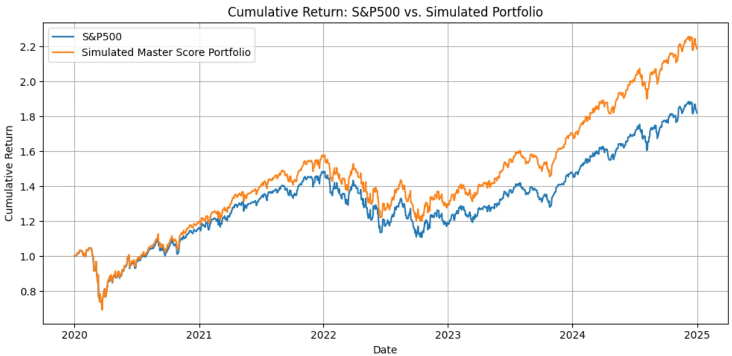
Image 7. Comparison of Cumulative Returns: S&P 500 Benchmark vs. AEFS Portfolio
Performance was not limited to absolute returns. When we examined risk-adjusted measures, the AEFS portfolio also showed significant improvements across the board. Sharpe ratio, information ratio, and drawdown management all improved relative to the S&P 500, proving that AEFS can enhance both return and resilience.
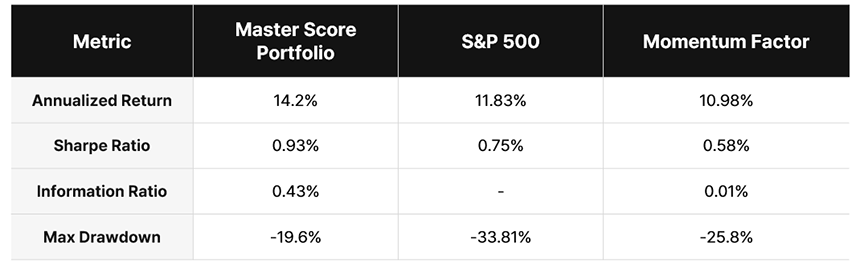
Image 8. Key Performance Indicators of AEFS Portfolio and Benchmarks
-
4. Synergy effectThe value of AEFS is not confined to standalone performance. Its real strength emerges when combined with existing investment factors. Because AEFS captures patterns that are distinct from traditional signals, it integrates seamlessly into multi-factor models, offering diversification benefits that extend beyond what conventional factors can deliver. In practical terms, this means AEFS can act as a new dimension of insight—one that amplifies the robustness of established strategies, reduces overreliance on any single factor, and creates portfolios that are better positioned to withstand shifting market regimes.
-
5. Transparency from designIn modern finance, predictive accuracy alone is no longer sufficient. Institutional investors demand systems they can understand and regulators require models that can be explained. Here, AEFS provides a decisive advantage. Every score is paired with commentary that clearly articulates the rationale behind the forecast, embedding explainability into the design itself. This transparency builds confidence for professional investors making capital-allocation decisions and helps ensure alignment with regulatory standards. By combining high predictive power with interpretability, AEFS bridges the gap between cutting-edge AI and the practical requirements of fiduciary responsibility.
4. Quality Control: Tackling Hallucinations
Any AI system that generates analysis without human intervention carries the risk of mistakes. In large language models (LLMs), this issue is widely recognized as hallucination—producing text that sounds authoritative but is factually incorrect. Left unchecked, hallucinations can undermine confidence and create serious risks for investor.
At LG AI Research, we treat this challenge as central to delivering a trustworthy product. Drawing on recent advances in the academic community, we have developed a robust, multi-layered quality control (QC) pipeline that directly addresses hallucination and commentary quality[1, 2].
Every generated score and commentary passes through multiple evaluation stages. For commentary, the QC system checks whether the text contains sufficient information, avoids hallucination, demonstrates an accurate understanding of the company, and provides appropriate supporting evidence. If any element falls short, the system automatically feeds back the evaluation and regenerates the output until it meets internal standards.
Through this process, AEFS ensures that its outputs are not only predictive but also rigorously validated, reliable, and transparent. By embedding quality control into the core of the generation pipeline, AEFS translates cutting-edge research into practical safeguards that strengthen trust in AI-driven financial analysis.
5. Future Outlook: From Fundamentals to a Hyper-Intelligent Agent
EXAONE BI has been built to cover the entire spectrum of the U.S. equity market, from mega-cap leaders to emerging nano-caps. Its fully automated, daily-updated system delivers clear and timely insights, giving investors a way to grasp essential company information at a glance and act with confidence in fast-moving markets.
The AEFS(AI-Powered Equity Forecast Score) is at the heart of this capability. For individual investors, it serves as a concise guide that makes complex companies understandable in minutes. For institutional investors, it provides a powerful filter, cutting through thousands of listed stocks to surface the most promising opportunities, dramatically reducing the time and cost of research.
The Business Intelligence AI Team’s ambitions, however, go well beyond AEFS. Our research is now extending into fundamental forecasting—not only anticipating short-term price movements, but also projecting revenue, operating profit, net income, and earnings per share (EPS). In parallel, we are broadening our scope across asset classes, from commodities and digital assets to private markets, building toward an integrated framework that connects signals across the global financial landscape.
This direction points to the next stage of evolution. EXAONE BI will move beyond individual agents working in parallel to a new paradigm of collaboration, where multiple agents combine their expertise to exhibit true collective intelligence. Step by step, the system is advancing toward becoming a super-intelligent agent—capable of supporting decisions that are not only faster and sharper, but also more comprehensive and resilient in today’s complex market environment.
- 참고
[1] Hashemi, H., Eisner, J., Rosset, C., Van Durme, B., & Kedzie, C. (2024). LLM-Rubric: A Multidimensional, Calibrated Approach to Automated Evaluation of Natural Language Texts. Association for Computational Linguistics (ACL), 13806-13834. https://doi.org/10.18653/v1/2024.acl-long.745
[2] Yehuda, Y., Malkiel, I., Barkan, O., Weill, J., Ronen, R., & Koenigstein, N. (2024, March 5). InterrogateLLM: Zero-Resource Hallucination Detection in LLM-Generated Answers. arXiv.org. https://arxiv.org/abs/2403.02889
https://www.anthropic.com/engineering/building-effective-agents
https://openai.com/index/new-tools-for-building-agents
https://cloud.google.com/transform/101-real-world-generative-ai-use-cases-from-industry-leaders
https://cloud.google.com/discover/what-are-ai-agents