 Sunghoon Hong
2026.02.13
Sunghoon Hong
2026.02.13
[AAAI 2026] Advances in Multi-Robot Simulation and Coordination for Industrial Automation
With growing interest in Physical AI, smart logistics and smart factories are no longer a vision of the future. Amazon, an American multinational technology company, operates over one million autonomous robots across hundreds of fulfillment centers worldwide, and efficient coordination of such large-scale robot fleets has emerged as a core challenge in modern industrial automation. Since building or modifying actual facilities is costly, simulation-based validation for testing various layouts and control strategies beforehand plays a crucial role. However, while existing simulation platforms offer powerful capabilities, their complex setup and lengthy preparation times have made them difficult to use in environments where rapid decision-making is required.
To address these challenges, LG AI Research developed the RAPID platform and presented the paper "RAPID: A Rapid Prototyping Platform for Industrial Automation"[1] at the AAAI 2026 Demonstration Program. AAAI (Association for the Advancement of Artificial Intelligence), founded in 1979, is one of the world's most prestigious AI conferences where researchers from around the globe gather annually to share the latest research findings. This year, AAAI 2026 was held in Singapore from January 20-27, receiving a record-breaking 23,680 paper submissions with an acceptance rate of only 17.6%. The Demonstration Program showcases working systems and requires recognition of research practicality and completeness for acceptance, making it particularly significant.

Image 1. Example of controlling robot fleets using RAPID[1]
The Need for Rapid Prototyping in Industrial Automation
LG AI Research has been collaborating with various LG affiliates' industrial sites to study practical applications of AI technology. Through this process, we repeatedly encountered a common problem: answering simple questions like "How much will throughput increase if we add 5 more robots?" or "Will changing the shelf layout resolve the bottleneck?" required weeks to months using existing simulation platforms. Leading platforms in industrial simulation such as AnyLogic[2] and NVIDIA Omniverse[3] provide sophisticated physics simulations and photorealistic visualizations. However, this sophistication demands high technical expertise, substantial computing resources, and lengthy setup times. The pursuit of complex features and high fidelity has paradoxically failed to meet the practical need for rapid prototyping.
Meanwhile, Multi-Agent Reinforcement Learning (MARL) research has been advancing rapidly in academia. MARL algorithms have shown promising results in various domains including warehouse robot fleet control, autonomous vehicle coordination, and game AI. However, researchers testing their algorithms often use different environments, making result comparison difficult, and there has been a lack of standardized benchmark environments reflecting real industrial problems. RAPID was created to address both challenges simultaneously: industry's need for rapid validation and research's need for standardization.
LG AI Research’s RAPID Platform[1]
The core philosophy of RAPID is to provide users with an experience where they can quickly and easily design practical environments (Design) and effortlessly analyze them with various AI-based control strategies (Analysis). This philosophy is implemented through two key views: the 'Environment Builder' and the 'Simulation Dashboard.' RAPID enables independent management of both through a standardized interface, allowing users to easily apply different AI models to the same layout or test the same AI model across different layouts.
Environment Builder is a visual editor for intuitively designing practical environment layouts such as warehouses and factories. Users first set the layout size in grid format, then select components—robots, shelves, charging stations, conveyor belts, workstations, etc.—from dropdown menus and place them via click or drag. Operational parameters such as order queue size, conveyor speed, and feed intervals can also be easily configured. All designs can be exported and imported as standardized YAML files, facilitating reproducibility and sharing. This meets the needs of both academia, which values research reproducibility, and industry, which requires version control of design assets.
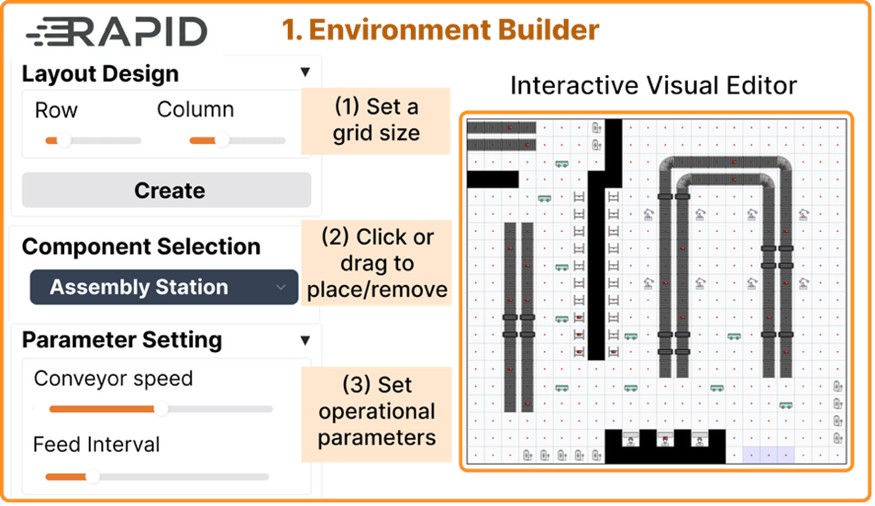
Image 2. RAPID's Environment Builder User Interface[1]
Once the layout design is complete, users apply various behavior models as control strategies in the Simulation Dashboard to validate system performance. The dashboard provides a dual-view display with an animation view on the left and a live chart view on the right. The animation view allows real-time observation of robot movements and interactions, while the live chart view displays key performance indicators in real-time, including throughput, task completion time, robot states (idle/moving/interacting/charging), and cumulative rewards (when using RL models). This enables answers to questions like "How much does throughput increase when adding robots?" or "Does changing charging station locations resolve the bottleneck?" within minutes.
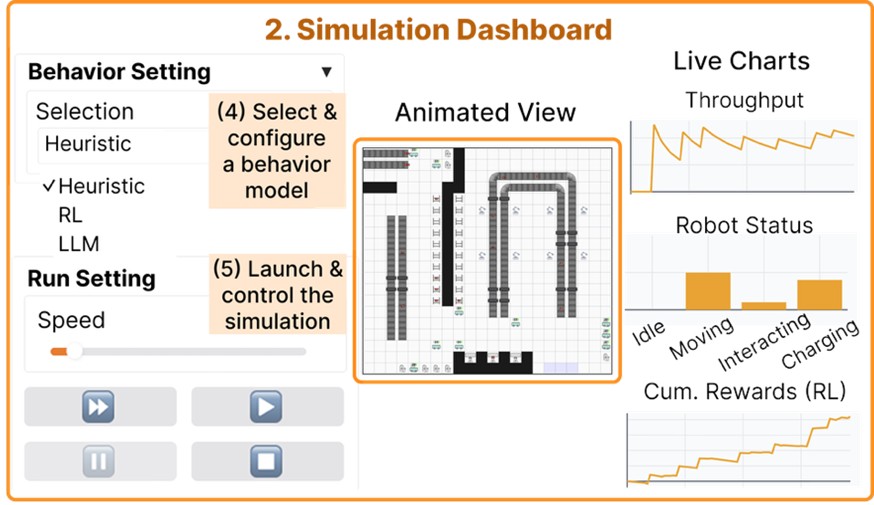
Image 3. RAPID's Simulation Dashboard User Interface[1]
RAPID's greatest technical strength is its standardized interface through PettingZoo API compliance. PettingZoo[4] is one of the standard interfaces for multi-agent environments, essentially a multi-agent version of OpenAI Gym[5], the standard interface for agent environments. By adhering to this standard, researchers can directly apply various behavior models—including diverse MARL algorithms such as MAPPO[7] and QMIX[8] trained in frameworks like EPyMARL[6]—without any code modifications. The behavior models currently supported by RAPID include:
- Heuristic Algorithms: Users can implement existing operational logic or new rule-based algorithms directly as Python scripts. This enables rapid integration of already-validated logic from operations into simulations.
- Reinforcement Learning (RL) Policies: State-of-the-art MARL algorithms such as MAPPO and QMIX can be directly applied. Researchers can train their algorithms and export policies for immediate testing in RAPID.
- Large Language Model (LLM) Planners: Supports planning using LLMs such as EXAONE. When the current environment state is described in natural language, the LLM generates high-level plans, which are then converted into executable low-level actions. This is useful for researching how language models reason about multi-agent coordination problems.
RAPID provides four representative example scenarios for industrial automation in smart logistics and smart factories:
- Stowing: Robots bring shelves to workers for restocking new inventory with the goal of minimizing stowing completion time
- Fulfillment Center: Simultaneous picking and stowing with the goal of optimizing both objectives concurrently.
- Production Line: Robots transport materials between workstations and conveyors with the goal of maintaining production flow and maximizing throughput.
The Fulfillment Center scenario, in particular, presents a complex resource allocation problem requiring simultaneous optimization of two conflicting objectives—order picking and inventory stowing—making it an interesting benchmark for researchers.
During the RAPID demonstration at AAAI 2026, we had the opportunity to interact with researchers and industry practitioners from diverse backgrounds. Many researchers expressed strong interest in and empathy for the topic of simulation environments for industrial automation and the need for features enabling faster implementation.
AAAI 2026 Research Trends
Many interesting research works related to RAPID were presented at this year's AAAI 2026. Among them, we introduce research on multi-robot control, a key for industrial automation problems.
Discrete-Guided Diffusion (DGD)[9]: Multi-Robot Path Planning Using Diffusion Models
DGD, presented by research teams from the University of Virginia and UC Irvine, applies diffusion models—one of the recently prominent generative models—to Multi-Agent Path Finding (MAPF). Existing MAPF methods operate on discrete grid-based approaches, offering good scalability but lower path quality. Conversely, optimization-based methods for path planning in continuous space generate high-quality paths but suffer scalability challenges due to the curse of dimensionality as the number of robots increases.
DGD combines both approaches to effectively solve path planning problems in continuous space. First, a discrete MAPF solver obtains an approximate spatiotemporal structure, which is then used as a guide for the diffusion model to generate high-quality trajectories in continuous space. The key ideas are (1) decomposing the nonconvex problem into convex subproblems, and (2) applying lightweight projection only when constraint violations are detected to ensure trajectory feasibility. This method achieves scaling to 100 robots while maintaining high success rates and planning efficiency.
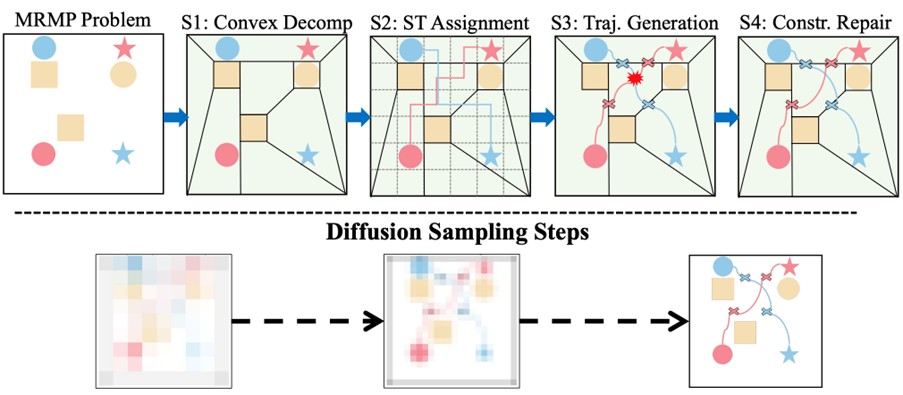
Image 4. Multi-robot path planning process using discrete-guided diffusion model[9]
Research on such high-quality path planning algorithms is essential for industrial automation problems involving multi-robot fleet control, and is expected to further enhance the quality of behavior models in industrial automation simulations like RAPID.
Workshop on Multi-Agent Path Finding (WoMAPF)
A workshop on Multi-Agent Path Finding was also held at AAAI 2026. Alex Barbosa from Amazon Robotics presented on "Large-Scale Mobile Robot Fleet Coordination" with key discussion topics including the combination of decentralized MAPF and MARL, real-time replanning, and coordination in partially observable environments. These research efforts all move toward the common goal of "scalable yet high-quality multi-robot control," and RAPID's standardized benchmark environment is expected to contribute to the comparison and validation of such research.
Future Plans
LG AI Research plans to continue Physical AI research while leveraging the RAPID platform to support various industrial automation projects across LG affiliates. We aim to continue research with the goal of utilizing it as a decision-support tool for real-world scenarios, particularly smart factory layout optimization and fulfillment center robot operation strategy development. Furthermore, we intend to continuously enhance the platform's quality through expanding component and behavior model libraries, integration with high-fidelity simulators, and research on multi-robot control optimization based on reinforcement learning.
RAPID aims to make industrial automation simulation accessible not only to experts handling complex tools, but also to practitioners who need rapid decision-making on-site and researchers who want to test new algorithms. In this regard, the demonstration at AAAI 2026 was a meaningful opportunity to share LG AI Research's vision of "Creating a new world where people can be experts and experts can achieve new breakthroughs with AI" with the global AI community. LG AI Research will continue to pursue this vision while conducting research to solve real problems in industrial settings.
Reference
- PettingZoo: A standard API for Multi-Agent Reinforcement Learning (MARL) maintained by the Farama Foundation. It can be considered a multi-agent version of OpenAI Gym.
- EPyMARL: An open-source framework implementing Multi-Agent Reinforcement Learning (MARL) algorithms (MAPPO, QMIX, etc.).
- MAPPO (Multi-Agent PPO): An algorithm extending Proximal Policy Optimization (PPO) to multi-agent environments, showing excellent performance in cooperative settings.
- QMIX: An algorithm that decomposes value functions for learning in multi-agent reinforcement learning, following the Centralized Training with Decentralized Execution (CTDE) paradigm.
- MAPF (Multi-Agent Path Finding): The problem of finding paths for multiple agents to reach their respective goal locations without collisions. An NP-hard problem and a core challenge in warehouse automation.
- Diffusion model: A model that learns to gradually corrupt data (add noise), then generates perfect data by reversing this process.
- 참고
[1] Hong, S., et al. “RAPID: A Rapid Prototyping Platform for Industrial Automation”. Proceedings of the AAAI Conference on Artificial Intelligence (2026).
[2] Borshchev, A. “The Big Book of Simulation Modeling: Multimethod Modeling with AnyLogic 6”. AnyLogic North America.
[3] NVIDIA, “NVIDIA Omniverse”. https://www.nvidia.com/omniverse. Accessed: 2026-01-30.
[4] Terry, J. K., et al. “Pettingzoo: Gym for Multi-Agent Reinforcement Learning”. Advances in Neural Information Processing Systems, 34, 15032-15043 (2021).
[5] Brockman, G., et al. “OpenAI Gym”, arXiv:1606.01540 (2016)
[6] Papoudakis, G., et al. “Benchmarking Multi-Agent Deep Reinforcement Learning Algorithms in Cooperative Tasks”. Proceedings of the Neural Information Processing Systems Track on Datasets and Benchmarks (2021)
[7] Yu, C., et al. “The Surprising Effectiveness of PPO in Cooperative Multi-Agent Games”. Advances in Neural Information Processing Systems, 35, 24611-24624 (2022)
[8] Rashid, T., et al. “Monotonic Value Function Factorisation for Deep Multi-Agent Reinforcement Learning”. Journal of Machine Learning Research, 21(178), 1-51 (2020).
[9] Liang, J., et al. “Discrete-Guided Diffusion for Scalable and Safe Multi-Robot Motion Planning”. Proceedings of the AAAI Conference on Artificial Intelligence (2026).