 Dongmin Kim
2026.03.18
Dongmin Kim
2026.03.18
[AAAI 2026] AEGIS: An industry anomaly detection system evolving alongside field experts
Quality management on the manufacturing floor is a core task directly linked to productivity. To address this, industrial sites are striving to build AI-based systems that manage processes using vast amounts of data. However, constantly changing production environments and unpredictable new defect types, subtle differences that only experts can discern often become critical criteria for defect assessment. Ultimately, the experience and intuition of on-site experts remain indispensable, yet there are clear limitations in resources and time for experts to individually review every case and provide feedback.
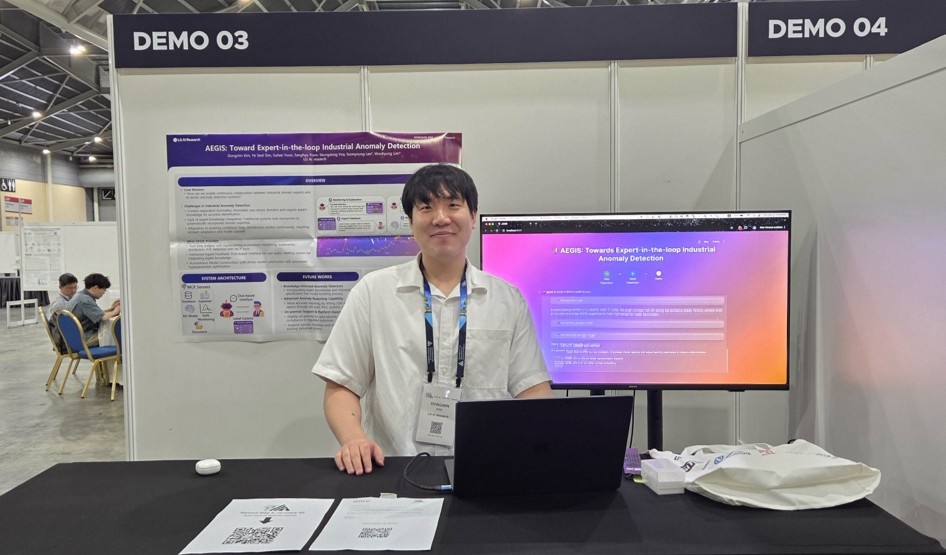
LG AI Research announced its innovative platform AEGIS[1] at AAAI 2026 to solve real-world industry challenges. The name AEGIS embodies the goal of AI and domain experts collaborating to safeguard quality in manufacturing environments. This post will cover the core ideas, research background, and underlying technologies of the AEGIS platform. Furthermore, it will examine the research presented at AAAI 2026 and discuss future research directions.
The difficulty of defining anomalies: The criteria for outliers vary across sites
The greatest challenge in anomaly detection in industrial settings is that the definition of “what is an anomaly” varies depending on the domain and context.
For example, a temperature of 80 degrees may be normal in one manufacturing process but could indicate a serious anomaly in another. The meaning of the same sensor value can vary completely depending on the product type, production time of day, or seasonal factors. Often, the very definition of “normal” itself changes dynamically over time or with shifts in the production line.
In many cases, the criteria for determining what is normal are not clear. Complex domain knowledge is required to answer questions such as: “Which combination of sensor values indicates a problem?”, “When does it become a problem and when is it acceptable?”, and “What type of defect does this pattern signify?” This knowledge is not explicitly recorded in the data. Rather, it exists solely in the experience of field experts.
LG AI Research repeatedly encountered the challenge of “model generalization limitations” while working on numerous industrial projects. Even identical AI models would experience a sharp decline in performance when applied to different environments, requiring retuning for each site. It was common for AI to misclassify cases that experts intuitively judged as “normal” as anomalies. Conversely, when an AI model flagged a sample as an “anomaly” and passed it on, a cognitive gap frequently emerged between the AI and the process expert, as the expert often failed to understand the AI's reasoning behind identifying the sample as anomalous.
Through these experiences, we realized that the key is for AI systems to clearly understand and collaborate with domain experts to define "anomalies." We concluded that data alone is insufficient; a platform that effectively integrates experts' domain knowledge into the system is essential.
Core elements of the AEGIS platform
Therefore, AEGIS aims to evolve the system in collaboration with domain experts based on three core elements.
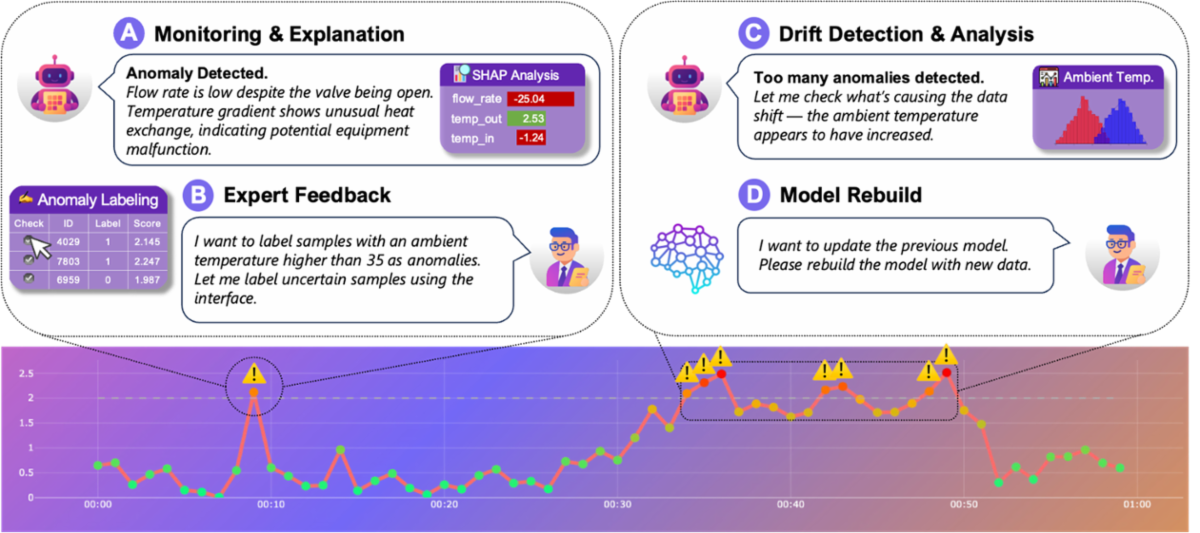
Image 2. AEGIS platform operational workflow[1]
(1) Provide explanations of outliers to experts
For experts to trust and collaborate with AI judgments, a logical explanation of “why it was deemed an anomaly” is essential. Merely presenting a number like “95% probability of being an anomaly” does not allow experts to verify that judgment.
AEGIS utilizes large language model (LLM)-based agents to comprehensively analyze past records in databases, domain documents, and similar cases, generating reasoning in natural language.
For example:
“The current temperature sensor value appears to be the primary cause of the anomaly. Upon checking the database, the current temperature sensor reading is 85 degrees, which is higher than the overall data average of 70 degrees, and therefore, it is determined that this sensor is likely the cause of the malfunction.”
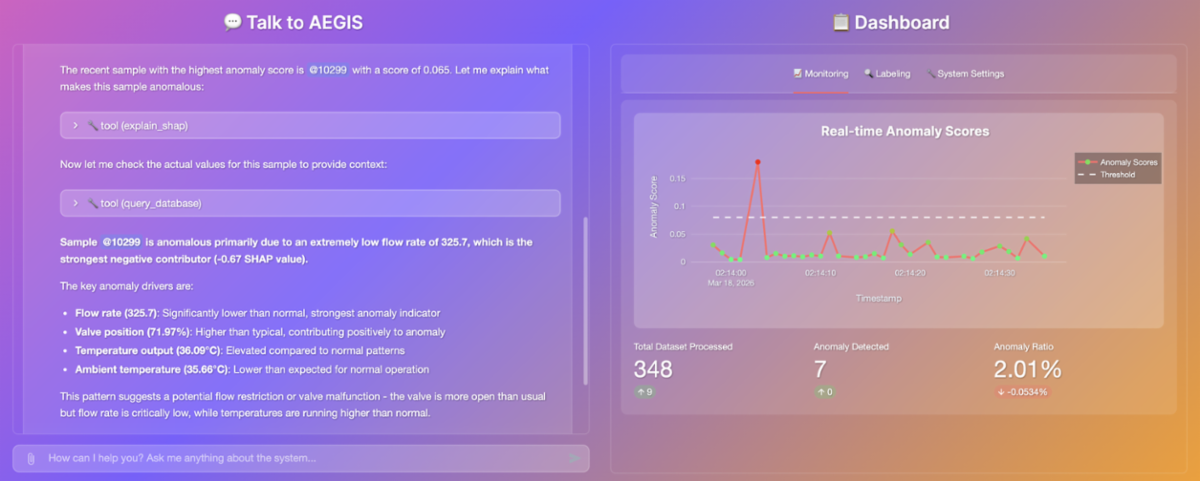
Through such explanations, experts can understand the basis for AI's judgments and quickly validate them by comparing them to their own experience. This then serves as the starting point for experts to provide feedback.
(2) Intuitive interface for receiving expert feedback
Additionally, efficient collection of expert feedback is also key to determining the overall system's completeness. As experts cannot review every sample, the AI model recommends samples with high uncertainty, allowing experts to focus only on the most critical cases.
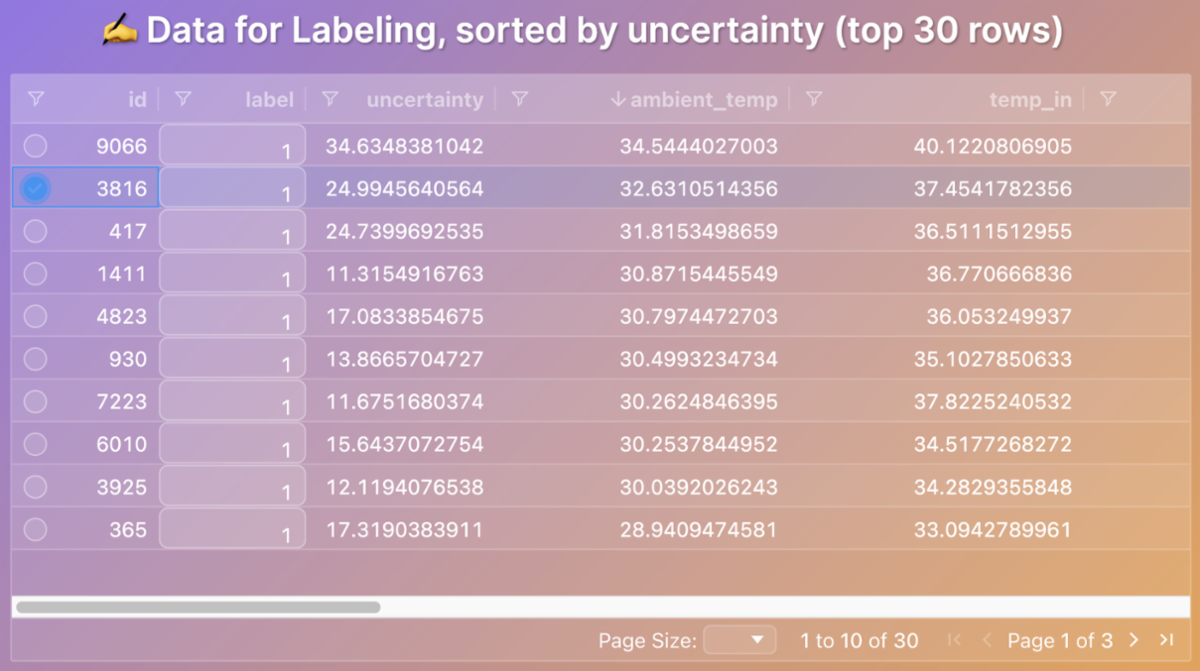
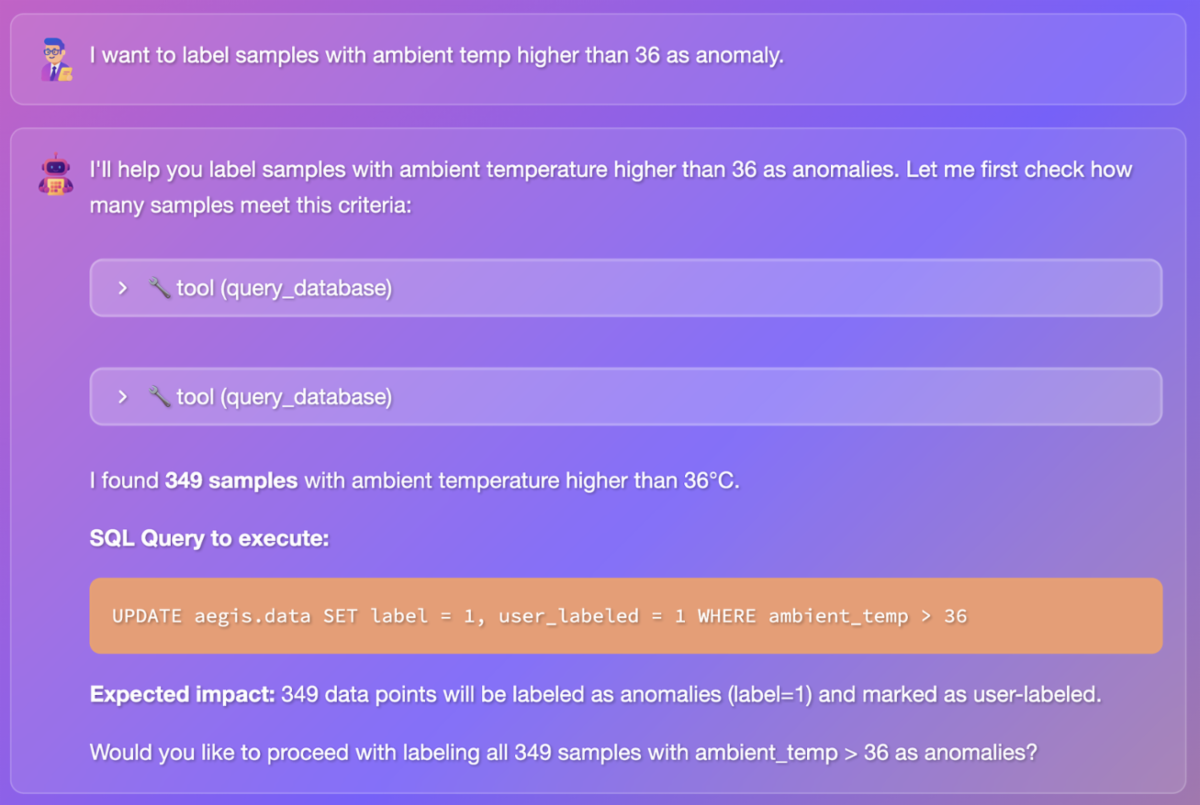
Additionally, AEGIS has introduced a method allowing experts to directly specify rules in natural language through a chat interface. Rules entered by experts are reflected in the database within the system in a structured format.
In this way, domain knowledge is conveyed to the system not through complex code, but through intuitive dialogue and sample labeling, so experts can incorporate their rich experience and intuition into the system without programming.
(3) Continual Learning and adaptation to real-world changes
Data in industrial environments is constantly changing, never static. Therefore, AI systems must instantly detect and respond to these changes. Feedback from experts must also be incorporated and utilized to train the next version of the model.
AEGIS automatically monitors distribution changes and alerts experts when data distributions shift due to production condition changes, seasonal factors, or new product introductions. Experts can determine whether model retraining is necessary based on data analysis provided by AEGIS, including distribution visualization, statistical testing, and database analysis. After confirming the expert's request, AEGIS automatically proceeds with retraining, deploying a model optimized for the new environment.
In this way, the AEGIS system is not a static model but a platform that learns from field changes and grows alongside them.
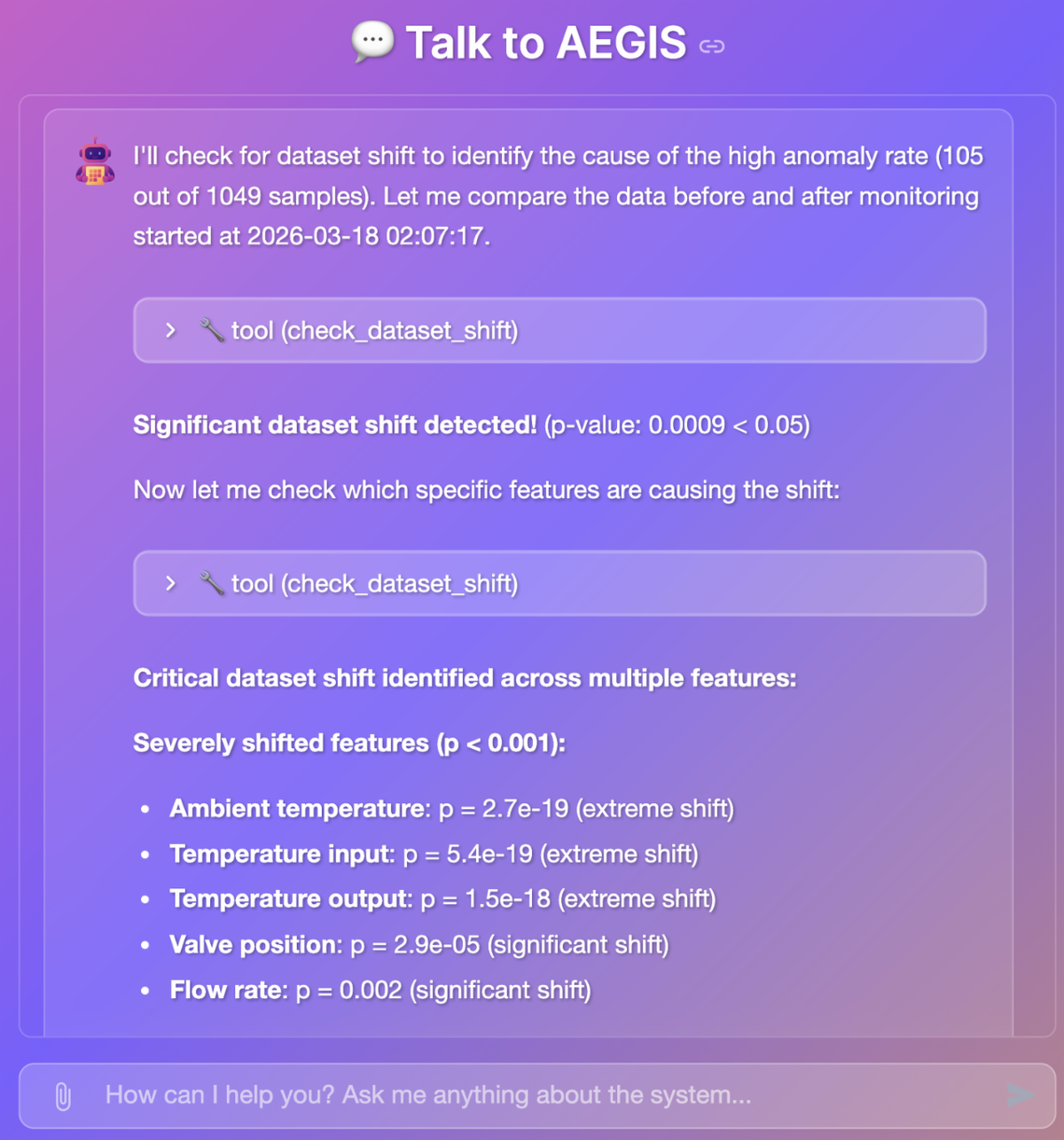
Image 6. Example of a response when a distribution change occurs. It uses the connected MCP tool to check for distribution changes and provides feedback to the user regarding model updates. The user is then asked whether they would like to update the model.[1]
Video 1. How AEGIS Works: Demo
Industrial AI research trends seen at AAAI 2026
LG AI Research aims to develop “Industrial Agentic AI” based on AEGIS, which goes beyond merely detecting anomalies to proactively solve problems in industrial settings. At AAAI 2026, we observed intriguing research aligned with this direction.
AssetOpsBench (IBM)
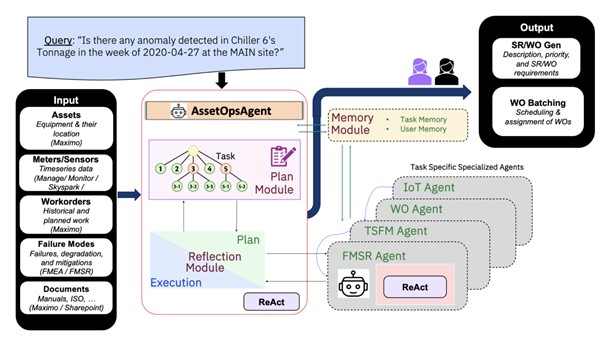
Image 7. Overview of AssetOpsBench's Multi-Agent System[3]
In particular, IBM's AssetOpsBench[3], released in 2025, is a benchmark for evaluating the performance of LLM agents in industrial asset management. At AAAI 2026, its evolved version, AssetOpsBench-Live[2], garnered significant attention with a live demo.
This benchmark simulates real industrial environments to evaluate whether agents can perform complex asset management tasks. The key evaluation metrics are as follows.
● Integration of multiple data sources: Ability to comprehensively leverage sensor data, maintenance records, operating manuals, and more.
● Decision-making process assessment: Measuring the ability to go beyond simple information retrieval to analyze situations and propose appropriate actions.
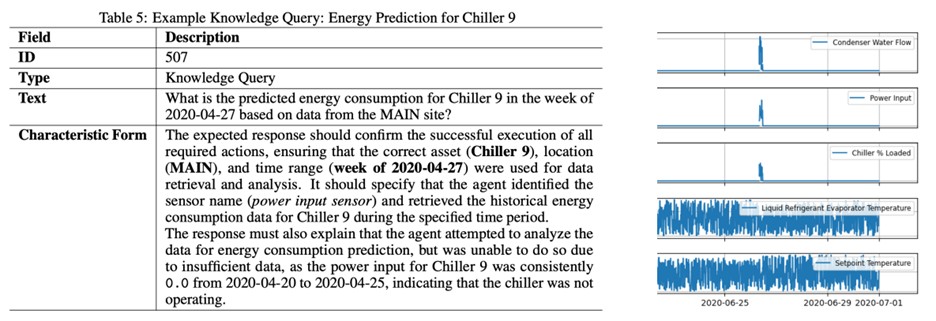
Image 8. AssetOpsBench scenario and DB example [3]. When querying the energy usage of the “Chiller 9” sensor, the agent must locate the “power input sensor” in the database, and if its value is 0, indicating the chiller is not operating, the agent must generate an appropriate response based on the database and documentation. This is the benchmark.
Based on this real-world industrial environment setup, this research demonstrates the academic community's interest in validating agents using actual industrial data and requirements rather than laboratory environments. This aligns precisely with AEGIS's goal of developing “agents that are truly usable in the field,” and we are also considering evaluating AEGIS's future scalability using standardized benchmarks like AssetOpsBench.
IAD-R1
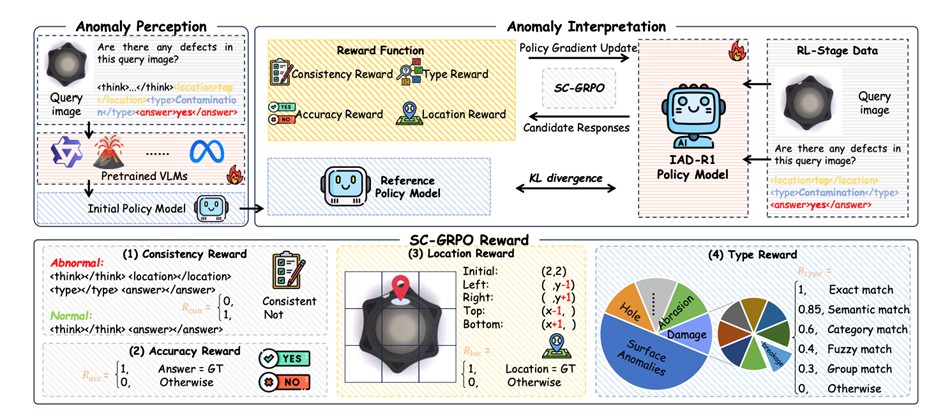
Image 9. Overview of the IAD-R1 learning methodology[4]
IAD-R1[4] is a study on industrial image anomaly detection utilizing a vision-language model. This research employs high-quality Chain-of-Thought (CoT) data for fine-tuning to enhance anomaly reasoning performance, followed by reinforcement learning algorithm-based post-training.
Specifically, the researchers propose a two-stage learning strategy.
1. PA-SFT(Perception Activation Supervised Fine-Tuning): Enhancing anomaly recognition with high-quality Chain-of-Thought data
2. SC-GRPO(Structured Control Group Relative Policy Optimization): Improving reasoning quality with a sophisticated reward function
- Consistency Reward: Whether the generated response adhered to the prescribed format
- Accuracy Reward: Whether it accurately classified normal/an anomaly
- Location Reward: Whether it accurately described the location of the anomaly
- Type Reward: Whether it correctly determined the type of anomaly
Based on this learning foundation, it explains step by step: “How does this differ from the standard?”, “What type of defect is this?”, and “Why was that judgment made?”
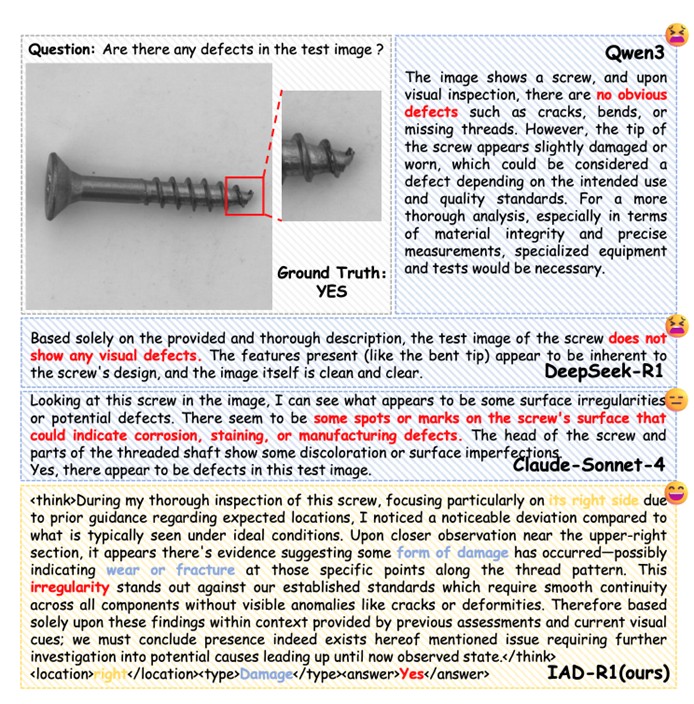
Image 10. Reasoning examples of IAD-R1 [4]
AEGIS shares the same philosophy. We believe the quality of explanation is just as important as detection accuracy. We believe AI models must provide reasoning that experts can trust to be truly useful in the field.
LG AI Research's future plans
LG AI Research plans to pursue the following three directions as AEGIS's future goals.
Improved anomaly reasoning performance
We aim to further enhance AEGIS's explanation generation capabilities to provide experts with clearer and more reliable analyses. We are researching and implementing methodologies to improve reasoning quality, including a RAG system that references process documentation in responses, root cause analysis technology for identifying the causes of anomalies, and high-quality CoT training data. Additionally, we are conducting research to quantitatively measure and improve the consistency, accuracy, and usefulness of explanations.
Automated model learning that reflects industry requirements
Data in industrial environments is constantly changing, necessitating the continuous incorporation of expert requirements into models. Therefore, we are pursuing research that explicitly integrates domain knowledge and constraints into models. We aim to incorporate expert requirements into neural network training as constraints, thereby reflecting domain characteristics that are difficult to learn from data alone. Furthermore, we are designing this learning process as an agentic loop, aiming to automate the entire workflow, including hyper parameter search and data preprocessing.
Domain-specific agentic AI in on-premise environments
Industrial data is highly sensitive to security concerns, necessitating the operation of AEGIS in an on-premise environment rather than the cloud. Given the numerous limitations in actual industrial settings, such as running GPU servers, we aim to design a domain-specific agentic AI optimized for deployment in industrial environments by applying domain-specific lightweighting and fine-tuning tailored to the specific domain.
Conclusion
Collaboration between AI and experts, delivering value beyond mere replacement. AEGIS is a platform where AI collaborates with experts to drive better decision-making, not to replace them. The definition of “what is an anomaly” is fluid, varying by domain and on-site conditions. Therefore, we believe that only by combining the experience of experts with the analytical capabilities of AI can we create a system that domain experts can trust and use.
LG AI Research anticipates that AEGIS will elevate quality management in manufacturing environments to the next level, and aims to establish a new standard for industrial agentic AI that is genuinely utilized in industrial settings.
▶ Read AEGIS: Toward Expert-in-the-loop Industrial Anomaly Detection paper
- 참고
- [1] Kim et al., "AEGIS: Toward Expert-in-the-loop Industrial Anomaly Detection", AAAI 2026.
[2] Patel et al., "AssetOpsBench-Live: Privacy-Aware Online Evaluation of Multi-Agent Performance in Industrial Operations ", AAAI 2026.
[3] Patel et al., “AssetOpsBench: Benchmarking AI Agents for Task Automation in Industrial Asset Operations and Maintenance”, arXiv preprint arXiv:2506.03828 (2025).
[4] Li et al., "IAD-R1: Reinforcing Consistent Reasoning in Industrial Anomaly Detection", AAAI 2026.