 Sangyun Kim
2026.09.02
Sangyun Kim
2026.09.02
 Youngsan Koh
2026.09.02
Youngsan Koh
2026.09.02
 Jeeho Hyun
2026.09.02
Jeeho Hyun
2026.09.02
 Cui Run
2026.09.02
Cui Run
2026.09.02
 Byungjun Kang
2026.09.02
Byungjun Kang
2026.09.02
From Labeling to Deployment: VLM and Agentic AI-Based Autonomous Vision Inspection
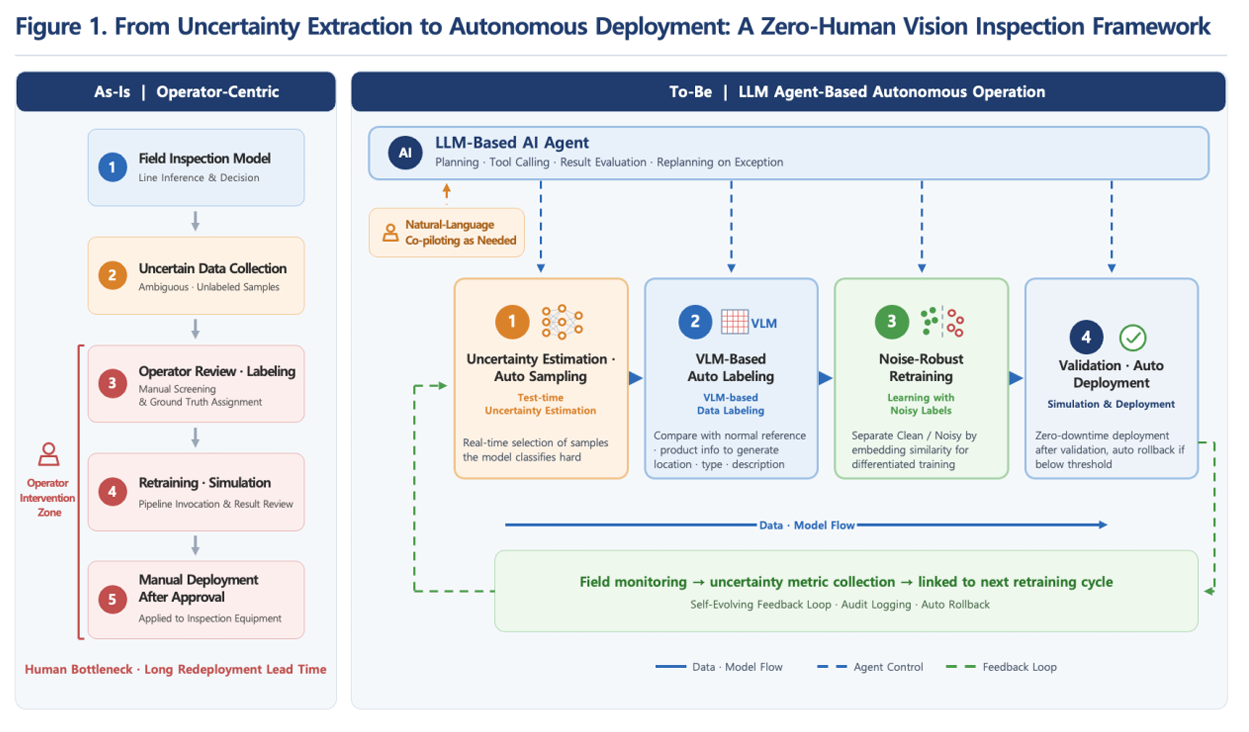
Figure 1. From Uncertainty Extraction to Autonomous Deployment: A Zero-Human Vision Inspection Framework
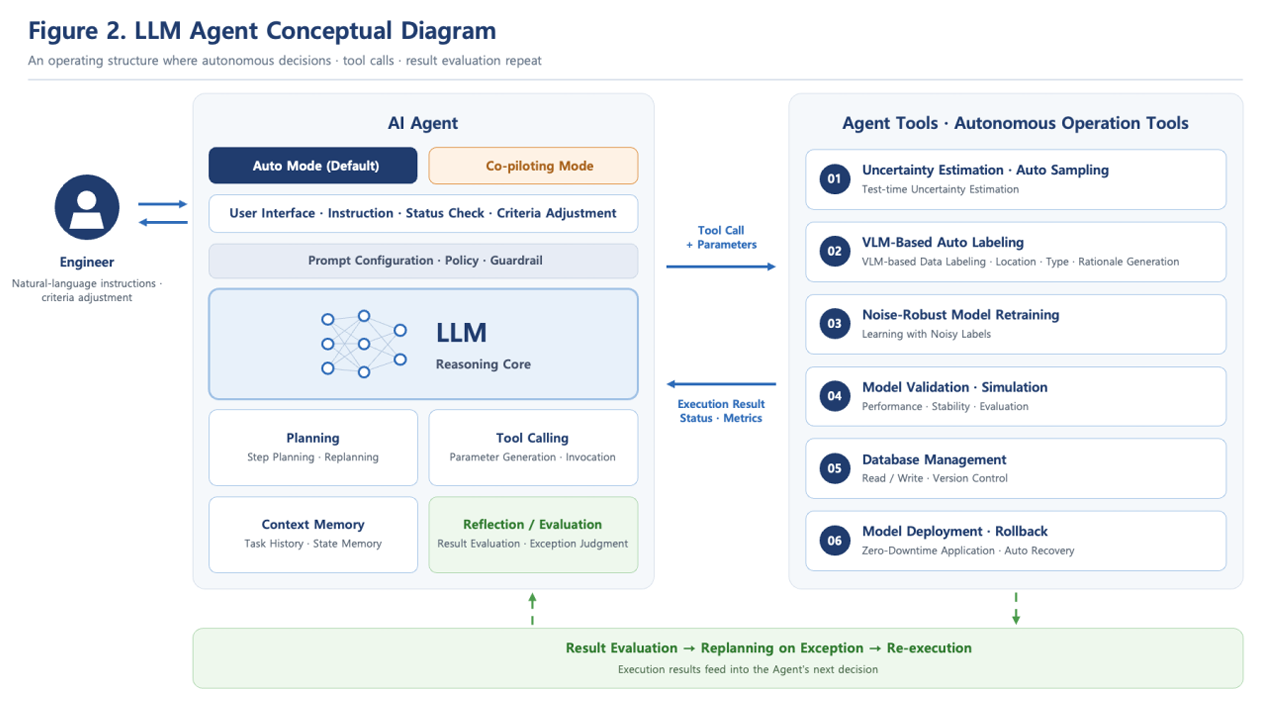
Figure 2. LLM Agent Conceptual Diagram
This agent framework operates through four core autonomous mechanisms:
The starting point of the autonomous operational flywheel lies in the ability to precisely isolate data that the field inspection model evaluates with ambiguity. Traditional systems merely collected samples with low prediction probability, which presented a key limitation: collecting data with inherent randomness (aleatoric noise) caused by sensor noise or image corruption. To overcome this, the proposed framework leverages Monte Carlo Dropout (MC Dropout) to mathematically decompose and extract uncertainty, as illustrated in Figure 3[6].
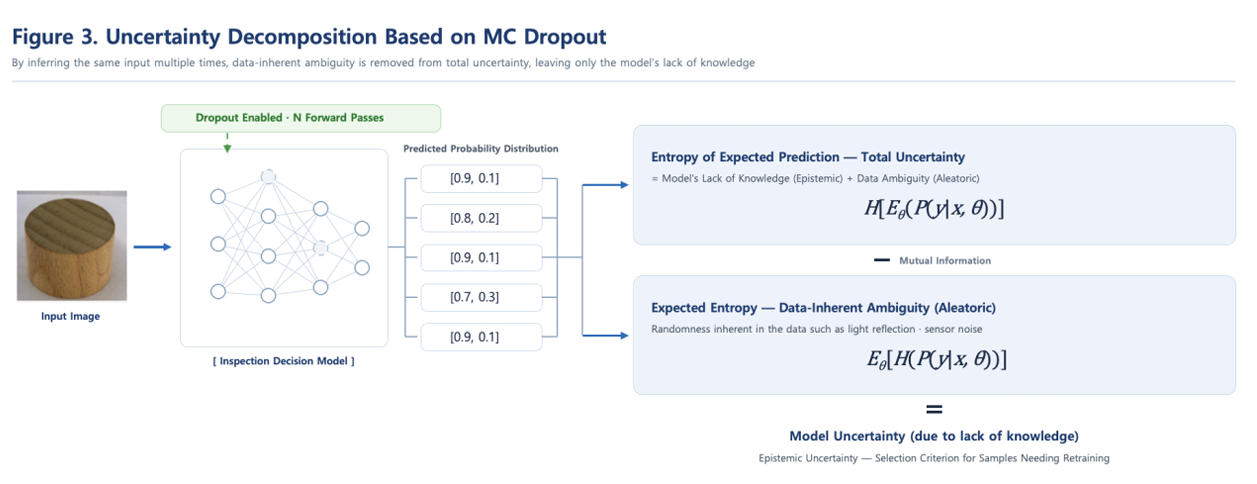
Figure 3. Uncertainty Decomposition Based on MC Dropout
By enabling Dropout during inference and executing multiple forward passes on the same input image, the inspection classification model outputs slightly varying prediction probability distributions (e.g., [0.9, 0.1], [0.8, 0.2], etc.). From these outputs, two forms of entropy are computed[7].
First, measuring the 'Entropy of Expected Prediction' quantifies Total Uncertainty, which combines model knowledge deficiency (Epistemic) and inherent data ambiguity (Aleatoric).
Second, computing the 'Expected Entropy' separately quantifies only the data-inherent ambiguity (Aleatoric Uncertainty) caused by factors such as lighting reflections or noise on the image.
Finally, by calculating Mutual Information—subtracting the 'Expected Entropy' from the 'Entropy of Expected Prediction'—the data-inherent ambiguity is cancelled out, allowing precise isolation of purely 'Epistemic Uncertainty driven by model knowledge deficiency'[8].
Applying this precise uncertainty sampling mechanism yielded an accuracy of 93.13%, representing a significant +4.84%p improvement compared to random sampling (88.29%) under identical data computational conditions. This demonstrates that focusing collection on high-value uncertainty samples maximizes training efficiency, sharply boosting model generalization performance with minimal data updates.
The uncertainty samples precisely selected in the previous stage bypass human operators and automatically receive ground truth labels via a Vision-Language Model (VLM). While conventional auto-labeling systems were limited to numeric outputs such as simple bounding boxes or pixel masks, VLM-based auto-labeling sets itself apart by mimicking a skilled inspector—observing product appearance and logically inferring the root causes of defects. The VLM comprehensively analyzes visual contextual differences between normal reference images and defective samples, simultaneously generating exact defect region coordinates alongside natural language explanations of defect causes and conditions, thereby dramatically enhancing engineer interpretability[9].
To move beyond simple visual data input/output and achieve 'reasoning-driven auto-labeling', the VLM within the framework acquires domain expertise through a multi-stage training pipeline:
Stage 0: Base Model Training
Leverages industrial benchmark datasets such as Real-IAD to establish foundational cognitive capabilities for vision inspection tasks[10]. The model learns to analyze image patches on a grid-area basis to localize defect patches, outputting concise comparative logic regarding visual differences from normal products in a standardized format.
Stage 1: Domain-Specific Fine-Tuning
Executes fine-tuning by injecting inspection data and domain knowledge from actual manufacturing sites. The model trains on paired prompt labels comprising natural language explanations that contrast subtle differences between collected [OK] and [NG] samples alongside precise defect regions, maximizing labeling accuracy for site-specific vision inspection[11].
Stage 2: Reasoning Reinforcement Learning
Applies Group Relative Policy Optimization (GRPO)-based reinforcement learning and designs a tailored reward model to further solidify the logical consistency and reliability of inspection decisions[12]. By defining rewards based on evaluation criteria such as "Did the model maintain a consistent reasoning process up to the final answer?" and "Did it accurately predict the ground truth location and defect cause?", the VLM is trained to provide clear labeling justification without swaying even in complex edge cases.
Completing this three-stage training pipeline allows the VLM to dramatically reduce the manual effort required for labeling while eliminating variability caused by human subjectivity, autonomously accumulating a precise, consistent, and high-quality database (Figure 4).
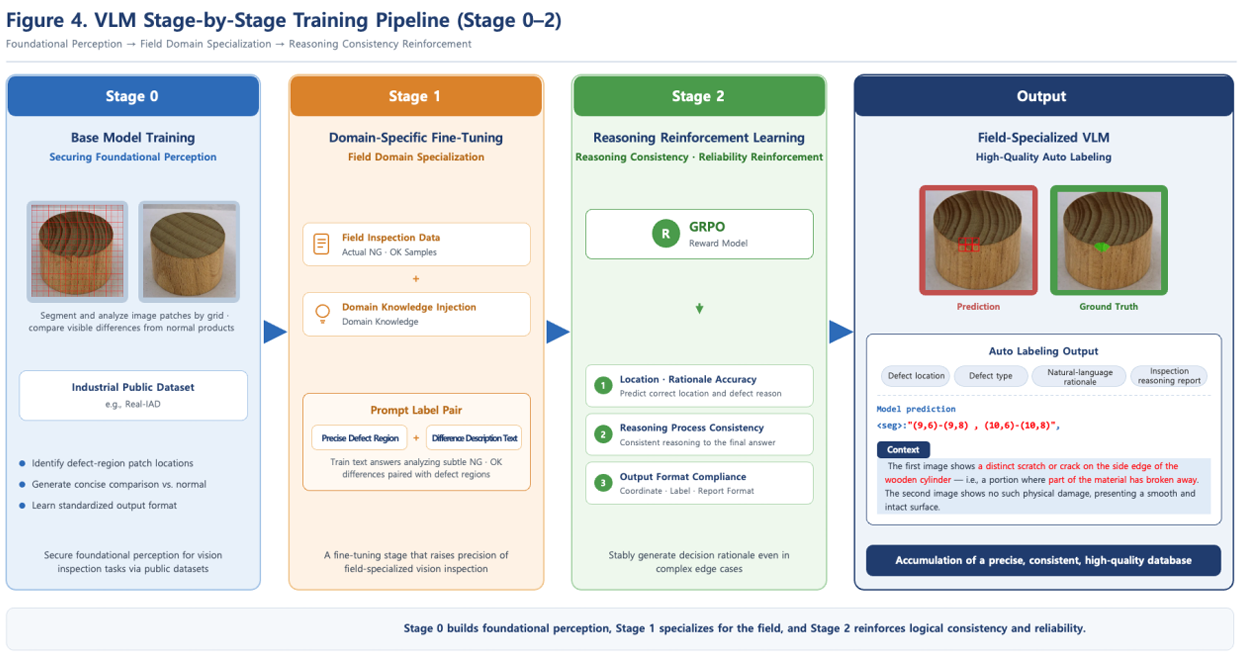
Figure 4. VLM Stage-by-Stage Training Pipeline (Stage 0-2)
While introducing VLM-based auto-labeling dramatically boosts labeling productivity and contextual reasoning capabilities, there remains a possibility that subtle label noise (noisy labels) may be introduced into pseudo-labels under extreme edge cases or optical limitation conditions. Feeding incorrectly assigned labels directly into retraining can cause the model to fall into confirmation bias—reinforcing its own errors—and lead to severe performance degradation[13]. To prevent this, the proposed framework adopts a noise-robust learning policy based on similarity analysis within the visual feature embedding space.
The core principle lies in verifying structural consistency across the inherent distribution of visual features.
• Embedding Space & Pair Similarity
When an input image passes through the encoder, it is transformed into a high-dimensional visual feature embedding. By measuring distances to adjacent samples in the embedding space (voting by referring to the closest sample), samples that exhibit nearly identical visual features to neighboring samples yet carry conflicting labels are clearly identified as noisy label samples. For instance, this includes cases misidentified as defective (NG) despite being virtually identical in feature space to surrounding clean samples labeled as normal (OK)[14].
• Group-wise Training Policy
Immunity to label noise is secured by applying differentiated learning loss functions and regularization policies according to the identified data groups:
-
Clean Set: Highly reliable samples optimized precisely using standard Cross-Entropy Loss.
-
Noisy Set: To offset potential label errors, Mix-up techniques—blending Clean and Noisy samples at specified ratios—and Weighted Cross-Entropy Loss are applied. Linearly interpolating visual features and labels provides regularization, effectively preventing the model from memorizing incorrect labels and causing overfitting [15].
Through this multi-layered noise control mechanism, performance degradation during retraining is effectively suppressed, even if some mislabeled instances contaminate the automatically collected and labeled dataset.
Simple rule-based automation scripts carry inherent limitations: when edge cases arise, the entire pipeline grinds to a halt or forces manual intervention by an engineer. As the core of the proposed framework, the LLM-based AI Agent acts as a central control tower governing the end-to-end autonomous operational framework, leveraging its capacities for Reasoning, Planning, Tool Calling, and Reflection on execution results[16].
• Agent-Based Orchestration & Human Co-Piloting
The AI Agent defines each stage of the autonomous operational pipeline as modular execution tools to manage them systematically. From uncertainty data extraction and VLM-based auto-labeling to triggering GPU cluster training via the noise-robust learning pipeline and conducting simulation performance verification on the completed model, the agent monitors operations in real time and autonomously orchestrates tool execution[4]. If exceptional events occur during training—such as convergence failure or underperformance—the agent autonomously executes replanning by adjusting hyperparameters or rebalancing data sampling ratios[17].
Furthermore, the agent framework supports a natural language communication interface alongside its fully autonomous mode. Engineers can utilize the interactive interface to instruct the agent to reprioritize specific defect types or adjust labeling criteria and retraining thresholds in real time. By precisely interpreting user intent and immediately applying it to the workflow, the agent provides an interactive co-piloting environment that minimizes human intervention while seamlessly incorporating high-level human intuition when necessary.
• Feedback Loop-Based Autonomous Deployment
In this way, the Agentic AI-based autonomous operational framework shortens the lead time for responding to uncertainty on the manufacturing floor while dramatically reducing maintenance overhead.
Vision inspection in smart factories is evolving beyond simple 'defect detection' into a 'Data Autonomy' paradigm, where success is measured by how efficiently shop-floor data can be refined and integrated into models. Paradoxically, the human intervention and manual labeling judgment required at critical stages of conventional operational pipelines have persisted as the primary bottleneck to system scalability.
The framework presented in this article overcomes these structural limitations by combining Vision-Language Models (VLMs) with Agentic AI. From precise uncertainty sample filtering via Monte Carlo Dropout to VLM-driven contextual auto-labeling and noise-robust, group-wise training policies, tasks previously reliant on human intuition are transitioned into the domain of AI autonomy.
Furthermore, Agentic AI-driven Tool Orchestration systematically interconnects modular tools to complete a zero-human model retraining and Continuous Deployment pipeline. By offering an interactive co-piloting environment where engineers can direct system execution through natural language as needed, usability on the shop floor is maximized.
A self-evolving autonomous vision inspection framework—one that diagnoses uncertainty, infers root causes, and continuously adapts—marks a new milestone in manufacturing quality control. Minimizing human intervention while empowering AI with autonomous decision-making will serve as the core engine driving the paradigm shift toward fully autonomous operations across manufacturing sectors.
▶ VLM & Agentic AI-Based Autonomous Vision Inspection Demo
- 참고
[1] Gama, J., et al. (2014). "A survey on concept drift adaptation." ACM Computing Surveys (CSUR).
[2] Settles, B. (2009). "Active Learning Literature Survey." University of Wisconsin-Madison Computer Sciences Technical Report.
[3] Sambasivan, N., et al. (2021). "“Everyone wants to do the model work, not the data work”: Data Cascades in High-Stakes AI." ACM CHI.
[4] Wu, Q., et al. (2023). "AutoGen: Enabling Next-Gen LLM Applications via Multi-Agent Conversation." arXiv preprint arXiv:2308.08155.
[5] Kim, J., et al. (2024). "VLM-PL: Advanced Pseudo Labeling Approach for Class Incremental Object Detection via Vision-Language Model." IEEE/CVF Conference on Computer Vision and Pattern Recognition Workshops (CVPRW).
[6] Gal, Y., & Ghahramani, Z. (2016). "Dropout as a bayesian approximation: Representing model uncertainty in deep learning." International Conference on Machine Learning (ICML).
[7] Kendall, A., & Gal, Y. (2017). "What uncertainties do we need in bayesian deep learning for computer vision?" Advances in Neural Information Processing Systems (NeurIPS).
[8] Houlsby, N., et al. (2011). "Bayesian active learning for classification and preference learning." arXiv preprint arXiv:1112.5745.
[9] Liu, H., et al. (2023). "Visual Instruction Tuning." Advances in Neural Information Processing Systems (NeurIPS).
[10] Wang, C., et al. (2024). "Real-IAD: A Real-World Multi-View Dataset for Benchmarking Versatile Industrial Anomaly Detection." IEEE/CVF Conference on Computer Vision and Pattern Recognition (CVPR).
[11] Ouyang, L., et al. (2022). "Training language models to follow instructions with human feedback." Advances in Neural Information Processing Systems (NeurIPS).
[12] Shao, Z., et al. (2024). "DeepSeekMath: Pushing the Limits of Mathematical Reasoning in Open Language Models." arXiv preprint arXiv:2402.03300.
[13] Song, H., et al. (2022). "Learning from noisy labels with deep neural networks: A survey." IEEE Transactions on Neural Networks and Learning Systems (TNNLS).
[14] Han, B., et al. (2018). "Co-teaching: Robust training of deep neural networks with extremely noisy labels." Advances in Neural Information Processing Systems (NeurIPS).
[15] Zhang, H., et al. (2018). "mixup: Beyond Empirical Risk Minimization." International Conference on Learning Representations (ICLR).
[16] Yao, S., et al. (2023). "ReAct: Synergizing Reasoning and Acting in Language Models." International Conference on Learning Representations (ICLR).
[17] Shinn, N., et al. (2023). "Reflexion: Language Agents with Verbal Reinforcement Learning." Advances in Neural Information Processing Systems (NeurIPS).
[18] Kreuzberger, D., et al. (2023). "Machine learning operations (mlops): Overview, definition, and architecture." IEEE Access.