 Changyoung Park
2026.09.22
Changyoung Park
2026.09.22
[ICML2026] MCFlow, a New Integrated Model for AI-Generated Inorganic Materials
Generative AI is rapidly expanding beyond text and images into the field of designing new molecules and inorganic materials. The stability and physical properties of inorganic materials, used in batteries, catalysts, semiconductors, and other applications, vary significantly depending on their elemental composition and the crystal structure in which their atoms are arranged. Therefore, to develop materials with desired properties, it is crucial to simultaneously explore appropriate combinations of elements and crystal structures.
However, the number of possible compositions and atomic arrangements is vast. It is difficult to fully explore this vast search space using only the conventional approach, in which researchers design candidates one by one and then validate them through simulations and experiments. In particular, traditional crystal structure exploration has the limitation of high computational costs due to the need for repetitive energy calculations[1–4]. Consequently, material-generation AI, which learns from vast amounts of material data to propose promising compositions and structures, is gaining attention as a new exploration method[5].
Recently, various crystal generation models have been developed that propose new material candidates based on learned crystal data. Models such as CDVAE, DiffCSP, MatterGen, FlowMM, and CrystalFlow have utilized diffusion models or flow-based generative models to predict crystal structures and generate new materials[6–10]. However, existing models have generally been designed so that a single model performs only one generation task. In other words, models that generate crystal structures from compositions and models that generate both compositions and structures from scratch have existed as separate models.
To address these limitations, LG AI Research developed Multimodal Crystal Flow (MCFlow), a model capable of performing not only conventional composition-based structure generation and new composition-structure generation, but also the generation of atomic species suitable for a given crystal structure, all within a single model. This enables the model to perform new exploration methods, which existing crystal-generation AI could not handle, within a single integrated model. This research was accepted by ICML 2026, a world-renowned machine learning conference.
1. Real-World Challenges and Research Inspiration
To date, research on AI for material generation has evolved in two main directions: designing new materials based on target physical properties[8,12] and identifying crystal structures suitable for a given elemental composition[7,9,10]. However, these tasks have been treated as independent problems, and the models addressing each task were often developed separately. When researchers’ desired input conditions or search objectives changed, they had to either train a new model separately or combine multiple models.
In contrast, the exploration methods required in actual material development are much more diverse. While the initial research stage may involve exploring entirely new compositions and structures, as commercialization approaches, an approach is frequently used in which the basic structure of a material whose performance and manufacturability have already been verified is retained, and performance is improved by substituting or doping certain elements. Typical examples include replacing a specific transition metal in a battery cathode material with another element or altering the element located at the active site of a catalyst.
However, existing crystal generation models have not sufficiently addressed the key challenge of generating new atomic species suitable for a given structure. LG AI Research recognized this gap between research and industry. “Could a single model handle the problems of generating a structure from composition, generating both composition and structure from scratch, and proposing new atomic compositions based on a given structure?” This research began with this question.
2. The Research of LG AI Research
[An integrated decision-generation model perfected through new perspectives and learning strategies]
The first key idea behind MCFlow is to view the atom typesand structural information that make up a crystal material as distinct modalities (Figure 1). The approach of applying independent generation processes to different modalities has been proposed in multimodal generation research aimed at handling heterogeneous information, such as protein sequences and structures, images, and text, within a single model[13,14]. MCFlow extends this perspective to the problem of crystal generation, defining atom type and crystal structure as information that can be generated and controlled independently. Treating atom type and structure as separate modalities in crystal generation is a novel approach proposed in this study, which serves as the foundation for handling various combinations of inputs and outputs within a single model.
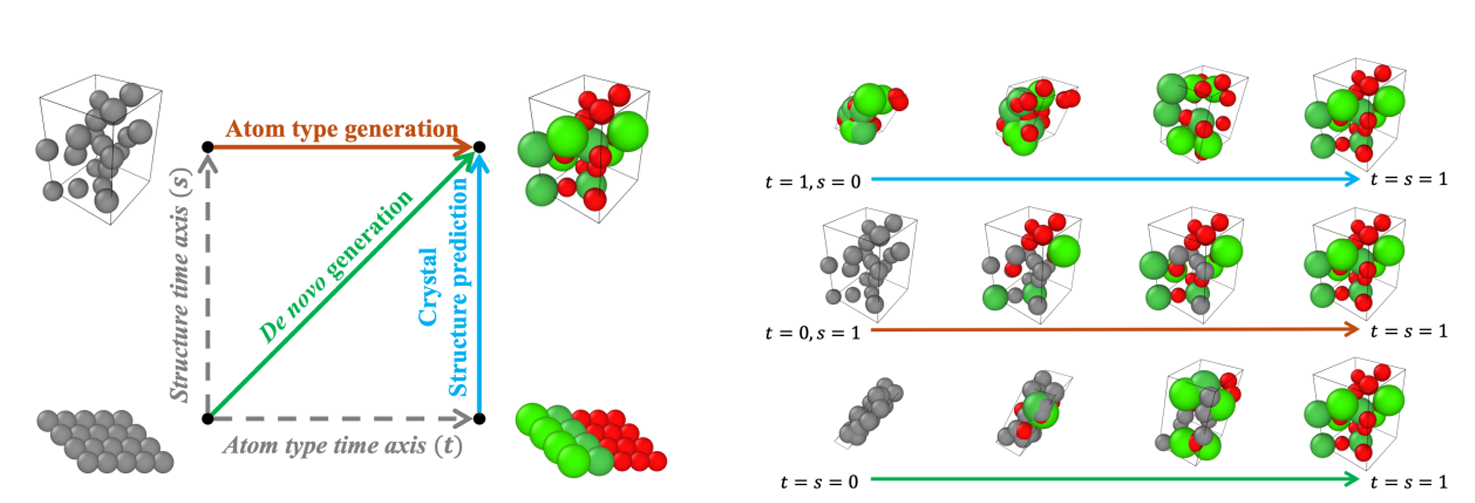
Figure 1. MCFlow trains on atomic species and structure as mutually independent pieces of information.
It trains a single flow model for multimodality by defining a time variable t for atomic species and a time variable s for structure.
Subsequently, by selecting which path to follow in the (t, s) space, a single model can perform crystal structure prediction, atomic species generation, and new crystal generation.
MCFlow assigns independent generation timelines to each atom type and structure. By controlling which modalities are retained and which are newly generated, a single model can perform crystal structure prediction (which generates a structure given a composition), de novo generation (which generates both atom types and structures from scratch),and atom type generation (which generates appropriate atom types for each position given a structure). In other words, rather than developing separate models for each task, it solves various crystal generation problems using a single integrated model by varying the inference paths.
The second key idea is a new data augmentation method for effectively learning crystal symmetry. In previous research on crystal generation, crystallographic information such as space groups or Wyckoff positions has been directly utilized as generation conditions or structural templates to reflect symmetry[15,16]. In contrast, rather than explicitly inputting symmetry information into the model or forcing specific structures, MCFlow introduced a learning bias toward symmetry through the arrangement of the data and the augmentation methods.
Even if two structures are physically identical, they can be represented as different data depending on the order in which the atoms are recorded. Accordingly, the research team proposed “hierarchical permutation augmentation,” which arranges atoms based on their electronegativity and Wyckoff positions, which represent their crystallographic locations, and trains the model by hierarchically rearranging the order of crystallographically equivalent atoms. This approach enabled the model to effectively learn the crystallographic relationships inherent in composition and atomic arrangement without directly imposing symmetry on the model structure.
Based on these two technical ideas, MCFlow integrated multiple crystal generation tasks into a single model while still demonstrating performance competitive with existing models specialized for each task. Furthermore, it ranked second globally in the overall standings on LeMat-GenBench, which comprehensively evaluates structural validity, novelty, uniqueness, and energy stability, thereby proving the generation quality of the integrated model[17].
The research team believes that this performance was likely due to a strategy in which atomic types and structures were trained separately as distinct modalities. After independently learning atomic types and spatial arrangements, and then establishing a relationship between the two, the model may have been able to more effectively learn the distances between atoms and the interactions influenced by neighboring atoms. It is presumed that this learning effect, which was not biased toward any specific task, contributed to the model’s consistently competitive performance across a variety of crystal generation problems.
In particular, the atom type generation method newly proposed by MCFlow involves generating the appropriate atom types for each position in a given crystal structure. By utilizing this method, it is possible to perform “atom substitution,” in which only some of the atoms in an existing crystal structure are masked, and new elements are proposed to fill those positions.
This feature is closely linked to real-world material development in that, rather than generating an entirely new structure from scratch, it allows for the modification of only certain elements while preserving the structure of materials whose performance or synthesizability has already been verified. For example, it can be applied to problems such as replacing a specific transition metal in a battery cathode material with another element or modifying the elements in a catalyst’s active sites.
This research goes beyond simply combining existing generation tasks. It proposes a new perspective that treats atomic types and structures as independent modalities, along with an augmentation strategy for effectively learning crystal symmetry, and based on this, performed multiple generation tasks within a single model. Furthermore, it is significant in that it has expanded the scope of generative AI to include element substitution problems, which are highly applicable in real-world material development.
[Turning research findings into practical tools for materials discovery]
LG AI Research has developed an LLM-based demonstration page so that researchers can utilize the research results of MCFlow (Figure 2). Users can enter their desired material generation conditions in natural language without having to deal with complex model configurations or specialized input formats. The system interprets these inputs and performs the appropriate task from among de novo generation, crystal structure prediction, atom type generation, and atom substitution. The generated results can be viewed as 3D crystal structures along with composition and lattice information, and can also be saved as structure files, allowing even users unfamiliar with inorganic material generation models to easily turn their research ideas into concrete material candidates.
The demo page was also introduced to LG affiliates. Among the various features, they showed particular interest in the capability to modify certain elements while preserving the structure of existing materials, and there were suggestions to prepare a proof-of-concept (PoC) plan for applying it to actual material development projects.
At the ICML 2026 conference, several companies and researchers—including Entalpic, the developer of LeMat-GenBench, and the materials AI company CuspAI—expressed interest in MCFlow. In particular, the element substitution feature, which is rarely found in existing crystal generation models, was praised for demonstrating a new area of application for materials-generation AI.
It is significant that representatives from affiliated companies and the global materials AI community all expressed interest in this feature. For materials-generation AI to be applied in industrial settings, it must not only generate a large number of new candidates but also be able to propose promising candidates within a limited search space while preserving existing materials and researchers’ knowledge. This response demonstrates that MCFlow has the potential to be applied in actual materials development processes.
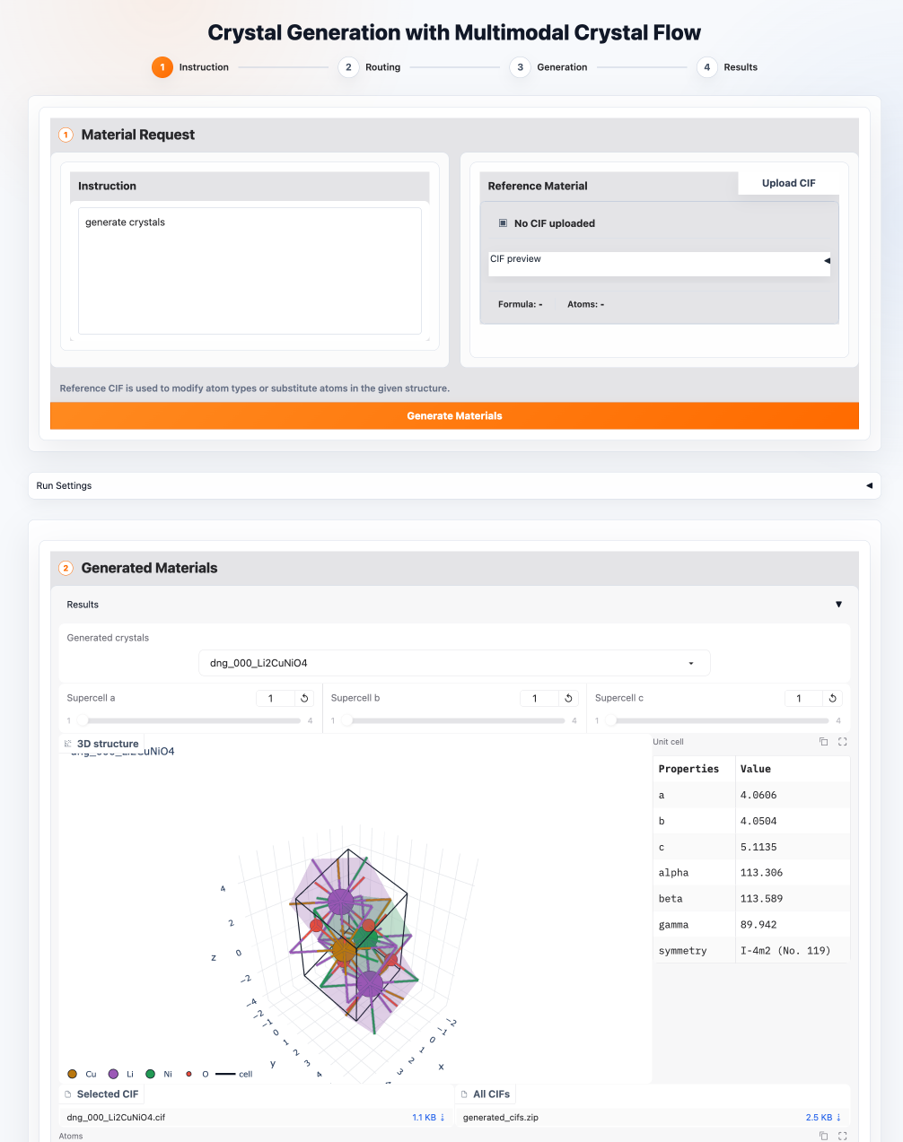
Figure 2. Natural language-based material generation demo page
[Towards AI for content generation that is easier and more widely used]
LG AI Research plans to start by making our current LLM-based demonstration page more user-friendly. We aim to improve usability so that users can select appropriate generation tasks and set conditions using only natural language requests, while also gradually enhancing features for comparing and analyzing generated structures, managing candidates, and linking to follow-up simulations. Through these efforts, we plan to create an environment where even researchers unfamiliar with material-generation AI can more easily explore candidates that align with their research objectives.
On the model front, we plan to conduct research that adds physical properties as a new modality, in addition to atomic types and structures. While MCFlow has currently learned various generative relationships between composition and structure, we can expand its capabilities in the future to generate desired materials based on target properties or to infer properties from given compositions and structures. Through this, we aim to evolve the model into an integrated one that goes beyond simply generating new materials to proposing candidates that reflect the performance and conditions specified by researchers.
In addition to atom substitution, we plan to continuously identify new application challenges that can utilize generative models. We intend to define problems necessary in the actual materials development process such as identifying defects and doping sites, modifying substructures, and conditional generation that preserves specific elements or structures as tasks for generative AI, thereby expanding the scope of applications that a single model can support.
In the long term, we aim to extend MCFlow’s integrated generative approach beyond inorganic crystalline materials to include organic materials. Although molecules, polymers, and organic crystals differ from inorganic materials in terms of structural representation and bonding characteristics, MCFlow’s approach, which defines and links components, structures, and physical properties as distinct modalities, can be widely applied. Ultimately, our goal is to develop an integrated generative AI that encompasses both inorganic and organic materials and can flexibly address a wide range of material development needs.
- 참고
[1] Glass, C. W., Oganov, A. R., and Hansen, N. “USPEX?Evolutionary Crystal Structure Prediction.” Computer Physics Communications, 2006.
[2] Wang, Y. et al. “Crystal Structure Prediction via Particle-Swarm Optimization.” Physical Review B, 2010.
[3] Pickard, C. J. and Needs, R. J. “Ab Initio Random Structure Searching.” Journal of Physics: Condensed Matter, 2011.
[4] Wang, Y. et al. “CALYPSO: A Method for Crystal Structure Prediction.” Computer Physics Communications, 2012.
[5] Butler, K. T. et al. “Machine Learning for Molecular and Materials Science.” Nature, 2018.
[6] Xie, T. et al. “Crystal Diffusion Variational Autoencoder for Periodic Material Generation.” 2021.
[7] Jiao, R. et al. “Crystal Structure Prediction by Joint Equivariant Diffusion.” 2023.
[8] Zeni, C. et al. “MatterGen: A Generative Model for Inorganic Materials Design.” 2023.
[9] Miller, B. K. et al. “FlowMM: Generating Materials with Riemannian Flow Matching.” 2024.
[10] Luo, X. et al. “CrystalFlow: A Flow-Based Generative Model for Crystalline Materials.” Nature Communications, 2025.
[11] Sriram, A. et al. “FlowLLM: Flow Matching for Material Generation with Large Language Models as Base Distributions.” NeurIPS, 2024.
[12] Tangsongcharoen, K. et al. “CrystalGRW: Generative Modeling of Crystal Structures with Targeted Properties via Geodesic Random Walks.” 2025.
[13] Campbell, A. et al. “Generative Flows on Discrete State-Spaces: Enabling Multimodal Flows with Applications to Protein Co-Design.” ICML, 2024.
[14] Rojas, K. et al. “Diffuse Everything: Multimodal Diffusion Models on Arbitrary State Spaces.” ICML, 2025.
[15] Zhu, R. et al. “WyCryst: Wyckoff Inorganic Crystal Generator Framework.” Matter, 2024.
[16] Kazeev, N. et al. “Wyckoff Transformer: Generation of Symmetric Crystals.” ICML, 2024/2025.
[17] Baird, S. G., Sayeed, H. M., and Riebesell, J. “Matbench-GenMetrics.” 2024.