LG AI Expert Course 2023 2nd Graduation & Achievements Sharing Session
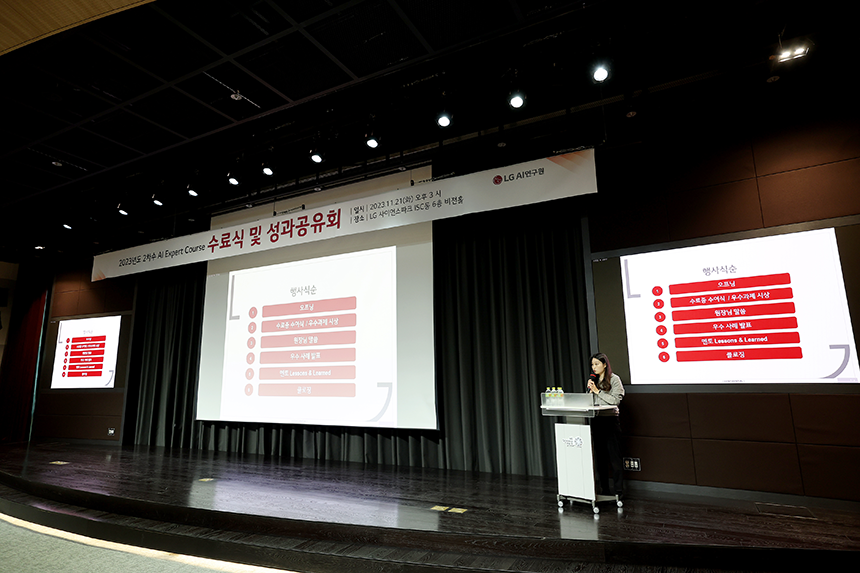
Photo 1. A Glimpse of the LG AI Expert Course 2023 2nd Graduation & Achievements Sharing Session
The 2nd LG AI Expert Course for 2023 has successfully concluded. During the 12-week program, designed to cultivate a better understanding of AI, 12 participants from six LG subsidiaries (LG Electronics, LG Household & Health Care, LG Innotek, LG Energy Solution, LG Chem, and LG Display) conducted focused research to address industry challenges under the close guidance of experienced experts from LG AI Research.
A closing ceremony was held at the Vision Hall in the ISC building of LG Science Park on November 21st to mark the successful completion of the program, and we are pleased to share the outstanding achievements and accomplishments from the 12-week period, which attracted participants from a wider range of subsidiaries and provided a platform for a greater number of individuals to engage with a broader spectrum of industry challenges.
Certification and Best Practice Awards Ceremony
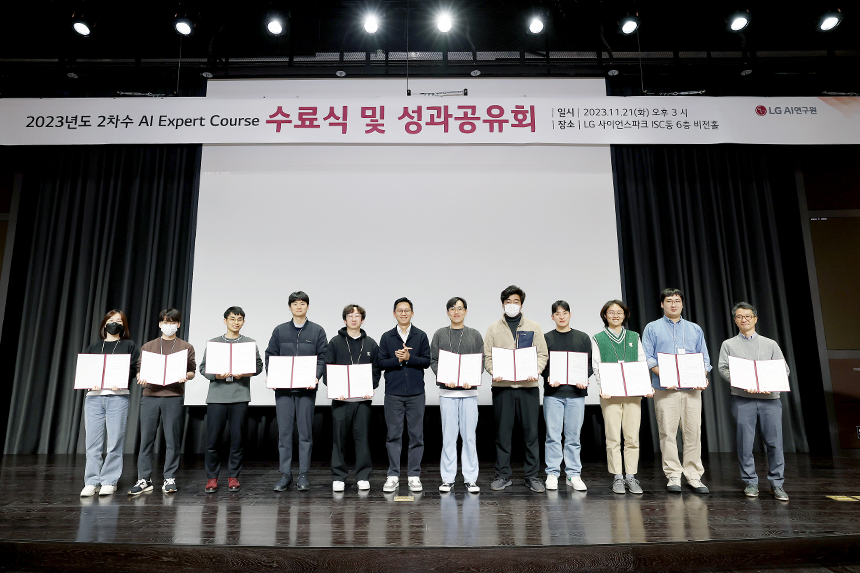
Photo 2. Group photo of the LG AI Expert Course 2023 2nd Graduation & Achievements Sharing Session
The closing ceremony, in which certificates for the successful completion of the 12-week program were awarded, was held in conjunction with an awards ceremony that recognized exemplary practices addressed during the program. A panel of internal judges from LG AI Research evaluated these practices based on criteria such as technical complexity, business impact, and educational advancement. These scores were then combined with the results of online voting by our employees, and the top three projects were presented with Best Practice Awards.
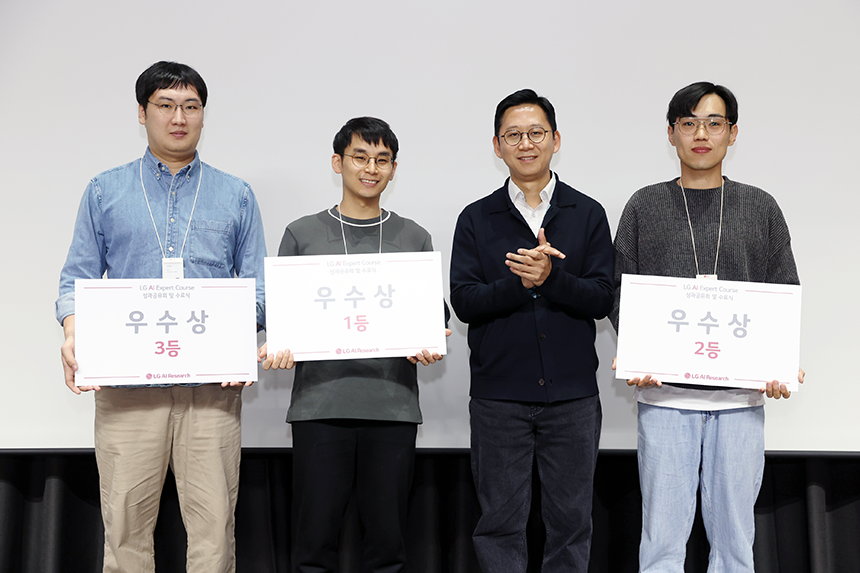
Photo 3. Group photo of the LG AI Expert Course 2023 2nd 1st~3rd winners
Coming in 1st place was Yeonseung Kim from LG Chem, whose project titled “Classifying and Detecting Anomalies At the Same Time? It’s Possible with (Almost) No Labeling!” secured the top spot. Following closely was Jeonghwan Choo from LG Innotek, taking 2nd place for the project titled “Automation of TS Inspection and Designation of Phase 2 Inspection Area (ROI).” Suchan Park from LG Electronics came in 3rd place, recognized for the project titled “Optimization of EXAONE Language Model for Knowledge Graph Question Answering (KGQA) System.”
“The Gap in Work Capability Will Widen Depending on the Proficiency of AI Utilization”
Following the award ceremony, the chief Kyunghoon Bae delivered a congratulatory speech. Commending both the trainees and mentors for their remarkable achievements, he delved into the inception and objectives of the LG AI Expert Course.
“It all started with the question of how to streamline AI knowledge acquisition for our trained employees,” he said, adding, “We discovered that in contrast to conventional learning approaches like AI classes or online courses, our employees had a better understanding of the concepts when they could apply them to familiar problems under expert guidance.”
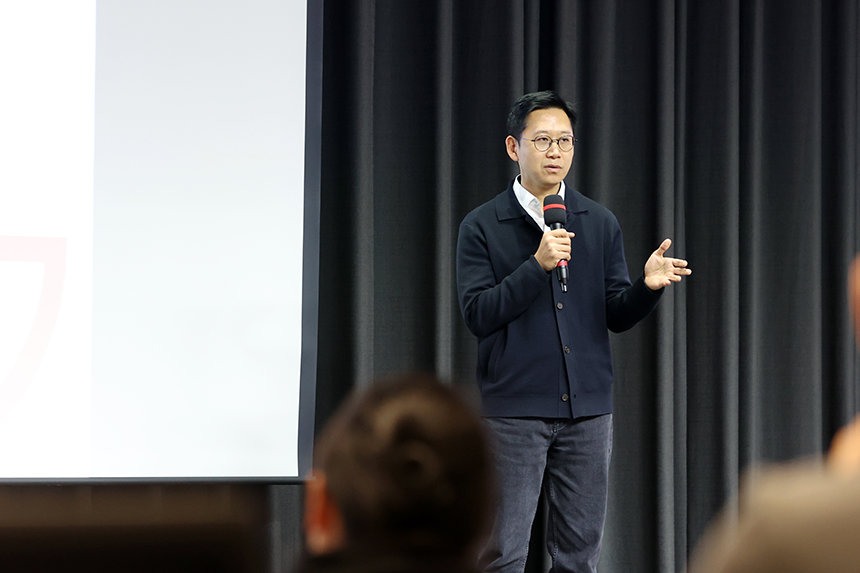
Photo 4. The chief of LG AI Research Kyunghoon Bae, giving a congratulatory speech
the chief Bae emphasized, “AI will inevitably have a place in all aspects of our work processes, which will lead to many changes. It will extend into domains typically unassociated with AI, and productivity and efficiency of all employees will depend on their ability to utilize AI technology.” He described a future in which tasks that once took months or years will be completed in days or hours, emphasizing the inevitable widening gap between skilled and unskilled AI users, and the importance of researching AI technology.
“Rather than relying solely on theoretical studies, engaging directly with industry challenges is more beneficial in the long run. This can be seen in the hands-on experience offered in the LG AI Expert Course,” he remarked. The chief Bae expressed his desire for all LG Group employees to feel comfortable seeking guidance from LG AI Research mentors and encouraged active engagement from both parties, adding, “Whenever you need help, do not hesitate to come to LG AI Research,” thus ending his speech on an encouraging note.
Best Practice Presentation; Addressing the Industry Challenges
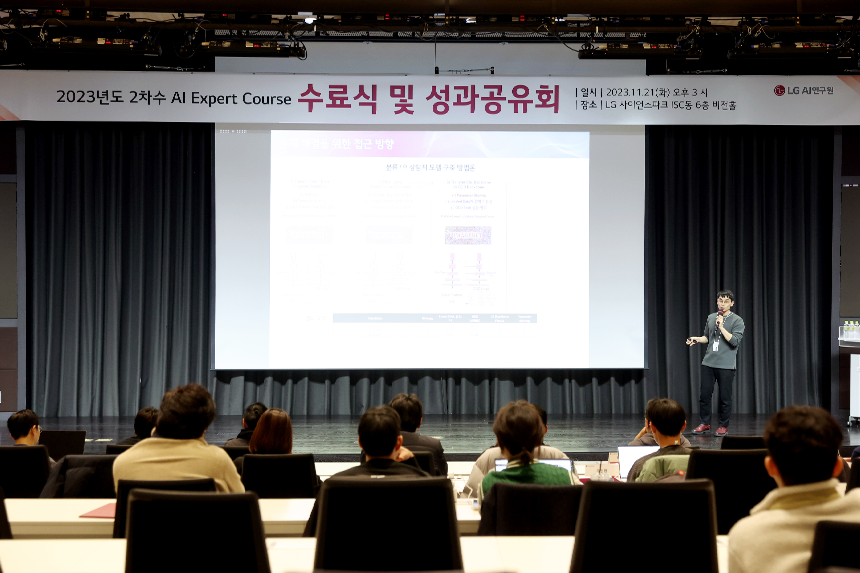
Photo 5. Best Practice cases Presentation
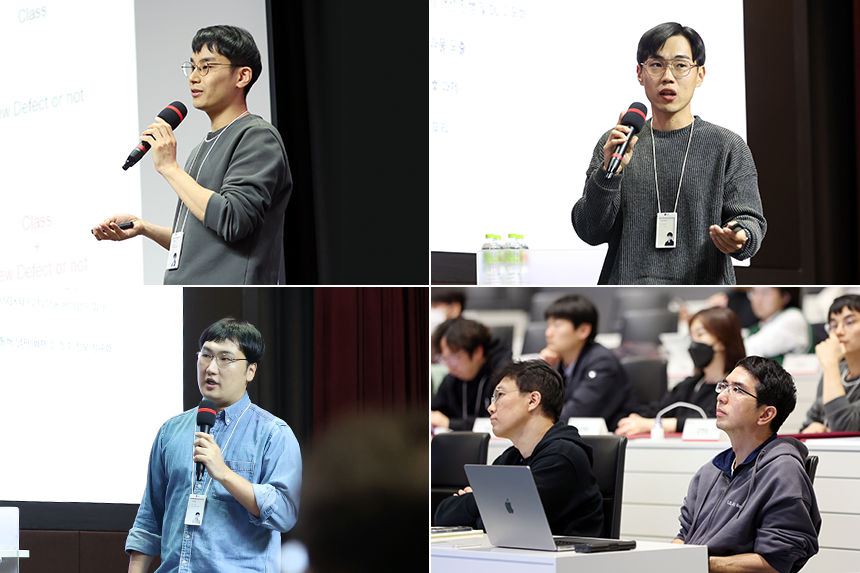
Photo 6. BP winners’ presenting and attendees
During the Best Practice Presentation, the winners of 1st to 3rd place took turns presenting their concepts. They shared the background, objectives, progression, achievement, and areas for improvement, and offered detailed insights on practical application in the field.
3rd Place Winner: Optimization of EXAONE Language Model for Knowledge Graph Question Answering (KGQA) System - Suchan Park from LG Electronics
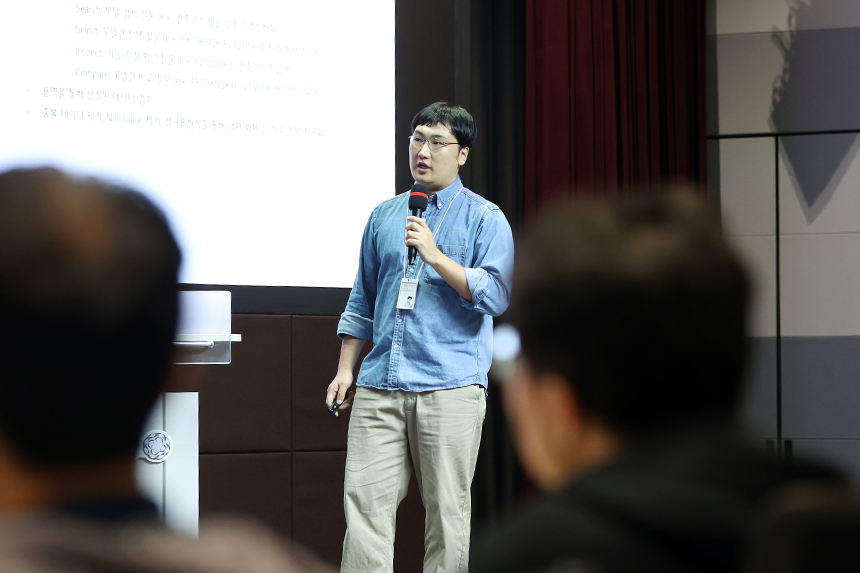
Photo 7. Suchan Park from LG Electronics, is presenting
Together with EXAONE Lab mentor Seonghwan Kim, Suchan Park of LG Electronics conducted research on the “Optimization of EXAONE Language Model for Knowledge Graph Question Answering System.” This was driven by his desire to improve the performance of the chatbot used for customer service at LG Electronics.
Swift progress in AI technology has notably improved chatbot performances, and the emergence of ChatGPT in 2022 significantly elevated user expectations for chatbots. However, due to the inherent limitation of not having all worldly information, language models face a significant challenge known as “Hallucination,” in which they generate false yet believable information. Further research is needed to address this issue, with a focus on providing these language models with accurate information from Internet searches or external databases.
Park aimed to solve the problem of hallucination within the company's domain by creating an external database structured as a Knowledge Graph, and compiling the company's product and service data. He then developed the “KGQA System,” a system capable of providing accurate information from the Knowledge Graph. His project focused on optimizing EXAONE for the KGQA system, which used EXAONE in its NLU and NLG tasks.
2nd Place Winner: Automation of TS Inspection and Designation of Phase 2 Inspection Area (ROI) - Jeonghwan Chu from LG Innotek
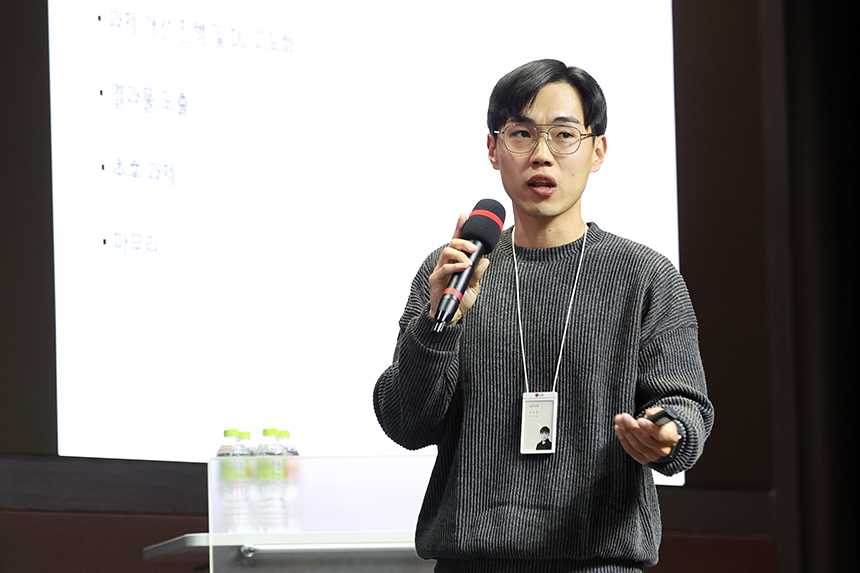
Photo 8. Jeonghwan Choo from LG Innotek, is presenting
Next up was Jeonghwan Choo, the 2nd place winner from LG Innotek, who worked with mentor Yeonsik Jo from the Vision Lab on a project titled “Automation of TS Inspection and Designation of Phase 2 Inspection Area (ROI).” Tape Substrates (TS) are thin tape-like substrates that act as signal connectors between display driver ICs and panels; this study focused on introducing AI to automate TS inspection processes, thereby reducing human resource costs.
Unlike previous projects that focused mainly on classification to sort out defects from good products using vision inspection, Choo's project focused on automating the process, including how to set up a vision inspector and which inspection is performed where.
As a result, the quality of the inspection was improved to the point where the inspection area drawn by the AI was almost identical to the one drawn by human inspectors. The results imply that AI goes beyond just drawing the area, as the system is expected to compare parameters of the current batch with previous ones, and by incorporating a deep learning process, video can also be applied.
“As a member of the production technology team, I didn’t have much experience working with researchers. We were the ones who requested new research most of the time, but now that I have done similar research, I have a much better understanding of how to make requests to get more efficient results,” said Choo at the end of his presentation.
1st Place Winner: Classifying and Detecting Anomalies At the Same Time? It’s Possible with (Almost) No Labeling! - Yeonseung Kim from LG Chem
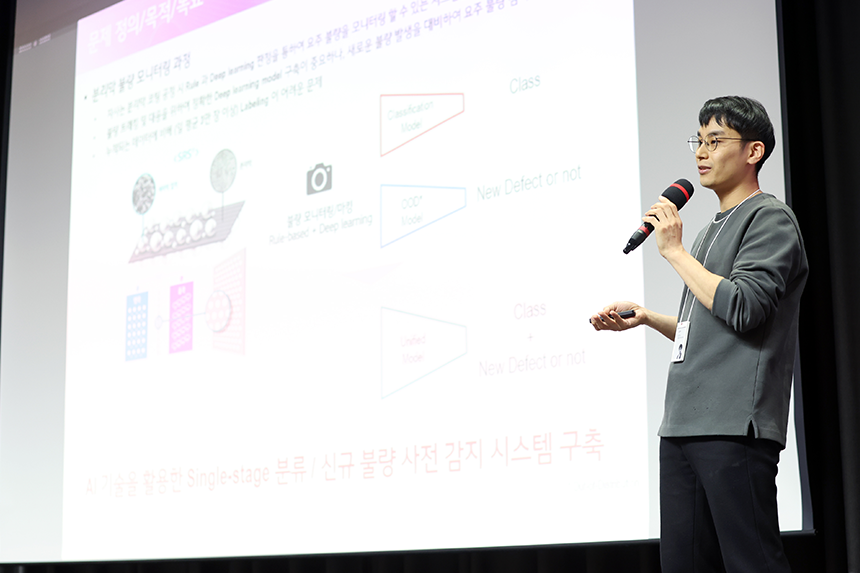
Photo 9. Yeonseung Kim from LG Chem, is LG Chem presenting
To round out the presentations, 1st Place Winner Yeonseung Kim of LG Chem presented the project he worked on with Vision Lab mentor Jinhyung Kim titled, “Classifying and Detecting Anomalies At the Same Time? It’s Possible with (Almost) No Labeling!” The goal of his project was to transform the established system in the field of separator film production DxP.
Separator films are materials that prevent short circuits between positive and negative electrodes in batteries. They are coated with SRS to increase stability, and during this coating process, they must be tracked and marked with a vision inspector to ensure that no contaminants are mixed in. The two important factors during this process are the detection of contaminants and defects.
There are systems that can do major defect detection and sorting, but because they are separate systems, utilization is limited. To solve this problem, Kim attempted to build a system that could not only sort out major defects but also monitor new defects that deviated from the existing defect distribution in a single stage.
To do so, he used a self-supervised learning model to build a specialized CNN backbone network tailored for each distinct domain. Additionally, he used the UniAD model to construct a new defect-detection model that was capable of accurately identifying a normal product that had previously been flagged as a new defect within the existing system.
Kim thanked his AI Research mentor for providing expert advice throughout the 12-week course and expressed his pleasure at “the opportunity to work with experts in the field of machine vision and share insights,” adding that he will continue to refine the model and conduct further research.
LG AI Expert Course: A Chance for Mentors and Mentees to Grow Together
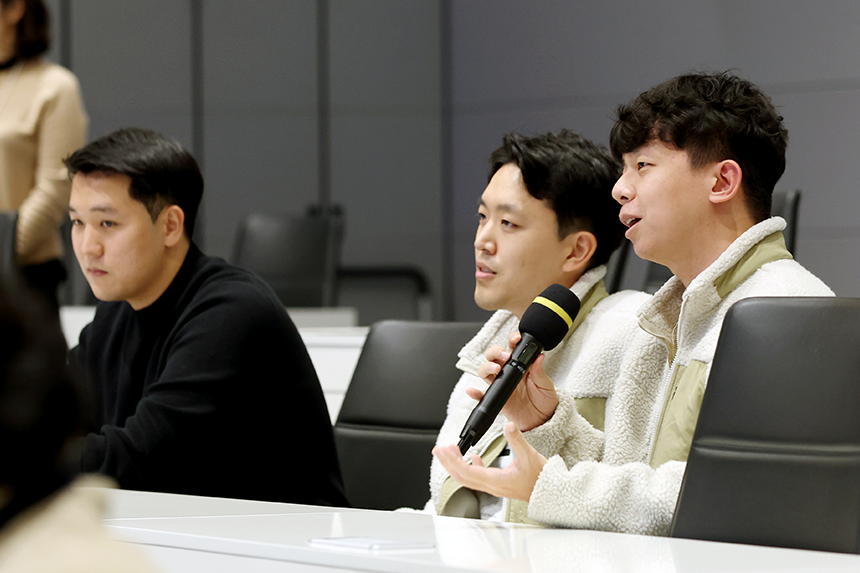
Photo 10. Mentors from LG AI Research, are presenting
To close the course, the mentors who worked together on the projects reflected on their experiences. Mentor Seonghwan Kim from EXAONE Lab said, “I'm happy that our hard work paid off. The LG AI Expert Course was a meaningful experience for me, as I got to see project models being applied and improved in the field.”
Mentor Yeonsik Jo of Vision Lab remarked, “Even though I participated as a mentor, I learned so much about challenges and limitations in the field that I wouldn't otherwise experience as a researcher, and also received many new things to consider. I believe it was a good experience for both mentors and mentees.”
“At first I was worried because the idea didn't work out as planned, but every week my mentee worked out the kinks and solved the problems piece by piece, so we were able to complete our project successfully,” Mentor Jinhyung Kim of Vision Lab said. He went on to thank his mentee, stating, “I was impressed by his willingness and effort to solve problems in the field and it was an honor to work with him.”
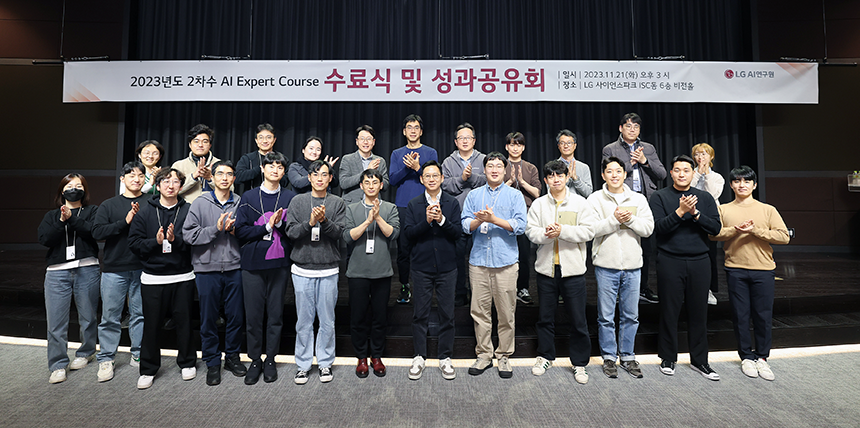
Photo 11. Group photo of 2023 2nd LG AI Expert Course
The expanding application of AI across various industries is rapidly transforming the way we work. It is fast becoming an essential skill that everyone should acquire, whether they work in related fields or not. LG AI Research will continue to explore ways to integrate AI seamlessly into existing practices across diverse fields and will make an effort to enhance the AI proficiencies of LG Group members through diverse educational programs.