“Accountability Report on AI Ethics” Released, Highlighting a Year of Progress
|
Contents
|
LG AI Research has published the “Accountability Report on AI Ethics,” which documents the implementation of the “LG AI Ethical Principles.” The LG AI Ethical Principles are comprised of five core values: ①Humanity ②Fairness ③Safety ④Accountability ⑤Transparency, which serve as a standard for proper behavior and value judgment for all members of LG who develop and utilize AI. The Accountability Report on AI Ethics, released in January 2024, contains LG AI Research’s realistic concerns and sincere efforts to implement AI ethical principles over the past year.
‘Voluntary effort’ in the report’s title
What stands out about the Accountability Report on AI Ethics is the word “accountability,” which can be found in the title of the report. We are committed to fulfilling our responsibilities as an AI company by responsibly practicing AI ethics and transparently disclosing our practices. In particular, the activities included in the Accountability Report on AI Ethics are significant in that they are not involuntary activities that are regulated by laws, systems, or other regulations, but are rather the result of LG AI Research’s voluntary actions.
First report to explore global AI ethical principles and norms
The Accountability Report on AI Ethics is the first to analyze global AI ethical principles and norms, including Korean ones, and summarize the status of ethics implementation in line with global trends. LG AI Research has been practicing AI ethics in line with the “Recommendation on the Ethics of Artificial Intelligence (2021),” the first international standard unanimously adopted by UNESCO member states, the “National Guidelines for AI Ethics (2020)” announced by the Korean government, and the “Digital Bill of Rights (2023).” In the Accountability Report on AI Ethics, LG AI Research’s AI ethics practices are compared to UNESCO’s AI ethics recommendations, government AI ethics standards, and the Digital Bill of Rights, including a content analysis of each. For example, in the case of “AI Ethical Impact Assessment,” an important part of the UNESCO Recommendation on the Ethics of Artificial Intelligence, you can see LG AI Research’s actions on pages 13 to 14 of the Accountability Report on AI Ethics.
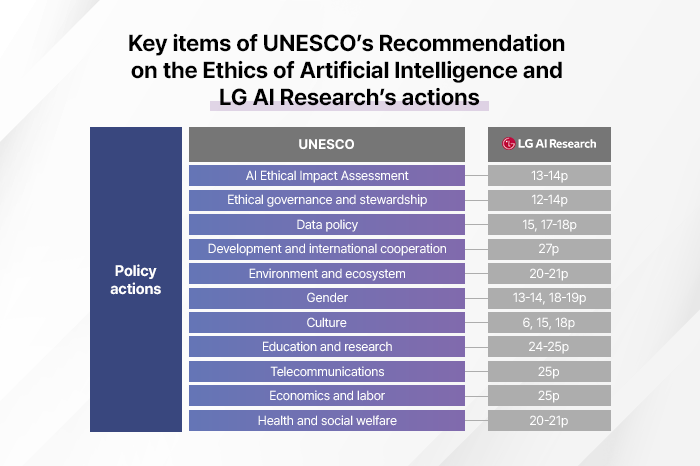
Image 1. Key items of UNESCO’s Recommendation on the Ethics of Artificial Intelligence and LG AI Research’s actions
AI ethical practice keywords: Governance, Research, Engagement
LG AI Research has been pursuing three strategies: establishing and operating governance, research to address AI ethics issues and engaging in activities to enhance awareness of AI ethics. The Accountability Report on AI Ethics details the actions LG AI Research has taken for each keyword.
Keyword 1: Establishing and operating governance
LG AI Research is committed to establishing and operating governance to secure the driving force of AI ethical practices. In particular, LG AI Research has established an “AI Risk Management Process,” a safeguard to proactively identify and resolve potential ethical issues that may arise in the entire process of AI R&D and utilization. The AI Risk Management Process is a three-step process, with step one bringing together a variety of experts to review the potential for ethical issues for each AI task. In step two, the identified ethics issues are evaluated in terms of “potential risk” and “difficulty to resolve,” and then prioritized for resolution. The final step three is a last check to ensure that ethical issues have been addressed, documented, and transparently managed.
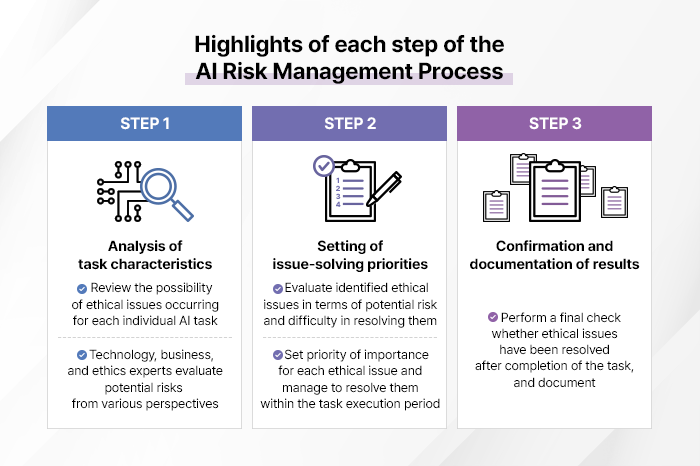
Image 2. Highlights of each step of the AI Risk Management Process
LG AI Research has been operating an AI Risk Management Process by selecting key tasks, and in the Accountability Report on AI Ethics, customer consultation efficiency and AI technology challenges were introduced as prominent process application cases.
In addition to the AI risk management process, LG AI Research has established and operates a number of organizations and procedures for the implementation of AI ethics, and collaborates with various partners to ensure data governance.
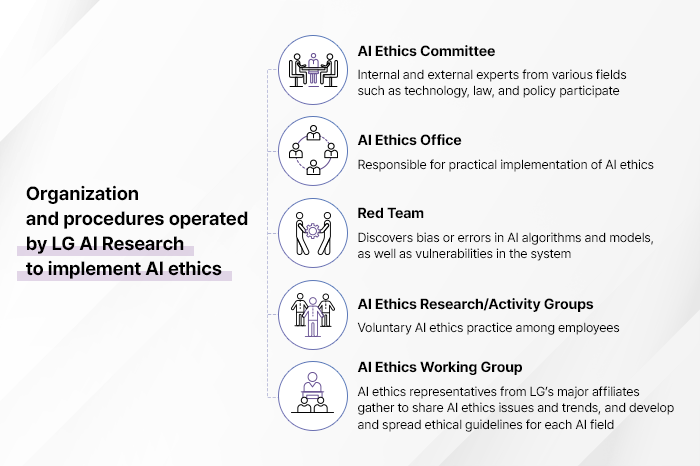
Image 3. Organization and procedures operated by LG AI Research to implement AI ethics
Keyword 2: Research to solve AI ethics issues
LG AI Research recognizes that AI technology is not yet perfect, and continues to conduct technical research to solve problems caused by the limitations of AI technology. LG AI Research’s research focuses on improving the reliability of EXAONE, a large-scale AI, and three platforms.
In particular, the Accountability Report on AI Ethics revealed the results of our research on EXAONE Universe, a conversational AI platform based on expertise. To reduce the issues with hallucinations, which make untrue statements plausible, LG AI Research developed QASA (Advanced Question Answering on Scientific Articles), an AI technology that provides evidence-based answers, and presented the results at ICML, the world’s largest AI conference, in 2023.
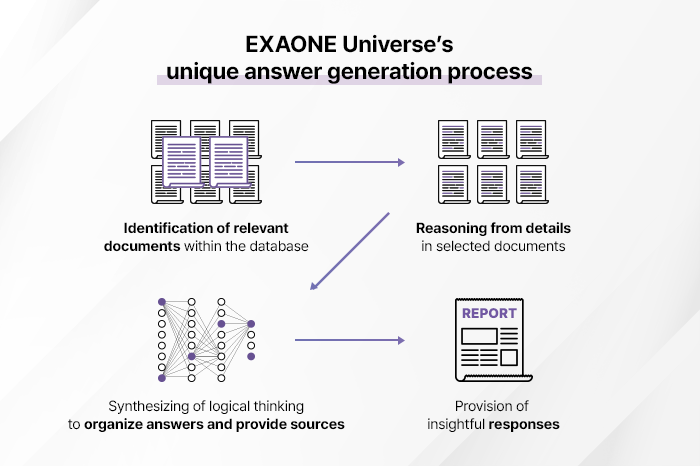
Image 4. EXAONE Universe’s unique answer generation process
The Accountability Report on AI Ethics also included LG AI Research’s work on EXAONE Atelier, a multimodal model, and EXAONE Discovery, a scientific knowledge discovery and prediction model. We are utilizing copyright-free data to train AI models, developing metrics for social bias to mitigate model bias, and contributing to the sustainability of humanity through research on applying AI technology to address challenges in health, energy, and the environment.
Keyword 3: Engaging members in AI ethics practice
One of the most important things in voluntarily practicing AI ethics is the engagement of those involved. LG AI Research periodically conducts an AI ethics awareness survey to see the current status of employees’ AI ethics awareness and practices, as well as to finds improvements in AI ethics practices. AI ethics seminars are also held to increase employees’ interest and participation in AI ethics.
In particular, the Accountability Report on AI Ethics introduced the results of LG AI Research’s “AI ethics awareness survey” conducted in 2023. When asked, “Why should I adhere to AI ethics?”, the top answer was “To fulfill social responsibilities,” followed by “To prevent potential losses in advance.” This shows that the members of LG AI Research recognize their responsibility in AI research.
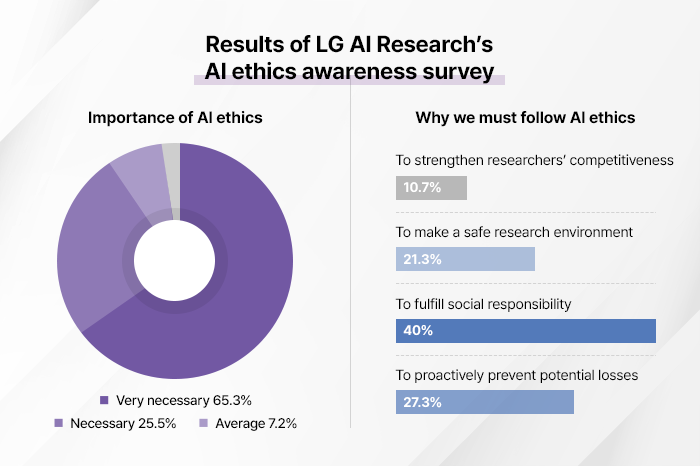
Image 5. Results of LG AI Research’s AI ethics awareness survey
Outside of this, LG AI Research also contributes to reducing AI education inequality by conducting AI literacy education activities through the LG AI Academy, an AI professional training program for employees, LG Aimers, an AI professional training program for young people, and LG Discovery Lab, an AI education institution for teenagers.
The only Korean company at the ‘UNESCO Global Forum on the Ethics of Artificial Intelligence’
LG AI Research’s efforts to practice AI ethics have been recognized globally. LG AI Research was the only Korean company invited to the UNESCO Global Forum on the Ethics of Artificial Intelligence, which was held in Slovenia from February 5 to 6. At the Forum, LG AI Research presented the status of AI ethics practices, including the Accountability Report on AI Ethics, and to hold discussions with representatives from global big tech, UNESCO member states, and international organizations for cooperation in the field of AI ethics and governance.
Starting in 2024, LG AI Research plans to publish an annual Accountability Report on AI Ethics and transparently disclose its performance in implementing AI ethics under the 3 action keywords of governance, research, and engagement. Stay tuned for more stories about LG AI Research’s commitment to AI ethics!