 Soyoung An
2024.03.28
Soyoung An
2024.03.28
 Myoungshin Kim
2024.03.28
Myoungshin Kim
2024.03.28
Why AI Ethicists Constantly Challenge
There are those who are working to expand the benefits and reduce the risks of AI technology in our lives. These are LG AI Research’s AI ethicists, Soyoung An and Myoungshin Kim.
These two recently participated in writing the Accountability Report on AI Ethics, which summarizes LG AI Research’s AI ethics research achievements over the past year, and were invited to the UNESCO Global AI Ethics Forum as the only Korean company to demonstrate their AI ethics leadership on the world stage. Let’s meet these two, who are constantly pushing to make beneficial AI technology, and listen to their stories.
AI ethics refers to the principles and guidelines that ensure AI is developed and used responsibly and fairly
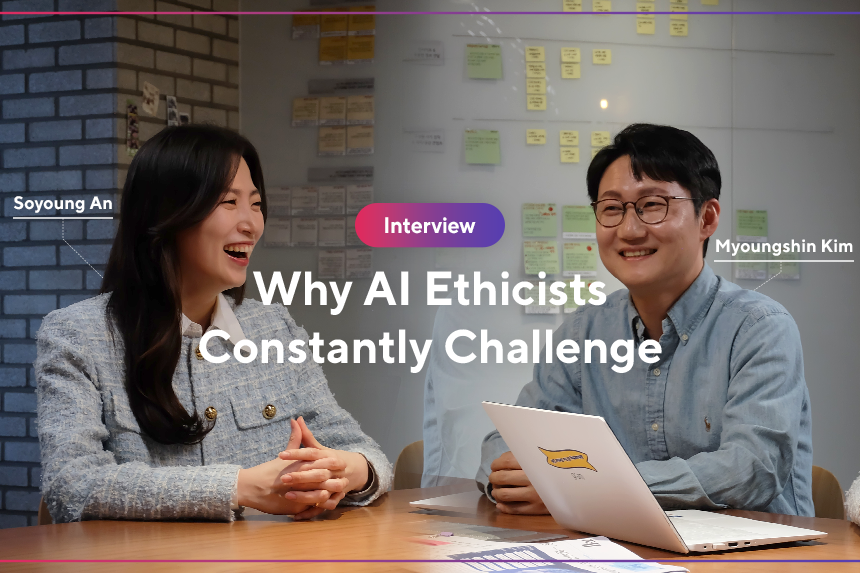
Image 1. AI ethicists Soyoung An and Myoungshin Kim
Q. The phrase “AI ethics” is easy in some ways, and abstract in others.
Myoungshin Kim : I think that the term “AI ethics” is still a bit foreign to most people. However, as concerns about the potential side effects of rapidly evolving AI technologies increase, I believe there is a growing interest in AI ethics. Recently, I met a friend and told him that I work on AI ethics. He responded, “Oh, so your job is to make sure the Terminator or something won’t appear.” While that’s not exactly accurate, I realized that it’s hard to describe AI ethics in one word easily.
Q. It’s a simple but clear analogy. If so, what competencies and values do you think are essential for an AI ethicists?
Soyoung An : The ability to ask “good questions” and look at AI research and development from multiple perspectives is critical. It’s unlikely that anyone would intentionally create bad AI. However, because AI is a rapidly evolving technology and a completely new field, unexpected issues sometimes arise during the R&D process. Therefore, the role of an AI ethics expert is to ask the question, “What issues will arise from the technology?” to identify anticipated issues and develop solutions to respond to them.
Myoungshin Kim : I think AI ethics is an interdisciplinary art. AI ethics is an overall concept that refers to ethics applied to all processes from planning AI services to collecting, refining, and labeling training data, developing models through algorithms, and operating and managing services. Not only that, but you also need to consider the impact of AI services on various stakeholders. Given these characteristics, I believe that AI ethics experts should be able to see both the forest and the trees. I think AI ethics experts also need empathy to be able to look at and evaluate AI systems from the perspective of various stakeholders, including users.
Going forward, the hot topics will all be about how AI can benefit the most people
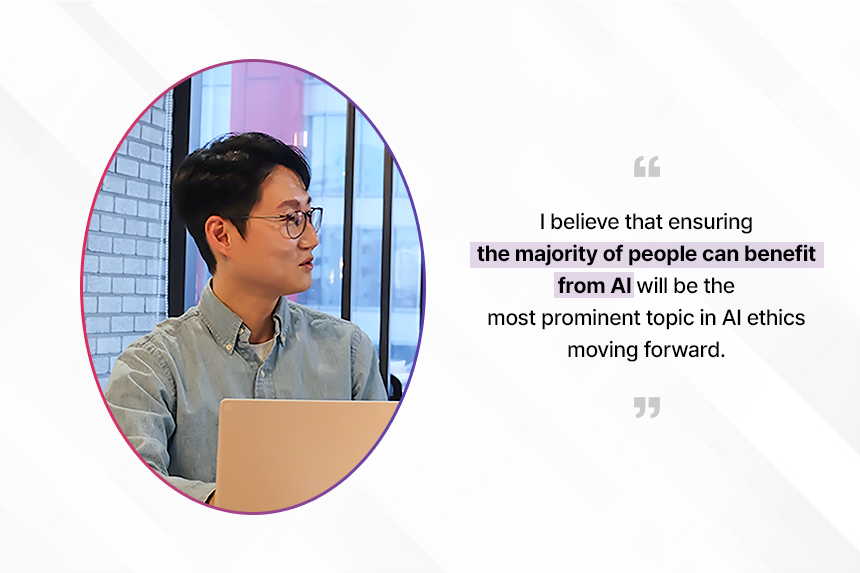
Image 2. Myoungshin Kim on hot topics in AI ethics
Q. What are the most actively discussed topics in AI ethics these days?
Myoungshin Kim : A noteworthy hot topic in the field of AI ethics is safety. With concerns that AI could advance beyond human controllability , the EU recently adopted the EU AI Act, which regulates high-risk AI and more, and the U.S., UK, and Japan has established AI safety institutes dedicated to managing AI risks. Korea is also preparing to establish a national-level AI safety lab. We can see that “risk management” and “safe use” of AI are emerging as new keywords.
Soyoung An : While it’s important to prepare for the high-risk AI of the future, LG AI Research is also looking to solve the current problems. A typical problem of today is that AI generated the contents which reflect the social values. For example, a global AI company’s image-generating AI service recently came under fire. When asked to draw key figures in American history, the service sparked controversy by creating images of people of color, regardless to the facts. This is the opposite of what we’ve seen in the past when AI created images of professions like lawyers and CEOs, which were controversial because they rarely featured people of color. As AI easily learns social biases from training data, it’s important to look at it carefully from multiple angles.
Myoungshin Kim : The lesson of the aforementioned case is that in addition to universal values, we need to consider the uniqueness of different countries and societies. For the past few years, the hot topic in AI ethics has been fairness. AI discriminating against people or creating biased responses based on race, color, gender, age, ethnicity, and where it resides has been an ongoing issue both in Korea and around the world, and there have been various efforts to overcome these issues. However, by simply focusing on the need to eliminate discrimination and bias based on universal human values, we may overlook the historical and cultural context of each country. That’s why something like the case above happened. We’re now at the stage of implementing fairer and more reliable AI that takes into account not only universal human values but also the historical and cultural specificities of each country.
Soyoung An : The difficulty with AI ethics is that it’s not a one-sided issue. To give you one more example, there was a lawsuit filed against the CEO of a global AI company. The reasoning was that the AI company wasn’t being transparent about its current AI models and was making profits, contrary to its initial founding purpose of “developing AI for humanity.”
There are two different sides to this issue as well. If AI technology is developed and monopolized by a few companies behind closed doors, the technological gap between companies can widen, leading to greater inequality and polarization. On the flip side, however, if a company makes all of its AI technology publicly available, it could make it easier for the average user to use AI for malicious purposes. This is where we need to look at the causes of conflict in the real world and carefully discuss and think about how AI ethics, AI regulations, and norms should be developed.
Myoungshin Kim : What will be the next big AI ethics topics? I think it’ll be inclusivity. At this moment in time, 2.6 billion people, or more than 30% of the world’s population, don’t even have access to the Internet, and there are still many people in Korea who have never used AI services. In the future, I think the inclusivity question of “What can we do to ensure that no one is left behind and can all benefit from AI technology?” will be at the center of AI ethics.
Q. As this conversation goes on, I noticed you two have great chemistry.
Soyoung An : As we have different areas of expertise, I think we complemented each other and built chemistry this way. In particular, we’ve had a lot of AI ethics collaborations with global stakeholders recently, and Myoungshin’s outreach skills have been invaluable to me for these. When there were differences in positions between countries, Myoungshin was incredible at finding common ground from a diplomatic point of view and developing a flow of dialogue that facilitated integration. It's thanks to Myoungshin that LG AI Research was able to participate in UNESCO's Global Forum on the Ethics of AI and engage in collaborations with other global companies.
Myoungshin Kim : I’m learning a lot about AI technology thanks to Soyoung. I’ve built my career working on AI ethics policies and norms, both domestically and internationally, so comparatively, I don’t have a deep knowledge of AI technology. Sometimes I’ll ask a question to a developer and be stumped by a specialized answer that ranges beyond my understanding. Soyoung is very good at explaining things at my level and in terms of AI ethics. I think we can all agree that it’s super helpful to talk to someone like Soyoung who can explain things properly.
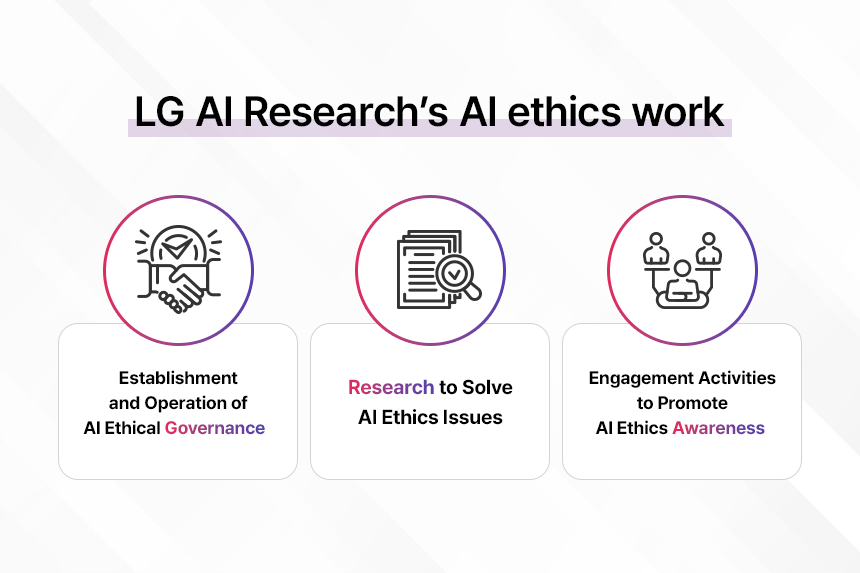
Image 3. LG AI Research’s 3 AI Ethics Strategies
Q. What makes LG AI Research’s AI ethics work different?
Myoungshin Kim : I want to talk about two value aspects. The first is the holistic approach. Many AI companies tend to focus on research to improve ethical issues. However, LG AI Research is not only conducting research, but also systematically practicing AI ethics with a three-pillar strategy of governance, research, and engagement. We have an organization and procedures in place to manage and oversee ethical issues throughout the AI lifecycle, and we conduct in-depth technical research to resolve AI ethics issues, as well as various training activities to raise awareness of AI ethics among our employees.
The second is that we’re transparent about the process and results of these AI ethics practices. In the 10 years since 2015, many companies, including global big tech companies, have published AI ethics principles, but very few have publicly reported their AI ethics performance to external stakeholders. LG AI Research was able to confidently publish the “LG AI Accountability Report on AI Ethics” in January this year because we are sincere about AI ethics, and we’ll continue to transparently disclose the results of our AI ethics implementation every year.
Soyoung An : The Accountability Report on AI Ethics is significant because it clearly summarizes the ethics-related activities that LG AI Research has been implementing in various areas over the past year. In particular, writing the report gave us an objective look at LG AI Research’s performance and helped us understand what activities were still lacking. Now that we have a better idea of what activities need to be supplemented in terms of AI ethics, I feel like we can make more meaningful progress this year. We also talked to a lot of our members during the process of writing the report, and I think it was a good way to communicate AI ethics activities to them. I believe that LG AI Research’s sincere desire to communicate with its employees and develop AI ethics is its competitive advantage and driving force.
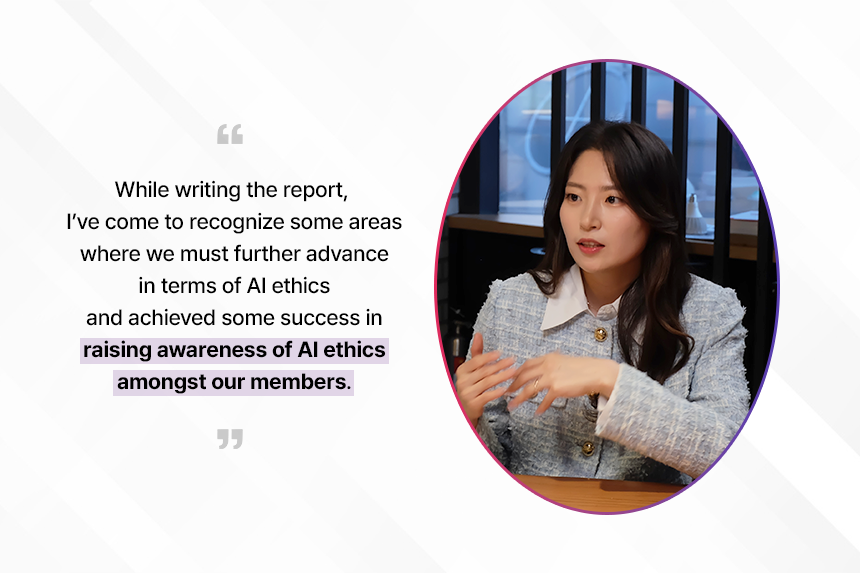
Image 4. Soyoung An talks about the results of writing the Accountability Report on AI Ethics
Q. What are LG AI Research’s AI ethics plans going forward?
Soyoung An : Internally, we plan to focus on deepening our AI ethics system and research with diverse input from internal and external stakeholders. We also want to ensure that the process of considering the ethical impact of AI in R&D and finding solutions together becomes an established culture.
Myoungshin Kim : Externally, the goal is to help LG AI Research become a global leader in AI ethics. Rather than simply monitoring and responding to trends in global AI norms discussions, LG AI Research aims to contribute to the ongoing process of establishing global AI norms by actively sharing our leading AI ethics practices with the international community. I think UNESCO's Global Forum on the Ethics of AI, which we attended in February, was the first step toward advancing on the global stage. We’re looking forward to working with UNESCO in the future.
For example, we’ll be launching an “AI Ethics Training MOOC for Professionals” project this year. AI ethics training programs for AI professionals are still relatively scarce compared to those for youth and the general public. In collaboration with UNESCO and top AI ethics experts from all around the world, we plan to develop AI ethics training curricula and content for developers, researchers, and other professionals based on LG AI Research’s AI ethics practices and more. Through this, we hope to establish ourselves as the leading AI company in Korea, and eventually Asia and the world.
The challenges faced by AI ethicists at LG AI Research will persist. If you want to learn more about our story of AI ethics, click the links below.
▶ Explore the roles of AI ethicists Soyoung An and Myoungshin Kim