[AI Accountability Report on AI Ethics EP.2] “Responsible AI - For the Proper Development of the AI Ecosystem”
LG AI Research has released the "AI Accountability Report on AI Ethics" which discloses its AI ethics practices and achievements. In particular, this report highlights LG's efforts to realize "Inclusive AI" and "Responsible AI." While Episode 1 focused on Inclusive AI, this Episode 2 article will cover LG's practical initiatives for achieving Responsible AI. LG AI Research has actively implemented various AI ethics initiatives across three key aspects: governance, research, and engagement. Notably, a significant achievement this year has been the establishment of the AI Ethics Impact Assessment process and a Data Compliance Framework to reinforce AI ethics practices.
▶ View the LG AI Accountability Report on AI Ethics in detail
1. Governance: Organizations and Processes for Implementing AI Ethics
We have established organizations and procedures to monitor and manage decision-making in the lifecycle of AI system, ensuring that it adheres to AI ethics principles. LG AI Research actively implements AI ethics by forming AI ethics organizations at both the internal and group levels, operating AI Ethical Impact Assessments for all AI projects, and developing a Data Compliance Framework to assess data-related risks. These initiatives reflect our commitment to responsible AI practices.
AI Ethical Impact Assessment
In order to systematically implement AI, internal organizations and procedures must be in place. For governance, the key lies in the “AI Ethical Impact Assessment,” which we introduced in 2024. After a two-year pilot period in 2022 and 2023, we implemented the AI Ethical Impact Assessment to all of LG AI Research's projects in 2024, which allows us to consider and apply AI ethics from the planning stage to the completion of an AI project. This allows us to pre-check the ethical impact of every project and to have a process in place to complete the project in a complementary manner.

Image 1. AI Ethical Impact Assessment Process
In 2024, LG AI Research applied AI Ethical Impact Assessments to more than 70 AI projects, resulting in a total of 229 potential risks identified and supplemented. Data-related content accounted for 46% of the potential risks identified, with “legal concerns regarding copyright” and “privacy concerns regarding sensitive data” being the main issues discussed.
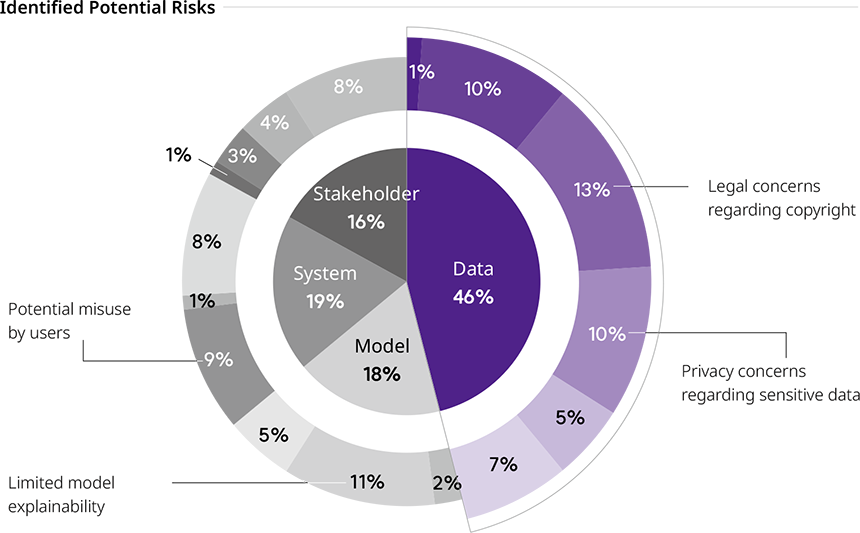
Image 2. Potential Risk Factors Discovered by AI Ethical Impact Assessments in 2024
In an effort to address the identified risks, we implemented follow-up methods to mitigate them, including performing individual dataset checks, establishing feedback and monitoring systems, and establishing/implementing user rights management. Unfortunately, not all issues have been resolved. Some are still ongoing, depending on the risk and difficulty of resolving them. We've documented all of this for greater accountability and transparency, which is shown in our open and honest reports.
Data Compliance
As third parties increasingly utilize data for learning, the importance of managing the legal risks of data continues to grow. One such example is the data compliance framework we developed here at LG AI Research. To overcome the limitations of reviewing large datasets with limited resources, the data compliance framework uses an AI agent to assess risks by considering copyright laws, case laws, and AI regulations in various jurisdictions, including the US, UK, EU, Korea, and China. The data used for AI development is analyzed from a total of 18 legal perspectives to review potential risks and derive an assessment result from a total of 7 risk levels.

Image 3. LG AI Research Data Compliance Framework
2. Research: Research to Address AI Ethics Issues
LG AI Research is conducting various studies to overcome the limitations of AI technology and develop trustworthy AI. This report provides a detailed overview of the research process and achievements in creating responsible AI.
Deepfake Detection
LG AI Research is also working to ensure the safe utilization of AI content. In particular, we have developed a technology that can tell whether an image is AI-generated or not without training on a separate dataset, achieving the highest level of State of the Art (SOTA) compared to other models. This research takes advantage of the fact that the Latent Diffusion Model, which is the foundation of the AI-generated image revolution, is highly accurate in the main outline of the image, but distortions occur in fine details such as texture. Existing deepfake detection models require a separate dataset to be collected and trained to distinguish between AI-generated images. However, our method requires no additional training data, significantly reducing the cost of data collection and model training. It is also widely applicable because it is not dependent on a specific dataset, especially since most image-generating AI models do not disclose the data used for training.
▶ Research paper : Sungik Choi, et al. “HFI: A unified framework for training-free detection and implicit watermarking of latent diffusion model generated images”
3. Engagement: Activities to Enhance AI Ethics Awareness
LG AI Research systematically promotes various education and awareness activities to help researchers develop ethically responsible and trustworthy AI. We conduct AI ethics awareness surveys to investigate the level of AI ethics awareness among employees and promote change. We further host AI ethics seminars to bring employees together to share insights on AI ethics and provide AI ethics training for new employees.
AI Ethics Awareness Survey
We conducted a 2024 AI Ethics Awareness Survey that showed an overall positive change compared to 2023. The need for AI ethics remained high at 4.6 in both years, showcasing how seriously LG AI research upholds AI ethics as part of our core values. The most notable changes were in the area of practice, with individual ratings of the level of practice of AI ethics principles rising from 3.8 to 4.0, and LG AI Research's level of practice of AI ethics principles rising from 3.8 to 4.2. This suggests that activities such as the introduction of AI Ethical Impact Assessments, holding AI ethics seminars, and publishing the Accountability Report on AI Ethics are having a tangible effect.
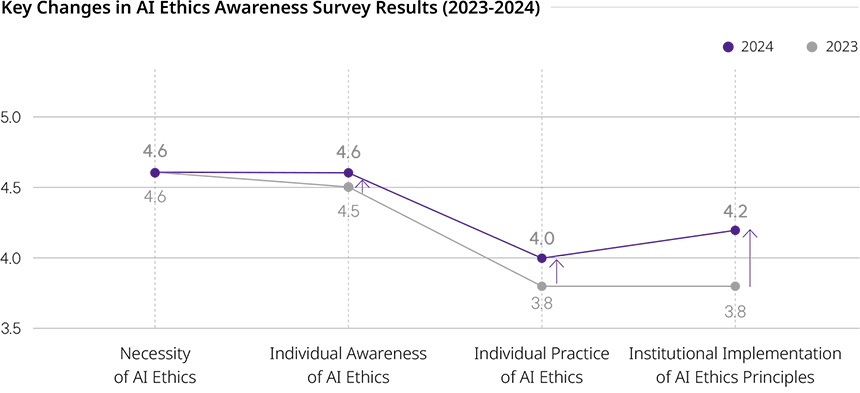
Image 4. AI Ethics Awareness Survey (Key Changes in 2023 vs 2024)
There is still room for improvement. Individual practice (4.0 points) and LG AI Research's level of practice of AI ethics principles (4.2 points) are still relatively low compared to awareness (4.6 points). We plan to identify differences in awareness of the need for AI ethics among employees and follow up with activities to close the gap.
We believe that by sharing our experiences and lessons learned, we can find a better path forward. We hope that the AI ethics initiatives practiced and shared by LG AI Research will contribute to building a better AI ecosystem. We will continue to reflect, innovate, and take on new challenges in this journey.