Understanding Creative Connections Through Relational Artifacts
How do we build creative connections in an era where artificial intelligence increasingly mediates our conversations? This project is a provocation with an experimental design involving human participants and AI, where language models actively seek to foster creative intimacy. Through structured interactions, we examine how AI responses shape human expression, redefine agency, and blur the lines between co-creation and computation.
This study isn’t just about technology; it’s about what it means to be seen, heard, and understood, even when the responding voice is an Artificial Intelligence system in the form of a human proxy.
The work was driven by the creative collaboration of the students from Parsons School of Design, and LG AI Research utilizing the LG AI Research’s AI agent 'ChatEXAONE' to uncover co-creation in the evolving human-machine relationship.
Can AI truly be a creative collaborator?
To explore the question of how human creativity can be expanded through collaboration with AI, 10 students from Parsons School of Design participated in a unique form of conversational experiment. Based on the psychological study "36 Questions to Generate Intimacy," this experiment paired human participants with an AI agent model to explore the relationship between humans and AI. However, instead of conversing directly with AI, the generated responses were printed and read aloud by a human proxy, setting AI an invisible partner in the dialogue. From curiosity and disappointment to unexpected emotional resonance, this film visually demonstrates how we navigate meaning, presence, and connection in an era where humans increasingly coexist with the new digital age.
10 Questions:
-
Describe your perfect day.
-
What excites you these days?
-
What is the earliest memory you have of creating something meaningful to you?
-
What have you always wanted to do but haven't yet? Why not?
-
Who would you choose if you could collaborate with anyone in the world, dead or alive? And why?
-
How would you describe your creative process?
-
What’s something you learned recently that shifted your perspective?
-
When was the last time you felt vulnerable because of your work? And why?
-
Complete this sentence: “I wish I had a creative partner with whom I could share…"
-
What is something you already like about me?
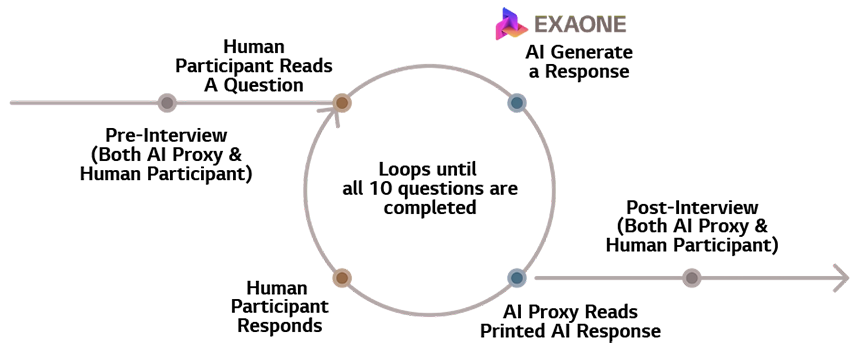
Image 1. 'Creative Connection in the Age of AI’ Experiment Process
AI as a Presence, Not Just a Tool
Analyzing pre- and post-experiment interviews, participant reflections, and the flow of conversation, the study identified recurring patterns in human interaction, negotiation, and responses towards AI.
Although AI does not exist as a physical entity, its responses were presented in real-time through a human proxy, positioning it as an unseen conversational partner. Even though participants knew that AI was simply generating text, they unconsciously attempted to discern intent from AI's responses, as if they were conversing with a real person.
|
“I caught myself wanting to ask AI a question back, as if it had something real to share.” “It wasn’t just text. It had a presence. The words felt like they carried weight in the room.” |
Negotiating Agency: Reading AI vs. Being AI
The AI proxy participants had trouble separating themselves from the role, often unintentionally layering their personal emotions and expressions onto the ChatEXAONE's words. It was hard for them to embody a truly neutral, non-human presence.
|
“I wanted to respond as myself. I felt like I was performing something unnatural.” “I kept thinking: Should I be neutral? Should I act like AI? What’s my role in this?” |
This highlights the participants' confusion between acting as a voice for AI and their own inherent selves, demonstrating that human agency is not fixed but rather a characteristic that changes depending on the situation.
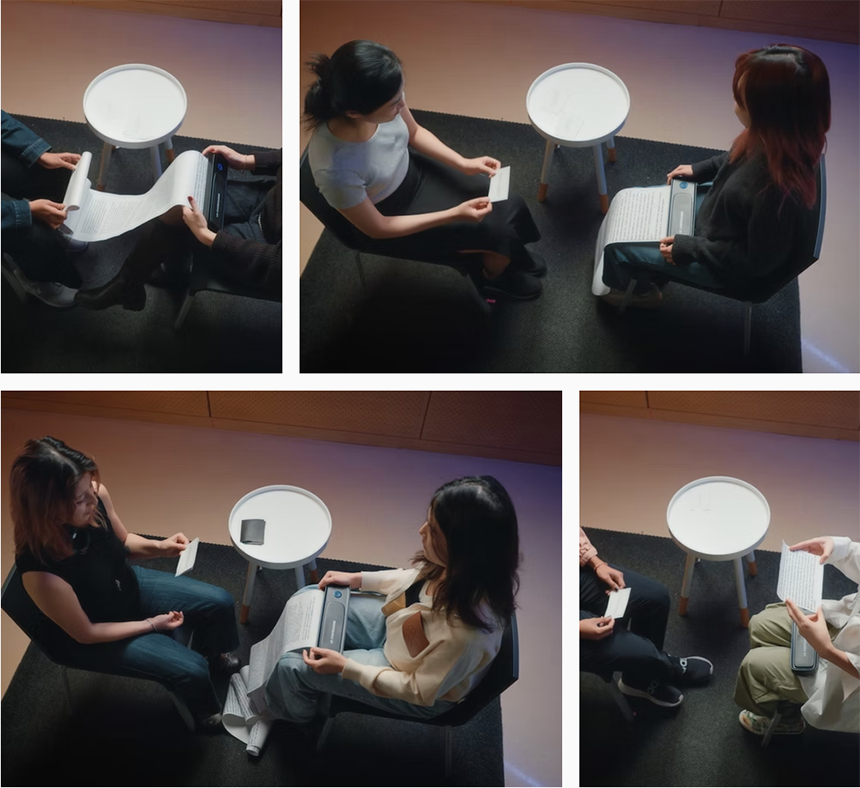
Image 2. The project is a provocation with an experimental design involving human participants and AI,
where language models actively seek to foster creative intimacy
AI’s Responses: Predictable, Yet Uncanny
Many participants attempted to predict the AI's answers, resulting in moments where their expectations either aligned or diverged from the generative AI's actual replies. Some participants found the AI's structured responses insightful, while others felt that the AI's answers lacked natural flow or deep emotional exchange.
|
“Sometimes, AI said exactly what I was thinking. It was eerie!” “I wanted AI to ask me a question at the right moment, but it never did. It felt… procedural” |
These reactions demonstrate that human conversation depends on factors beyond mere words which relies heavily on elements like timing, conversational flow, and emotional exchange, not just the words themselves.
The Illusion of Connection & The Limits of AI Intimacy
While some participants felt a sense of connection with the AI during the conversation, others recognized a lack of depth and a tendency for the interaction to follow predictable patterns. Even when the AI provided thoughtful responses, the absence of genuine emotional engagement, characteristic of human-to-human conversations, was perceived as a clear limitation.
|
“AI listened. It gave responses. But I never felt truly ‘seen.’” “It reassures you that it understands, but does it really?” |
This brings up crucial considerations about the nature of emotional exchange with AI, and whether it can move beyond mimicking to embody the essence of intimacy.
AI as a Catalyst for Reflection and Connection
This research began as an exploration of creative collaboration, relationships, and artistic intimacy between humans and AI. However, it evolved into a deeper understanding of AI, not merely as a tool, but as a medium for self-reflection and meaning-making. Rather than seamlessly integrating into human dialogue, AI's structured and predictable responses prompted participants to reconsider their communication styles, expectations, and sense of agency.
Additionally, the study presents a new perspective on AI as a digital medium existing in the boundary between human-designed structures and emergent interactions. It also emphasizes that our relationship with AI is not solely about what it can do, but how we interpret, adapt, and communicate with it, ourselves, and others.
As AI continues to integrate into creative and social spaces, it will continuously reshape and redefine our existing notions of human agency, collaboration, and relationships in the digital age.
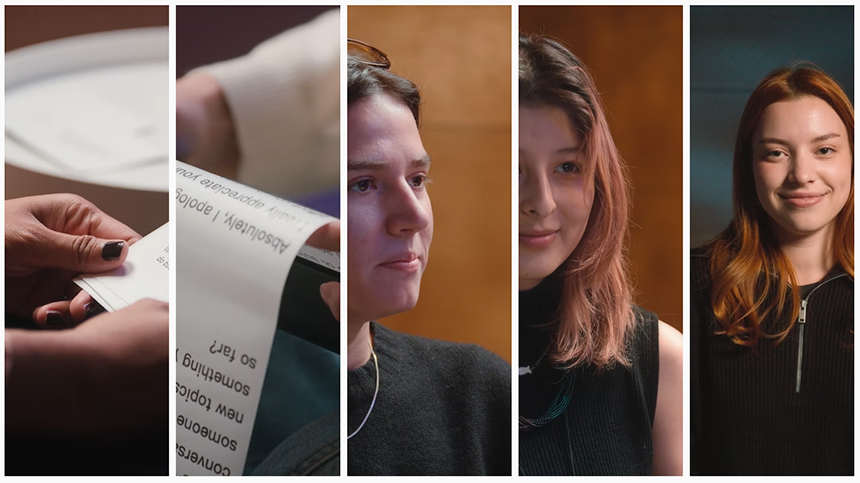
Image 3. A Cinematic Exploration of Artificial Intelligence and Human Connection
What Comes Next?
This research, a collaboration between LG AI Research and Parsons Design School, marks a starting point for discussing the future where AI plays an increasingly significant role in creative, intimate, and social interactions. As AI becomes more integrated into our lives, how we design, interpret, and regulate these interactions will play a crucial role in defining the ethical and artistic boundaries of human-machine relationships.
-
How can AI be integrated into co-creation without reducing human agency?
-
What does it mean for AI to be a partner in dialogue rather than an output generator?
-
How can future research push beyond simulation toward truly emergent interaction?
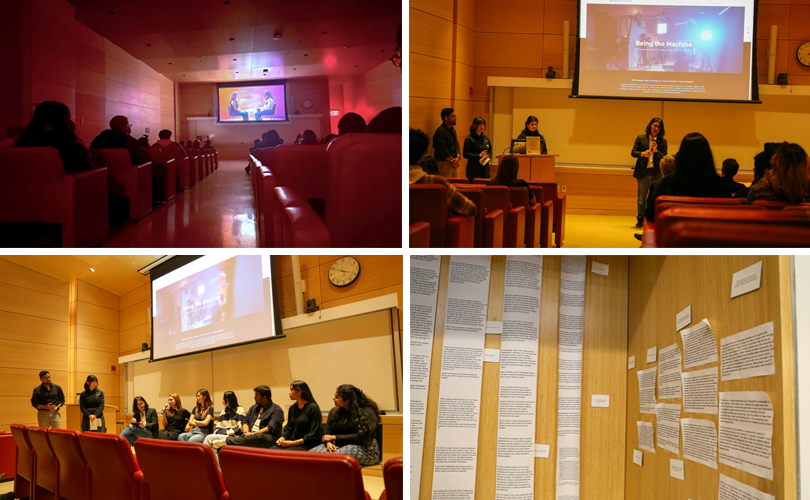
Image 4. Screening of ‘Creative Connection in the Age of AI’ research film at Parsons school of design
ⓒParsons school of design
These questions are not just academic explorations; they represent the beginning of a collective journey that requires our shared contemplation and development. We anticipate that artists, designers, researchers, and experts from various fields will engage in this crucial discussion, contributing their unique perspectives and insights to enrich the conversation.
▶ YouTube Official Trailer: Being the Machine