The winners of the LG Awards 2025 ━ How AI Became the Driving Force of Industrial Innovation
The LG Awards recognize the year’s product, technology, and service innovations that delivered real value to customers! This year's LG Awards, made even more meaningful by the fact that the winners are selected by our customers and employees, brought us some great news. LG AI Research’s “NCC Operations Optimization AI Scheduler Development Project” won the Customer Satisfaction Award at the 2025 LG Awards.
We met with the award winners and heard how they went about understanding their customers' language and solving problems on-site together. From a journey that began with the question, “Can we really do this?”to the moment of triumph — “We did it!”, we sat down with the project team to hear their firsthand stories behind the success.
How the AI Scheduler Redefined the Rules of Production Processes
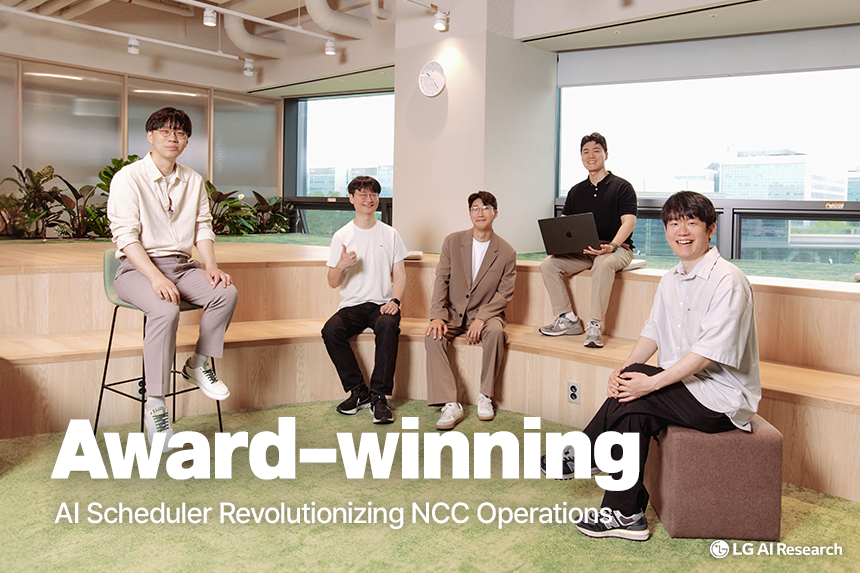
Image 1. Award-Winning AI Scheduler: Revolutionizing NCC Operations
(From left) Kanghoon Lee, Whiyoung Jung, Hwon Tak, Sunghoon Hong, Deunsol Yoon
The “NCC Operations Optimization AI Scheduler Development Project”, for which we won at the LG Awards, was a project to develop an AI-based scheduler that applies AI technology to plan NCC (Naphtha Cracking Center) production more efficiently and increase productivity and profitability at the same time. In simple terms, the task was to develop an AI that schedules the highly complex NCC production process to operate efficiently and productively.
NCC is the process of pyrolyzing naphtha to produce basic petrochemical raw materials such as ethylene and propylene. Ethylene and propylene are often referred to as the “rice of petrochemicals” and are used in a variety of plastics, synthetic fibers, and synthetic rubbers. NCC is the core of the petrochemical industry, and its operational efficiency is directly related to a company's competitiveness.
The project was initiated to improve the efficiency of LG Chem's NCC operations. At the time, LG Chem's Daesan NCC production plant was facing on-site challenges such as the complexity of production scheduling and difficulty in optimizing marginal profit. To address these challenges, LG Chem and LG AI Research began working together on the project in April 2022.
As a result, the AI Scheduler we created achieved a performance improvement of more than 3% over the existing human level and increased marginal profit by more than KRW 10 billion per year at the Daesan NCC plant alone. At the beginning of the project, we thought that a 0.1% performance improvement over the existing performance would be a significant achievement, but in the end, we achieved a performance improvement of more than 30x the target.
AI That Understands the Industrial Field — Now an Essential Tool in Practice
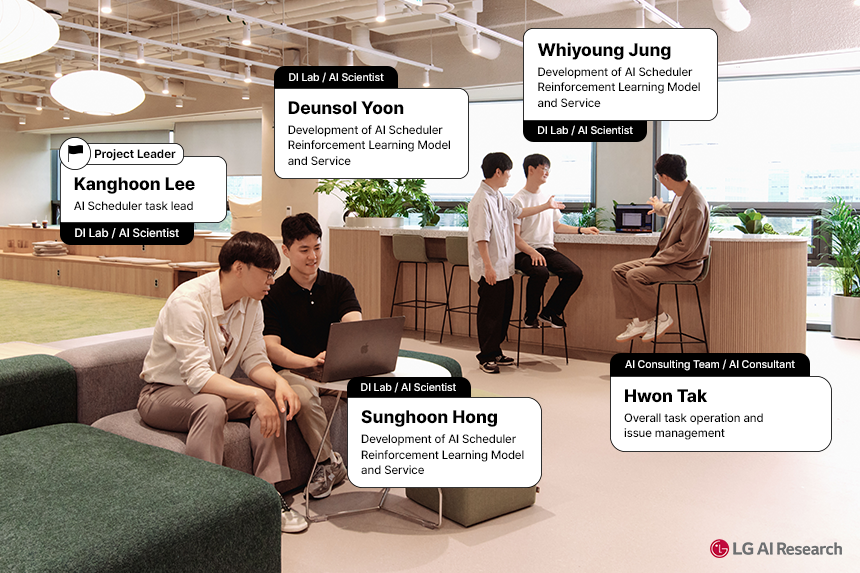
Image 2. Those who worked on the AI Scheduler development project
This project was a series of challenges, but there were two unforgettable crises among them. The first came in October 2022, about 6 months into the project, when we reported on the completion of the first year of the project. The first feedback we received from people on-site was that the AI-proposed schedule was “not usable for real-world operations”. It didn't fully reflect the realistic constraints of the industrial site. It was a moment when we realized the gap between an optimal schedule based on computer simulation and actual factory operation.
Immediately after receiving this feedback, we traveled down to the Daesan plant to meet with the plant manager and other on-site engineers to better understand the actual site. We learned that some of the on-site engineers traveled to Seoul every weekend, and so we had offline meetings and dinner with them every Friday. These “stories from the actual site” helped us understand the complexities of real-world operations, helping us evolve our AI Scheduler to be more and more site-friendly.
The new AI scheduling technology implemented through this effort received positive feedback from the people on-site, who stated, “This is something we can actually use.” In September 2023, the AI-generated schedules began to be reviewed at the weekly production planning meeting at the NCC plant in Daesan.
But then the second crisis came. In February 2024, we noticed that the AI Scheduler's utilization rate was hovering around 10%. It wasn’t enough for the technology to be merely usable — it had to become something essential on the ground. We got back together with the NCC staff on-site in Daesan to go through the actual workflow one by one, supplement the detailed constraints that had not been reflected, and improve the algorithm and service UI/UX together. As a result, after a major update in August 2024, we were able to increase the utilization rate to over 85%, and saw the AI Scheduler become a real operational tool. Even now, the NCC scheduler continues evolving to keep pace with changes in the industrial environment, and has steadily maintained a utilization rate of over 70%.
There was a particularly unforgettable moment: when the AI proposed a scheduling method that had never been attempted before. Typically, multiple decomposition units are operated in the same direction — for example, raising or lowering the temperature simultaneously. However, the AI generated a schedule where one unit increased the temperature while another decreased it. At first, the approach felt too unfamiliar and unconventional to implement right away. But after careful review on-site, it was determined that there were no technical or operational issues. As a result, it was decided that this schedule would serve as the standard in similar future situations.
It was a symbolic case that demonstrated AI’s potential to go beyond a supporting role — to actually define new industrial standards.
Amaze the customer with AI
Image 3. Amaze the Customer - AI, Delivering Unmatched Customer Value
This project exemplifies a true customer-centric innovation that puts into practice one of LG AI Research’s core values — Amaze the Customer from Our DNA. By deeply understanding the complexity of real-world operations and tailoring the technology accordingly, we ultimately established a new standard that surpasses human intuition and experience.
Every team member stayed focused on solving the customer’s challenges. It wasn’t just about developing AI technology — it was about creating a solution that truly addressed the problem at hand. For this project, LG AI Research's Data Intelligence Lab, AI Biz. Transformation Unit, and Product Unit worked closely together toward a single goal, while focusing on their respective roles. Everyone involved in the project was focused on solving customers’ real-world problems. From the beginning, we set our goal to realize world-class technology, and the passion to see it through to the end without giving up in the face of difficulties along the way led to the amazing results. The entire process of technology development, task planning and management, and productization was seamlessly connected and led together, and this organic collaborative structure created momentum throughout the project.
This made the results of this project truly remarkable. The Daesan NCC plant alone has demonstrated the value of our technology by recording a substantial increase in marginal profit of approximately KRW 10 billion per year, which is a significant achievement, and also achieved a productivity improvement of more than 30x the original target. This proved our belief that AI can learn from human intuition, but can produce better results through data-based scientific optimization.
Our reinforcement learning-based AI technology was also a key factor in driving customer satisfaction. LG AI Research possesses world-class AI technology based on reinforcement learning and an organic organizational collaboration system that connects it to solving real-world industrial problems. LG AI Research is led by the best reinforcement learning researchers in Korea and has solid technical capabilities ranging from theory to application to service development. In particular, the AI Scheduler developed in this project is one of the world's top technologies in the field of reinforcement learning, and has been presented at prestigious international conferences such as AAMAS 2024 and ICML 2025.
Reinforcement learning technology has been in the spotlight globally since AlphaGo, but real-world applications of this technology at industrial sites are still rare. However, we have made a very meaningful case of applying reinforcement learning to a real-world problem in the petrochemical process, which led to actual profit improvement, and we believe that this proves the technical and execution capabilities of LG AI Research.
AI Rooted in Industry — Advancing Real-World Problem Solving
We believe this project is a true example of customer-centered innovation, where we went beyond just developing technology, and created results by thinking and growing together with our customers. By deeply understanding the complexity of reality and aligning our technology to it, we ultimately created a new standard that surpasses human intuition and experience. With the petrochemical industry experiencing a general crisis, an important factor in us winning the Customer Satisfaction Award was that we were able to make a real breakthrough through AI technology.
Above all, we are particularly proud of the fact that our AI technology has successfully solved the NCC scheduling problem, a long-standing challenge in the traditional manufacturing industry of petrochemicals, and has been applied to and is operating stably on-site for more than a year.
Image 4. Transforming Industry and Elevating Customer Satisfaction — Powered by AI
As this project has demonstrated the potential of reinforcement learning-based AI technology to solve real-world industrial problems, we plan to continue our research in the future by expanding and expanding it further.
First, we will continue to improve the performance of the multi-agent reinforcement learning-based AI Scheduler applied at the Daesan NCC plant and evolve the algorithm to reflect different production conditions and constraints. At the same time, we are working on generalizing the technology so that it can be applied to other manufacturing sites with similar tasks.
In terms of core technology, we are conducting basic research on reinforcement learning, which effectively utilizes historical operational data to improve learning efficiency, and related achievements have been accepted by major international conferences such as ICML 2025 and recognized for their technical excellence. Based on this research, we will focus on bridging the gap between basic technology and industrial applications.
Ultimately, we aim to provide an integrated AI technology that can solve complex decision-making and scheduling problems in various LG Group affiliates, centered on reinforcement learning technology. Furthermore, we hope to help bring in an era where AI automates and optimizes process operation decisions that have been dependent on human experience across the manufacturing industry.