EXAONE Path 1.5 Unveiled at ASCO 2025 ━ Strong On-Site Response Highlights Its Transformative Potential
At ASCO 2025, LG AI Research unveiled EXAONE Path 1.5, the latest version of its AI model tailored for digital pathology. This release follows the debut of version 1.0 last year and marks another step forward in the development of AI-powered personalized medicine. EXAONE Path can predict genetic mutations and recommend optimal treatments and medications based solely on pathology images—without requiring conventional genetic testing. The new release further expands the possibilities of AI-driven precision healthcare.
AI Technology Designed to Save Lives — EXAONE Path
Although pathology images may be unfamiliar to the general public, they are essential in clinical settings. These high-resolution images—often as large as 20,000 x 20,000 pixels—contain unique visual characteristics and color ranges that differ from standard images. The image content is also highly specific, often limited to structures like cell nuclei and cytoplasm. Because of these factors, there has been growing demand for specialized AI models capable of efficiently processing and analyzing pathology data.
EXAONE Path was developed precisely to meet this need. By enabling AI to analyze and interpret whole-slide pathology images, EXAONE Path can predict genetic mutations without the time-consuming gene testing process. This breakthrough significantly reduces both the time and cost required for cancer diagnosis and treatment planning—cutting down a process that previously took up to two weeks. For patients with urgent conditions, this acceleration in decision-making can be life-saving.
The first version of the model, EXAONE Path 1.0, launched in 2024, was integrated into MONAI, NVIDIA’s open-source AI platform for healthcare. As the only Korean AI model registered on MONAI, EXAONE Path demonstrated its global competitiveness and technical credibility. Within just two weeks of its release, the model was downloaded over 10,000 times—highlighting strong interest from medical professionals and researchers worldwide.
With the release of version 1.5, LG AI Research continues to drive innovation at the intersection of AI and healthcare, aiming to deliver faster, smarter, and more accessible solutions for patients around the globe.

Image 1. EXAONE Path 1.0 model deployed on NVIDIA MONAI
Global Debut of EXAONE Path 1.5 at ASCO 2025
EXAONE Path 1.5 made its global debut at the 2025 Annual Meeting of the American Society of Clinical Oncology (ASCO), held from May 30 to June 3 in Chicago. ASCO is the world’s largest and most influential oncology conference, where clinicians and researchers from across the globe gather to share the latest advancements in cancer care.
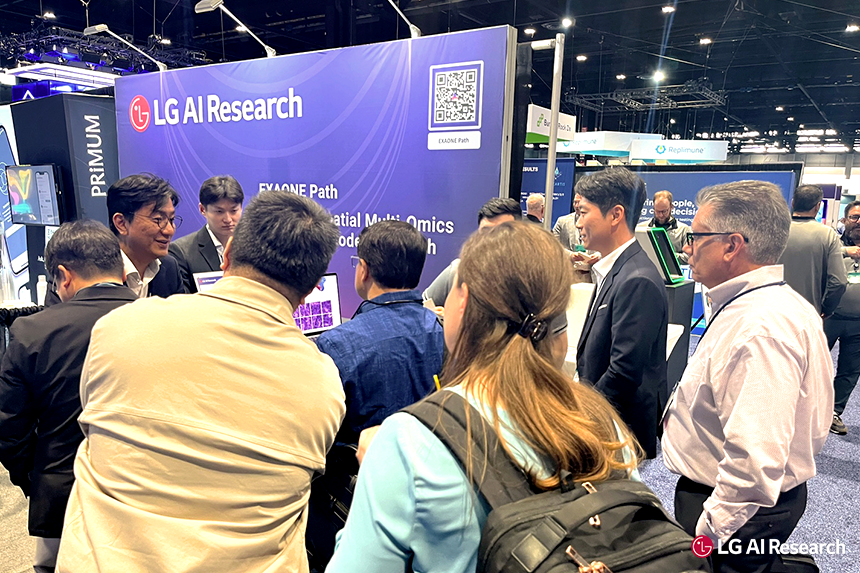
Image 2. LG AI Research Booth at ASCO 2025
At the LG AI Research booth, the enhanced capabilities of EXAONE Path 1.5 captured the attention of international researchers and healthcare professionals. Lively discussions followed on how this AI technology could revolutionize both the precision and speed of cancer diagnosis and treatment. Many attendees expressed excitement at the model’s potential to redefine clinical workflows and improve patient outcomes.
EXAONE Path 1.5: More Powerful Than Ever
With EXAONE Path 1.5, LG AI Research continues to push the boundaries of AI-driven oncology. By addressing key challenges in pathology image analysis and integrating cutting-edge deep learning techniques, the new model delivers faster, more accurate insights—bringing the promise of AI-powered personalized medicine closer to reality.
-
Enhanced Understanding of Cellular Morphology : The 1.5 model is pretrained on an expanded dataset of approximately 73,000 whole-slide images, up from the previous 35,000. Having analyzed over 500 million tile images, the 1.5 model demonstrates a high level of understanding of the fine morphology of cells and tissue structures.
-
Optimized for Whole-Slide Image Analysis : Each slide image consists of thousands of tile images, and how these tiles are integrated is key to improving model accuracy. The 1.5 model strengthens its attention-based architecture to effectively aggregate tile-level information at the slide level. As a result, it can interpret pathology images more precisely and identify critical regions with greater accuracy.
-
Beyond Images to Genetic Information : Through algorithm enhancements, the 1.5 model underwent further training with approximately 10,000 pairs of slide-RNA genetic information data. This enables the model not only to encapsulate information from the images themselves but also to incorporate genetic data. In particular, when specimens are unavailable (e.g., due to patient death) or urgent clues about genetic characteristics (such as mutations or overexpression) are needed, EXAONE Path can predict these factors, facilitating rapid treatment strategy planning and extensive use in retrospective studies on specific cohorts.
LG AI Research will not stop at the release of the EXAONE Path 1.5 model — our research will continue. We are committed to advancing AI-powered personalized medicine, driving innovation in the bio field, and ultimately contributing to saving patients’ lives. We look forward to your continued support on this journey.