LG AI Research and The Jackson Laboratory Unveil AI-Driven Breakthroughs in Disease Research
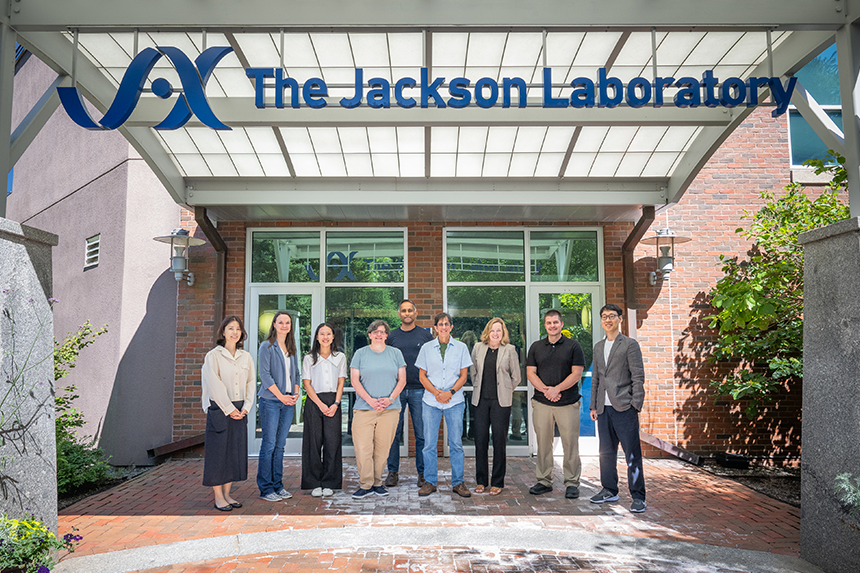
Image 1. Members from LG AI Research and The Jackson Laboratory participating in joint research
© [2025] The Jackson Laboratory.
LG AI Research and The Jackson Laboratory (JAX) are conducting joint research and development using AI to advance Alzheimer's disease studies. By combining JAX’s extensive Alzheimer's-related research with LG AI Research’s advanced AI technologies, the teams are training models on genetic characteristics and longitudinal lifecycle data. This collaborative effort aims to uncover the root causes of the disease and enhance treatment efficacy.
The achievements of this partnership are being recognized at major global conferences. A total of six joint research papers—two accepted at ICML 2025 and four at AAIC—demonstrate the impact of this collaboration. These papers highlight an integrated research approach that spans from AI-based behavioral analysis in mice to multi-omics prediction and biological interpretation in humans. The work has been praised for both its strong performance and future potential.
Based on their research to date, LG AI Research and Jackson Laboratory recently met at Jackson Laboratory in Connecticut to discuss the selection and validation of candidate genes related to Alzheimer's disease. Building on these accomplishments, JAX plans to identify Alzheimer’s-related candidate genes and, conduct follow-up experiments. This initiative represents a major step toward solving complex biomedical challenges by integrating AI into life sciences.
Topics and key findings of papers accepted at ICML 2025 and AAIC 2025
ICML 2025 (International Conference on Machine Learning, July 13–19)
-
Cell-Type-Aware Pooling for Robust Sample Classification in Single-Cell RNA-seq Data
This study presents a novel methodology for sample-level phenotype prediction using scRNA-seq data. By implementing a two-stage approach—aggregating information within each cell type and then integrating it at the sample level—the model achieved higher accuracy than existing methods. Furthermore, the use of cell-type embeddings allowed the model to maintain strong performance even in low-data scenarios. -
Robust Multi-Omics Integration from Incomplete Modalities Significantly Improves Prediction of Alzheimer’s Disease
Multi-omics data often contain missing modalities, making data integration challenging. This research introduces MOIRA (Multi-Omics Integration with Robustness to Absent Modalities), an AI model capable of integrating available modalities and learning effectively from incomplete datasets. Evaluated on the ROSMAP (Religious Orders Study and Memory and Aging Project) dataset, MOIRA outperformed conventional approaches. Ablation studies further quantified the contribution of each modality to the model’s performance.
AAIC 2025 (Alzheimer's Association International Conference, July 27–31)
-
Incomplete multi-modal learning of omics data for phenotype prediction and biomarker discovery
This research focused on building a predictive model for human Alzheimer’s disease using the ROSMAP cohort. A novel multimodal learning framework was developed to utilize missing modalities and incorporate additional omics data, achieving state-of-the-art performance. The model also successfully rediscovered known biomarkers, demonstrating the power of deep learning approaches in multi-omics Alzheimer’s research. -
Integrating SNP Dimensionality Reduction and Bootstrapped k-NN Imputation for Cognitive Function Prediction in AD-BXD Mice
JAX’s AD-BXD mouse data, this study predicted Alzheimer’s-related cognitive traits. Missing data were addressed via bootstrapped k-NN imputation, and the high-dimensional SNP features were compressed using an autoencoder. This approach effectively extracted meaningful representations, enabling accurate cognitive function prediction. -
Cell Type-Aware Multiple Instance Learning Improves Alzheimer’s Disease Prediction from snRNA-seq
A hierarchical Multiple Instance Learning (MIL) framework was applied to snRNA-seq data for Alzheimer’s disease prediction. The model outperformed traditional approaches in both predictive performance and interpretability. In addition to improving disease classification, the method identified cell types most strongly associated with Alzheimer's, offering valuable insights for biomarker discovery and therapeutic development. -
Investigating Hyperactivity in Alzheimer's Disease: Genetic and Dietary Influences in AD-BXD Mice
This study used AD-BXD mice to examine how hyperactivity in Alzheimer’s disease is influenced by both genetic background and diet. Female mice showed more pronounced behavioral differences, suggesting sex-specific effects. Furthermore, high-fat/high-sugar diets significantly exacerbated hyperactivity. These findings contribute to a better understanding of behavioral changes in Alzheimer's and lay the groundwork for developing novel intervention strategies.

Image 2. LG AI Research and Jackson Laboratory researchers discussing research data
LG AI Research and JAX's collaboration is not just a research project; it's a journey to fundamentally improve the quality of human life by blending AI technology and life sciences. This partnership aims to pioneer the future of precision medicine. By combining vast genomic data, life science expertise, and the analytical power of a large-scale AI model, the two organizations are proving the feasibility of medical innovation. This includes not only early disease prediction but also the identification of root causes and the development of new drugs.
Going forward, the two organizations plan to continue their joint research, leading the global paradigm of AI-based bio research and accelerating the realization of precision medicine.