 Hwayoung(Edward) Lee
2020.12.15
Hwayoung(Edward) Lee
2020.12.15
The significance of LG's participation in A3MD Consortium and a study on AI driven Material Discovery
"No matter how good a chef is, he can't make delicious food without good ingredients. The same goes for the product. Excavating good materials is essential to making a valuable product. Artificial intelligence (AI) is now playing a major role in finding greener, more efficient, and safer materials.”
LG AI Research jointly formed 'A3MD, The Alliance for AI-Accelerated Material Discovery' on behalf of LG Electronics, LG Chem, LG Display, and LG Innotek in September and has hoisted sail on the material discovery using AI. We met with Hwayoung Lee, Director of AI Business Division at LG AI Research, who promoted participation in the A3MD consortium, and heard about LG's research on AI-based material discovery.
A3MD, an organic combination of world-class academia and industry
In addition to LG AI Research, Toronto University, McMaster University, and Total, a French energy company, will participate in A3MD as founding members. It is no exaggeration to say that research and material discovery using AI is a journey to find talented people with complex capabilities such as research experience and know-how due to the nature of material discovery where expertise in chemical and physical sciences is very important. LG AI Research has set 'AI Driven Material Discovery' as a strategic direction and is preparing to make a leap forward in material discovery by signing up for A3MD, a group of outside experts.
Q. I would like to know the background of the establishment of A3MD and the process of LG AI Research participating as a founding member.
"A3MD first began in 2019 with Professor Ted Sargent and Professor Alan-Aspuru-guzik, world-renowned scholars in material development, moving to use AI to break through the limits of new material discovery through industry-academic cooperation. Six leading faculty members from fields such as Computational Chemistry, Large-scale Experimentation, and AI gathered first, and LG AI Research had maintained a close relationship with Toronto University and focused on AI basic research, so it was able to detect their movements ahead of other companies.
Joining A3MD enables to utilize both advanced development infrastructure and rich material data. You can also gain the know-how of world-class scholars with both material and AI knowledge. We decided to participate because we thought it could take LG's material discovery capability to the next level. In advance, We met LG Chem, LG Display, LG Electronics, and LG Innotek, major LG affiliates related to material development, and carefully designed a structure that enable to discuss in-depth the utility and utilization directions through participating in A3MD and share the results.
In October, the first symposium at A3MD was held online where more than 30 global companies, including BASF in Germany were attended. On this day, we shared LG's vision for the discovery of AI-focused materials, and announced how LG joined A3MD and plans to use the consortium in the future.
LG is especially actively collaborating with Toronto University through A3MD. Recently, at the request of Canadian Trade Minister Mary Ng, we had a video conference and she promised generous support from the Canadian federal government. That's how important the Canadian government considers collaboration between LG and the University of Toronto."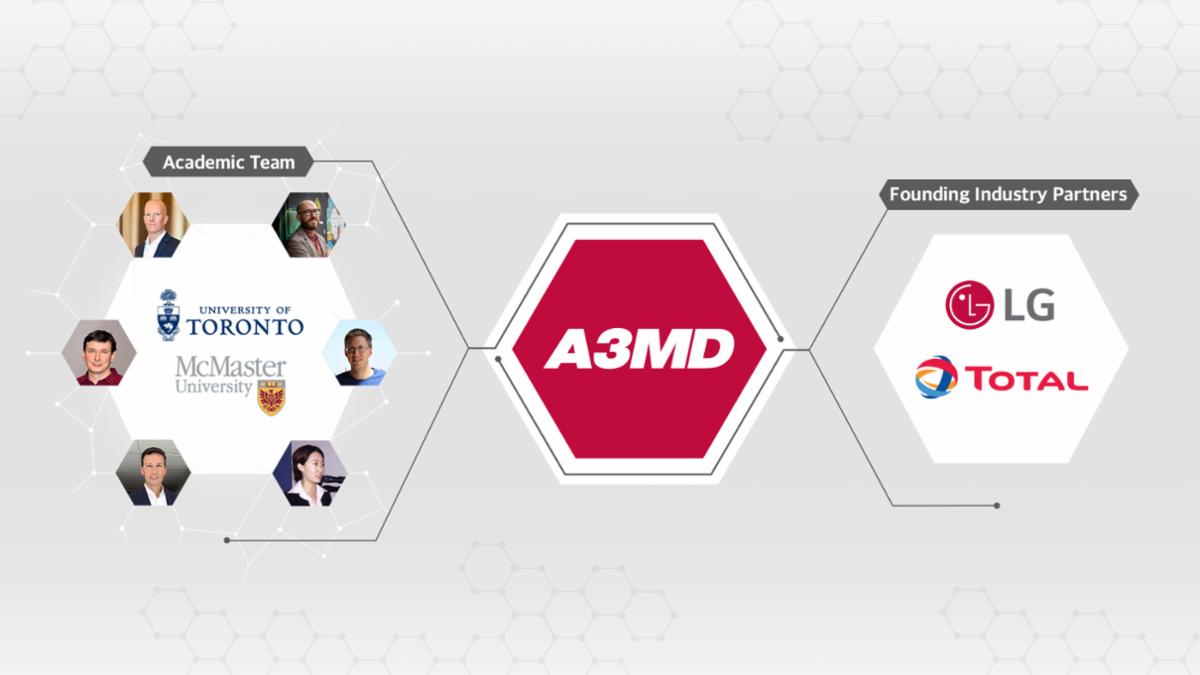
A3MD founding members. The meeting between the world's top academic and industrial circles has drawn attention since its establishment.
Q. What studies are currently being conducted in A3MD, and what AI technology is applied to each study?
"First of all, we are working on two common issues: eco-friendly catalyst and high-efficiency Light-Emitting Semiconductors. The eco-friendly catalyst project is to make carbon dioxide, a major cause of global warming, into carbon monoxide or ethylene which is highly utilized. We are designing this catalyst with machine running and automated robot system.
The other is a research on high-efficiency next-generation Light-Emitting Semiconductors, Perovskite, which converts electricity into light. It is a project to design a structure with optimized performance in efficiency and reliability by utilizing automated experimental platforms using supercomputer simulation, AI modeling, and robots.
Both projects use AI technologies for creation, prediction, and validation. They include reverse-engineering algorithm that reversely finds the molecular structure of the material, data and algorithms to predict the band structure and forming energy of the material, large-scale experiment based on the robot, and closed loop creation algorithm. LG's ultimate goal for material discovery is to fully automate the research process using AI, which is surprising that A3MD has the same goal. We're looking forward to seeing more synergy in the future."
Dream of Avengers to lead material discovery in LG
Q. How will the research results from A3MD affect LG affiliates?
"LG Chemical's high-efficiency battery materials and catalysts, LG Display's next-generation light-emitting materials, and LG Innotek's core optical materials can all be A3MD's research projects. LG Electronics will be able to develop innovative products that will ultimately give new value to our customers based on these highly efficient, eco-friendly, and next-generation materials. LG AI Research has already established 'AI Hub', a knowledge sharing system that can share all A3MD research results with affiliates. We'd like to establish a more advanced AI-based material discovery methodology from A3MD as a material discovery system for major affiliates."
Q. Besides the technical aspects, what are the expected effects of A3MD?
"In the past mass-production era, all values came from production facilities, but in today's AI era, it's no exaggeration to say that all values come from people. In other words, meeting people with diverse know-how and capabilities in material discovery will be a great asset in the future in that LG's talents can grow together. In particular, A3MD is more valuable in that not only the six core scholars who form the consortium, but also their human networks for excavation of materials are spread around the world.
The biggest difference between other industry-academic cooperation and A3MD is that the industry asks for a project, and the academic community communicates closely with the participating researchers, not in a one-way relationship. Researchers at LG can participate in training programs such as technical seminars and boot camps run by Guru-level experts, and be dispatched to the laboratory to utilize the infrastructure there and study together. We expect our researchers to be more competent and contribute greatly to LG's development of AI-based materials."
Q. What are the reactions of researchers directly participating in A3MD?
"The researchers who participate directly are also proud to work with world-class scholars. Above all, we are encouraged by the fact that we have a strong ally who can think about and communicate with us through A3MD.
Now, all of our Material Informatics (MI) researchers who study materials inside the AI Research are "rare" people who have expertise in material development and have a very high understanding of AI technology. In addition, they are 'AI consultants' who serve as a bridge between affiliates and LG AI Research. I ask them not only to fully develop their capabilities, but also to transfer them to their affiliates, to become catalysts for the affiliates' development of AI-based materials."
AI Becomes a compass for unknown molecular structures
The reason why LG AI Research is devoted to research on AI-driven material discovery is to provide better value to customers. Products made with excellent new materials can deliver differentiated value to customers. Furthermore, by reducing energy consumption and environmental pollution, it also helps solve the challenges facing all mankind, such as climate change. Lee says that the 'positive effect' caused by this is just as important as 'creating new customer values' with good materials.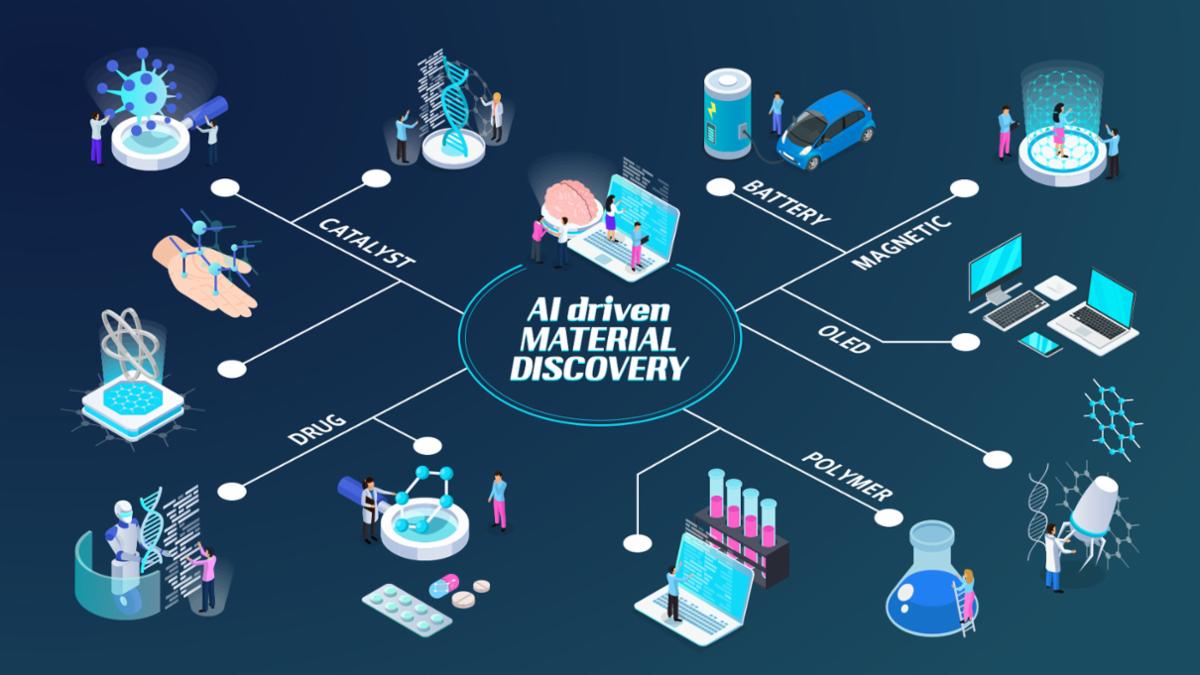
Q. How is AI technology overcoming limitations in material discovery?
"Material discovery is the process of finding meaningful combinations among countless molecular combinations. The problem is that the number of these combinations is much higher than that of all the stars in the universe over 13 billion light years. Material discovery has repeated the process of designing, synthesizing, experimenting, and verifying molecular structures based on the intuition of researchers who have long worked in this field. It wasn't easy to come up with a whole new structure because it was hard to test tens of thousands of materials in a lifetime, and you had no choice but to rely on past experience.
However, AI without preconceptions can quickly create numerous candidate molecular structures by considering tens or hundreds of dimensions at the same time, or by using Generative Model. Among them, the optimal molecular structure can be found in the shortest possible time with the latest technologies such as Multi Agent Reinforcing Learning. Depending on how you use AI, you can reduce your life's work to years and months. Recently, as the talents equipped with the knowledge in both chemistry field and AI field are started to produce talented people, research on AI-based material discovery has also accelerated in recent years, with people starting to have knowledge of both the chemical and AI sectors.”
Q. What is LG AI Research doing to secure the capacity of material discovery sector?
“Last October, LG AI Research hosted the second LG AI Hackathon. The question of converting an image-based molecular structure into a character string format was topped by researchers from Chile and the Netherlands, who are majoring in chemical engineering at domestic universities, beating expectations that computer vision majors in related fields would win. What was even more surprising was that their results were higher than the level of a recently published paper. As such, LG AI Research will actively discover and hire talented people who are interested in AI based on their expertise to accelerate LG's research on AI-based material discovery. 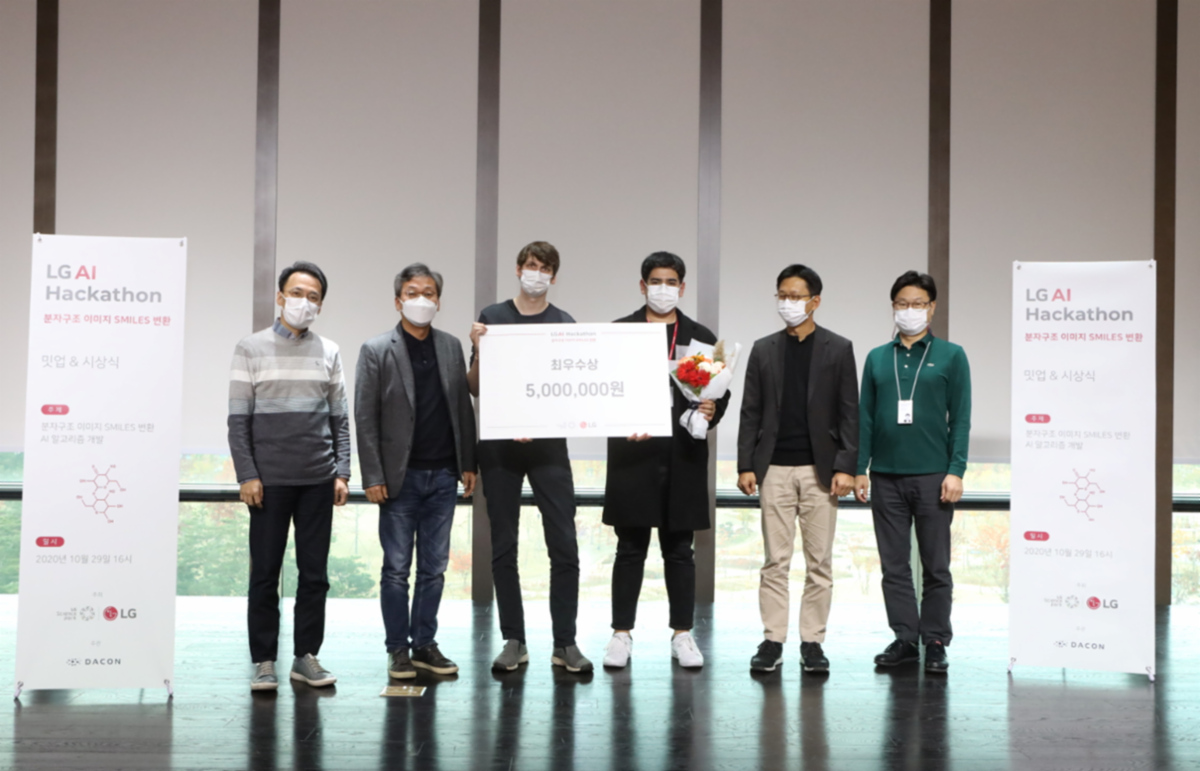
The 2nd LG AI Hackathon held in October under the theme of 'Molecular Structure Image SMILES Transformation
In addition, we are planning to create a systematic sharing system that can share AI technology information, data, algorithms, and application know-how that can be used directly by affiliates researching materials such as LG Chem, LG Display, and LG Innotek. We believe that the creation of an inter-subsidiary collaboration system based on this system will further strengthen LG's material development capabilities."
LG AI Research will continue to expand cooperation with universities and research institutes related to AI and material discovery starting next year. Canada, which has advanced pure science and artificial intelligence research, is mentioned as the first candidate base for LG AI Research. Director Hwayoung Lee said that it will gradually increase its overseas base, and that in areas where expertise in the field is important, even if not in material discovery, it will actively interact with outside agencies and promote research and cooperation. 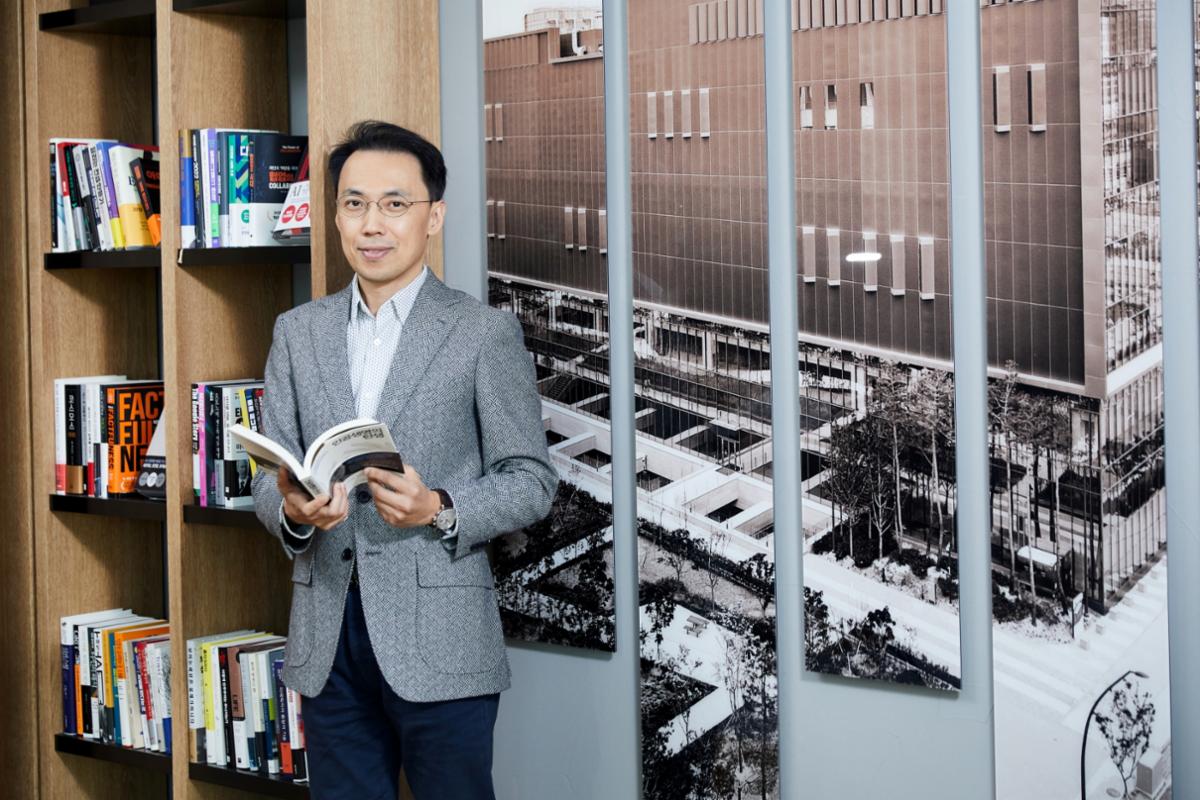
Q. What challenges do you need to solve to apply AI technology to industrial sites and commercialize new materials that have been developed?
"Our ultimate goal is to establish a material discovery system using AI in LG. To do this, it is important to make the researchers in affiliates who are discovering materials in a traditional way realize that AI is a good companion to research as a human assistant.
I think we have already reached a consensus with the materials development researchers of our affiliates on the utility and necessity of AI through the AI technology education and MI consultative body that we have been proceeding. I think it played a big role in drawing candidates for new drugs for cancer and immunization diseases in eight months using AI and successfully discovering battery anode materials to show the possibility of AI.
There seems to be a process left for the top executives to encourage and support the active introduction of AI into the material discovery process. In the future, LG AI Research plans to continue and systematically share excellent research cases and AI-based material discovery methodology to increase confidence in AI technology."