[LG Accountability Report on AI Ethics EP.2] Proving Safety, Ensuring Trust: Inside the 2025 Report
LG AI Research publishes an annual “LG Accountability Report on AI Ethics” transparently sharing its ethical governance and implementation outcomes based on two core pillars: Responsible AI and Inclusive AI. Marking its third edition, this year’s report presents concrete actions and achievements aimed at strengthening technological safety and building social trust in a rapidly evolving AI landscape.
Key Themes for 2025: Continuous Commitment to ‘Safety’ and ‘Trust’
In 2025, amidst the reshaping of the global AI governance landscape, South Korea is actively engaging in discussions and institutional preparations for the implementation of the ‘AI Basic Act’ in January 2026. Rather than passively responding to these changes, LG AI Research is committed to proactively ensuring the safety and trustworthiness of AI, enabling customers and society to embrace its benefits with confidence.
Major Achievements and Practices in Responsible AI
■ Advancement of Ethical Governance and AI Safety Framework
- Strengthening Data Compliance: Through “EXAONE NEXUS,” an AI-based data compliance system, we accelerated efforts to enhance safety by tracking risks throughout the training data lifecycle and identifying potential legal risks, including copyright-related issues.
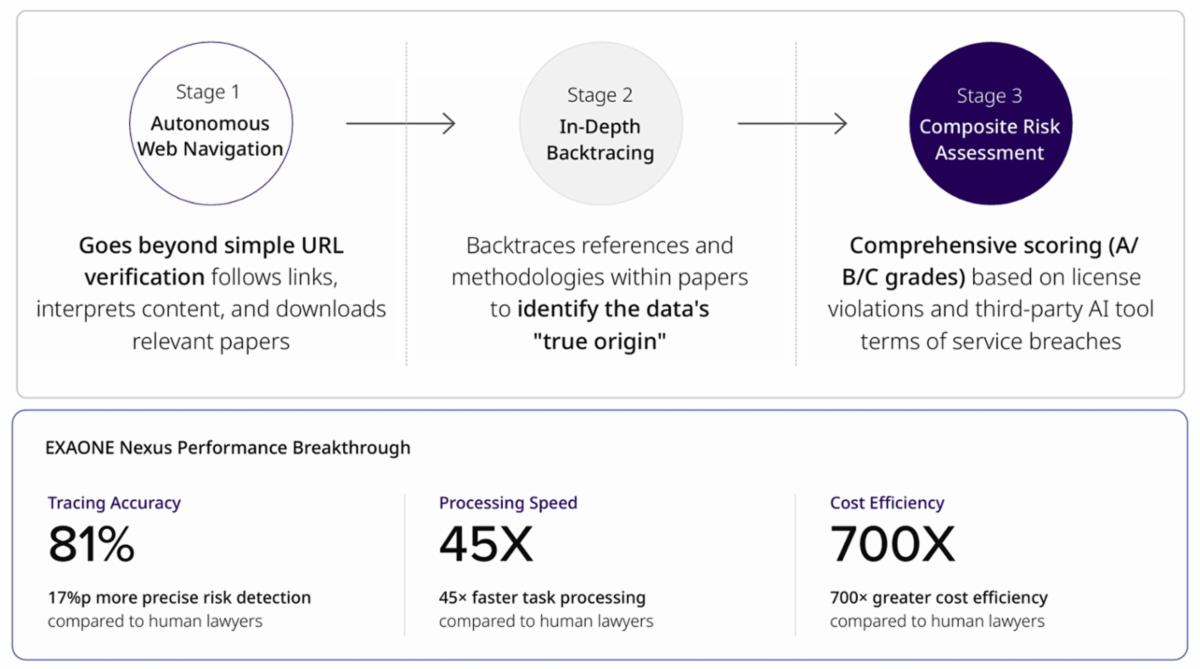
Image 1. EXAONE Nexus, An AI-powered data compliance framework
- Establishment of the K-AUT Risk Taxonomy: To proactively address potential threats posed by AI technologies, LG AI Research independently developed K-AUT (Korea-Augmented Universal Taxonomy), an AI Risk Taxonomy reflecting universal human values as well as Korea’s unique legal, social, and cultural characteristics.
Based on international norms such as the Universal Declaration of Human Rights and UNESCO’s Recommendation on the Ethics of AI, K-AUT also carefully incorporates Korea’s distinctive socio-cultural dynamics. It presents a new global benchmark for Responsible AI applicable both domestically and internationally.
This system, precisely structured into 4 core areas and 226 detailed items, serves as a practical guideline for researchers and developers to make immediate ethical judgments in the field. Detailed information on the risk taxonomy can be found in Appendix 2 of this report.
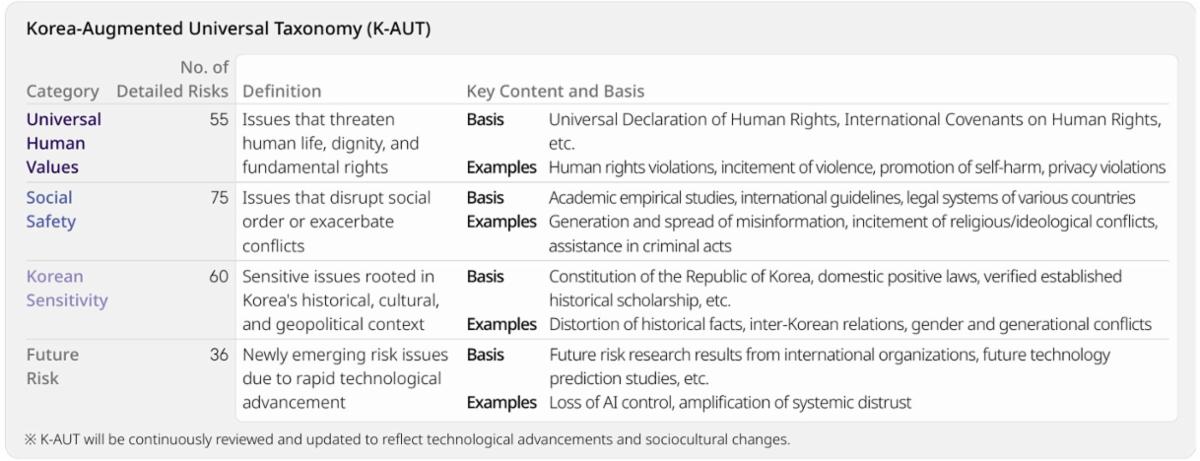
Image 2. Korea-Augmented Universal Taxonomy (K-AUT)
■ Research for Trustworthy AI
By mitigating spurious correlations between spatial and temporal tokens and balancing their positional relationships, this approach reduces biased predictions and establishes a technological foundation for more reliable multimodal AI systems in domains requiring high-precision situational understanding, such as safety monitoring and industrial environments.
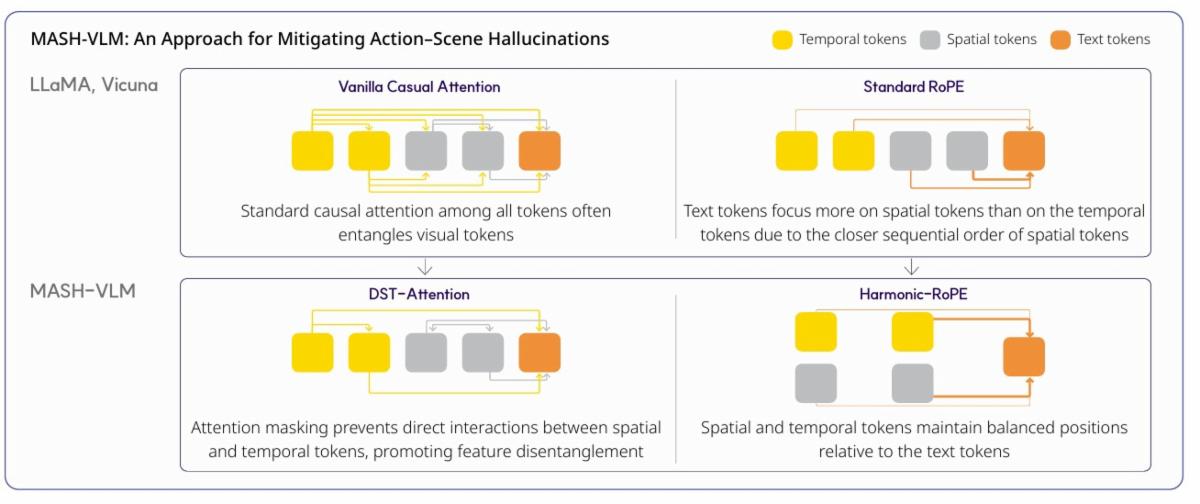
Image 3. Advancing Multimodal AI Trustworthiness through Hallucination Mitigation
▶ Research Paper: Bae, Kyungho, et al. "Mash-vlm: Mitigating action-scene hallucination in video-llms through disentangled spatial-temporal representations."
Unlike conventional approaches that require retraining for each new generative model, WaRPAD leverages the inherent robustness properties of self-supervised vision models, using sensitivity to high-frequency component changes as a detection signal. This allows the method to generalize across diverse generative architectures and image resolutions.
By providing a scalable and model-agnostic detection approach, WaRPAD contributes to strengthening safeguards against increasingly sophisticated deepfake threats and supports more trustworthy digital content ecosystems.
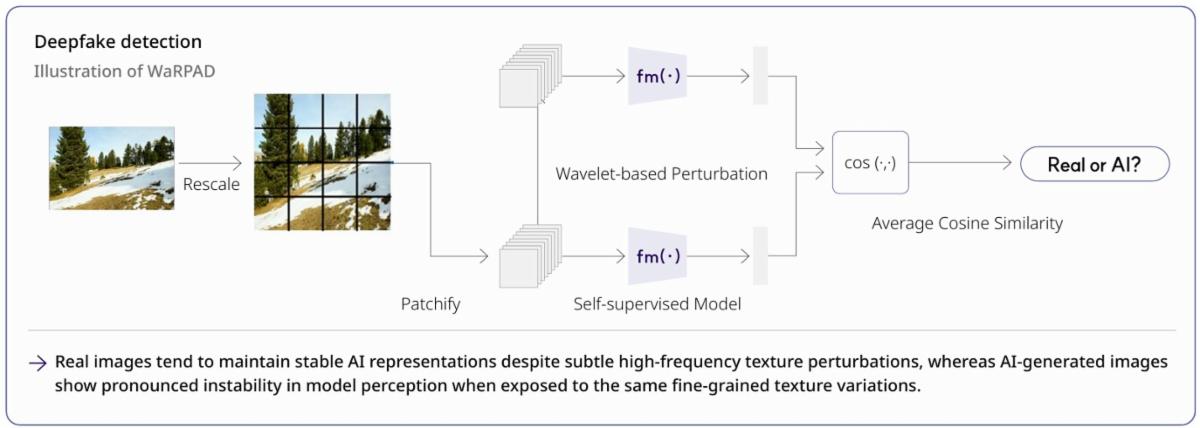
Image 4. Development of WaRPAD: Next-Generation Deepfake Detection Technology
▶ Research Paper: Choi, Sungik, Hankook Lee, and Moontae Lee. "Training-free Detection of AI-generated images via Cropping Robustness."
■ Internalization of an AI Ethics Culture
Trustworthy AI emerges from researchers’ deep reflection and voluntary practice. Beyond one-way training, LG AI Research fosters a culture of communication and participation, enabling members to empathize with ethical principles and apply them proactively in their work.
- AI Ethics Seminars: Learning from Each Other: The “AI Ethics Seminar” is a voluntary knowledge-sharing platform where members select topics based on their expertise and collaboratively explore tailored ethical solutions through rigorous discussion. In 2025, 11 topics were covered, ranging from global governance and fairness to safety and ethical philosophy. The program achieved a perfect participant satisfaction score of 5 out of 5, confirming its positive impact on real-world practice.
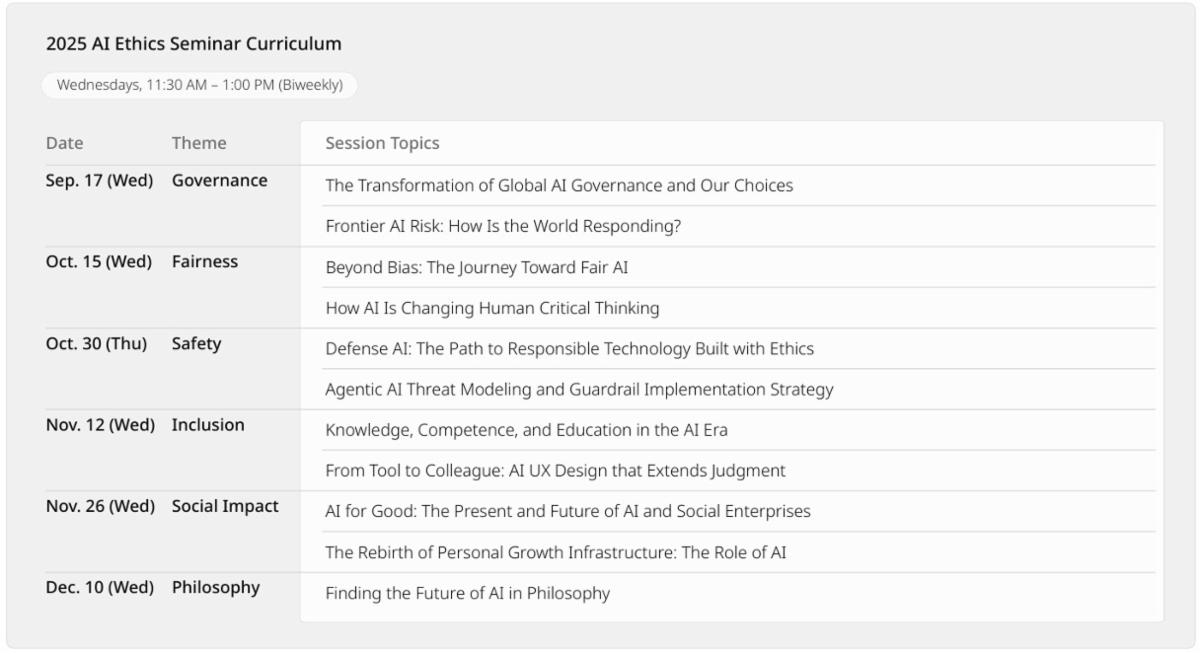
Image 5. 2025 AI Ethics Seminar Curriculum
Major Achievements and Practices in Inclusive AI
■ Realizing “Inclusive AI” through EXAONE and K-EXAONE
LG AI Research practices the value of Inclusive AI by sharing its proprietary technologies with researchers worldwide through open-source platforms, rather than monopolizing its capabilities.
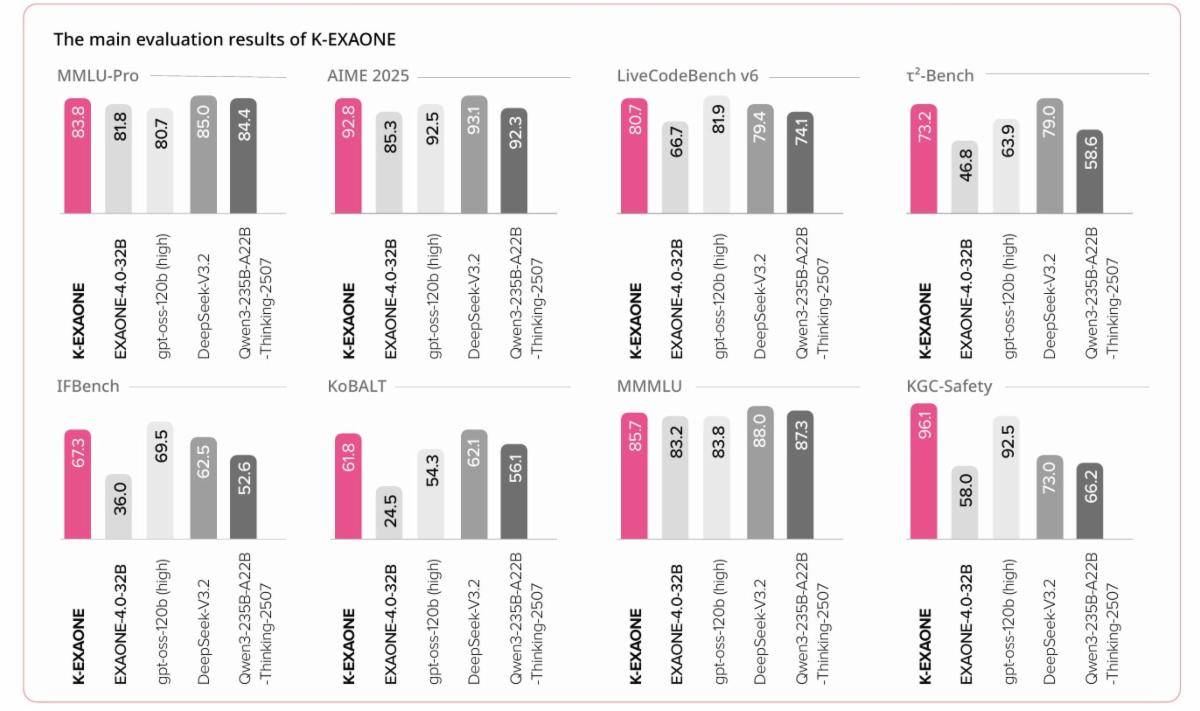
Image 6. The main evaluation result of K-EXAONE
LG AI Research also participated in the Ministry of Science and ICT’s Proprietary AI Foundation Model Project, developing the large-scale AI model K-EXAONE. K-EXAONE ranked first across benchmark, expert, and user evaluations, advancing to the second stage of the project.
- Superior Architecture: K-EXAONE contains 236 billion parameters and adopts a Mixture-of-Experts (MoE) architecture that selectively activates 23 billion parameters during inference. This design secures both the intelligence of a large-scale model and enhanced computational efficiency.
- Top-Tier Global Performance: In the Intelligence Index published by Artificial Analysis, K-EXAONE ranked 7th globally (1st in Korea) among open-weight models. Shortly after its release on Hugging Face, it rose to 2nd place in global model trend rankings, drawing significant attention from researchers worldwide.
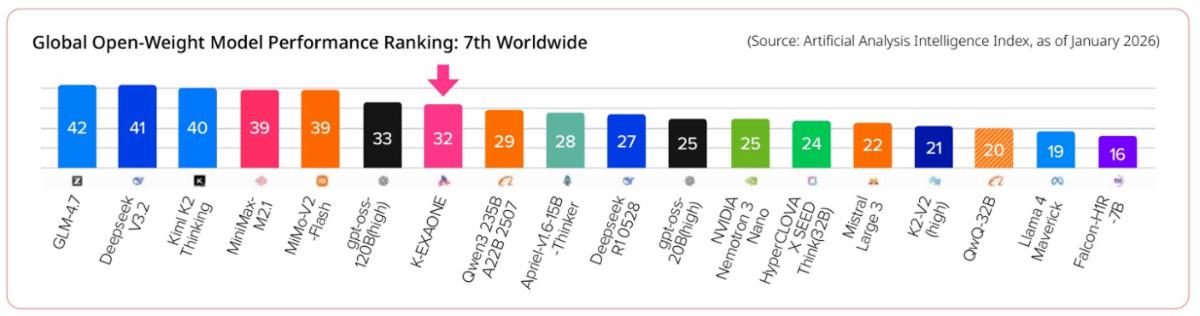
Image 7. In the Intelligence Index published by Artificial Analysis, K-EXAONE ranked 7th globally (1st in Korea)
■ Providing High-Quality AI Education for All
- Official Approval of the LG AI Graduate School: In 2025, LG AI Research received approval from the Ministry of Education to establish Korea’s first corporate graduate school authorized to confer master’s and doctoral degrees. The school offers a practice-oriented curriculum utilizing real industrial data from LG Group affiliates—including electronics, chemicals, and bio industries—to address complex real-world challenges and cultivate top-tier AI talent.
- Expansion of AI Literacy and Ethics Education: Through high-quality programs, LG AI Research has provided training to more than 40,000 learners annually in Korea. In May, educational opportunities will expand globally through online MOOC platforms, ensuring that the benefits of technological innovation are shared broadly so that all members of society can use AI safely and responsibly.
■ Global AI Ethics Leadership and Partnerships
- World’s First IEEE CertifAIEd Product: In September 2024, LG AI Research became the first Korean company designated as an Authorized Assessor for the IEEE CertifAIEd program. We conducted rigorous ethical evaluations of LG Electronics’ AI home hub, “LG ThinQ On,” making it the first private-sector product in the world-beyond prior certifications centered on governments to receive the “CertifAIEd AI Product” certification. This proves that ethical compliance is a core asset that provides differentiated trust to customers and enhances product competitiveness.
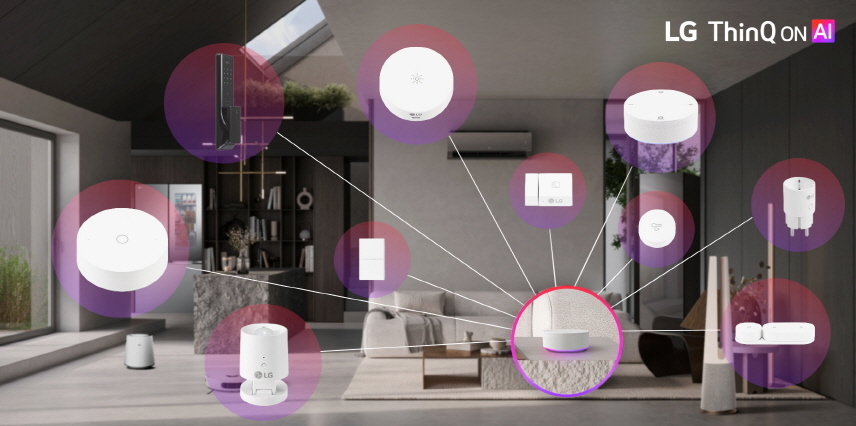
Image 8. LG ThinQ ON: The AI Home Hub for Personalized Connected Living
- Developing AI Ethics MOOC with UNESCO: Working with an international advisory board of 15 experts, we developed 10 core modules incorporating over 120 real-world cases from 37 countries to bridge theory and practice. The course will be released free of charge on global platforms such as Coursera in the first half of 2026.
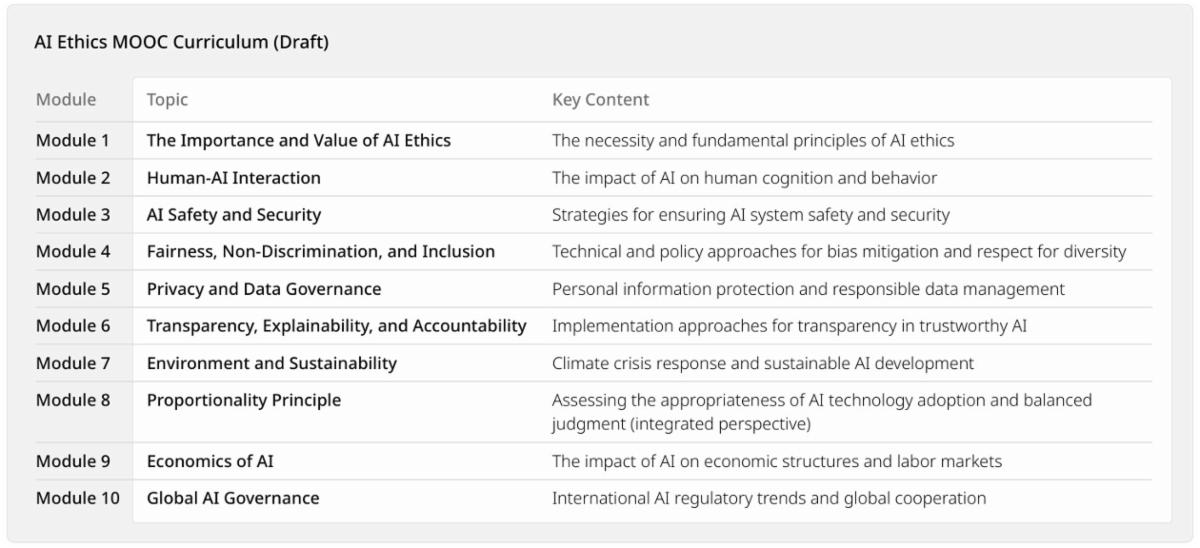
Image 9. AI Ethics MOOC Curriculum (Draft)
LG AI Research will continue to move beyond 'Responsible AI' toward 'Inclusive AI,' ensuring that AI earns deeper social trust and that its benefits reach everyone.