 Jongseong Jang
2021.05.11
Jongseong Jang
2021.05.11
Researcher Jongseong Jang’s Story of AI Research in Toronto
We conducted an online interview with Researcher Jongseong Jang of LG AI Research Canada, who is in charge of various AI research projects in Toronto. Jang is conducting a joint research in collaboration with the University of Toronto and is establishing the fundamentals of LG AI Research Canada, the global hub of LG AI researchers. Amid the COVID-19 pandemic when workers cannot personally gather for collaboration, Jang and his co-workers have relentlessly been producing significant outcomes.
Biomedical Engineer Becomes AI Researcher
Jang’s background is somewhat unique. Jang majored in mechanical engineering in college and bionics in graduate school. After graduation, he worked for biomedical labs in Korea and Japan and later became part of the AI researchers.
“I mainly focused on the research of 3D medical image processing in graduate school. It is no different from the research of image processing in computer engineering; it just has the additional term ‘medical.’ I worked on developing the projection of medical images such as MRI and CT images to actual patients on operating tables, which was the core technology of surgical navigation that didn’t allow even the smallest errors.
Like most image data, however, the image outcomes varied depending on the person who made the image and the device that was used to make the image. This made producing a consistent performance a real challenge. When I was feeling skeptical about the conventional image processing method, I had the opportunity to listen to a lecture on deep learning by Prof. Andrew Ng of Standford University at an open lecture platform. I was then convinced that deep learning was the key to solving the existing issues of image processing.”
All collaborations are conducted online due to COVID-19 and physical distance. This interview was also conducted through Webex.
He found the potential through deep learning, but soon encountered another problem. A vast amount of data was needed for deep learning research, but it was difficult to gather such data because of the unique nature of medical institutions and the busy schedules of medical workers. He wanted to find a place where he can find real, not refined, data for his passion for AI research. That is how he chose a corporate lab for his next career journey. He researched AI technology for vision inspection and factory automation at an LG affiliate and later joined the AI Research of LG Science Park, formerly LG AI Research, in January 2019. Jang has been a member of the team since the early stages after the establishment of the organization until now. He says the advantage of LG AI Research is the research-centered, failure-accepting culture.
“It is easy for a corporate AI research to overlook basic research, as it must lead to profitable projects. An absolute research even in practice is realized through much trial and error, but most corporations are hesitant to fail because of the time and cost incurred. This makes it a difficult environment for new challenges. LG AI Research is different, however. It encourages us to focus solely on research and to give up quickly if it seems to be going nowhere. I believe this reduces the researchers’ burden regarding failure. Of course, all of us should feel a sense of responsibility for making achievements, but we surely get to take on more challenges when there is less burden on failure.”
Headed for Toronto for Deeper Basic Research
Jang was sent to Toronto in March 2020. It was not easy for him to decide to go with his child who just turned three at the time when COVID-19 cases were peaking worldwide. However, he had good reason for choosing to do so.
“I was actually filled with curiosity. I wanted to experience for myself the research culture of the University of Toronto, which made it the strongest university in the field of AI. It was also appealing that I would be able to focus on my research instead of thinking about practicality or profitability. Meeting world-class scholars as a representative of LG was a great opportunity for me as well to grow as an AI researcher. I was more excited than scared.”
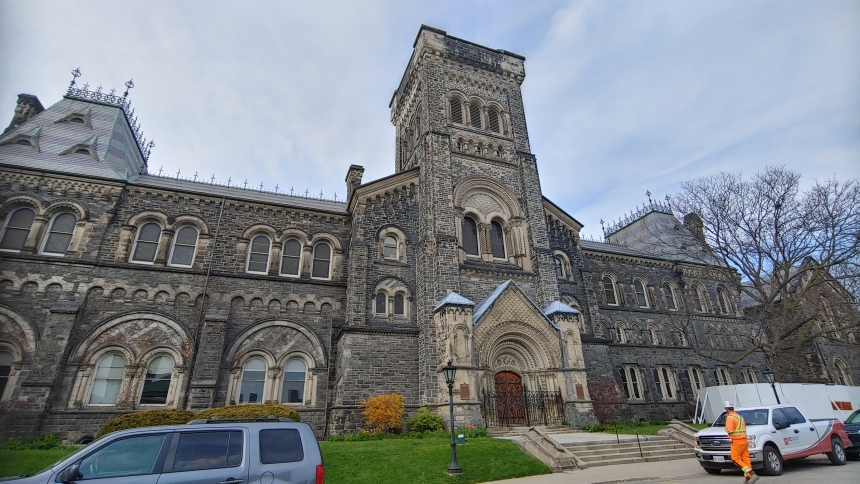
University College, the symbol of the University of Toronto. The University of Toronto is currently closed due to COVID-19.
It is not an overstatement to say that Canada is the heart of AI. The University of Toronto with professors Geoffrey Hinton, Roger Grosse, and Jimmy Ba, the University of Montreal with professors Yoshua Bengio and Aaron Courville, the Vector Institute, MILA, CIFAR, and other universities and research institutions leading the world’s AI research are concentrated in this country. Jang must have felt pressure as a representative of Korea and LG among the prominent researchers of the community and to come up quickly with an achievement as the first dispatched member.
“I didn’t feel so confident at first. The professors were world-renowned people, and the lab ambiance was quite authoritative, which is not so different from that of Korea. But the students here are full of confidence. They know how to voice out their opinions to professors. This must be due to the fact that they’re fiercely trained as undergraduates, gaining field experience through internships during their Master’s programs and learning how to lead their own research. I also adapted myself to this research culture, and I am now able to express clearly my desired directions or topics to professors.”
It is not the first time for Jang and his family to live abroad. Jang earlier worked for a medical engineering lab of a Japanese university after completing his doctoral program. Although it was not his first experience living away from home, it must have been a challenge for him and his family to accustom themselves to a new cultural environment. Each time he had to make a choice, he asked himself whether the decision developed him as a researcher, and his family always supported his decision.

The natural environment of Canada. Having more time to spend with family is a benefit of life in Canada.
“Research or work did not worry me much, but I was concerned about some basic necessities, such as visa issuance and house hunting. It was not just me who would struggle if I were to face hardships. My family has always supported me in making advantageous choices for my career, and I’m really thankful to them. It must be hard to live away from family and friends and accustom yourself to a completely new place with different language and culture, but my wife and child are thankfully adjusting to life here.
Canada does not have many amusement or entertaining facilities compared to Korea. Restaurants and convenience stores are rarely open 24/7. Instead, we can enjoy the great nature within walking distance, so I usually go to the park or playground with my 4-year-old child when I am free. COVID-19 has put a lot of restrictions on our activities, but I’m glad I’m given more time to spend with family here.”
Making the Foundation for the Global Market, LG AI Research Canada
As the global hub of LG AI Research, LG AI Research Canada usually conducts joint research through industry-university collaboration projects. The initial research plan was to share the lab of the University of Toronto, but the university has closed indefinitely due to COVID-19. Currently, researchers are sharing ideas, research status, and results through virtual meetings and real-time messaging.
Researcher Jongseong Jang and his co-workers of LG AI Research Canada.
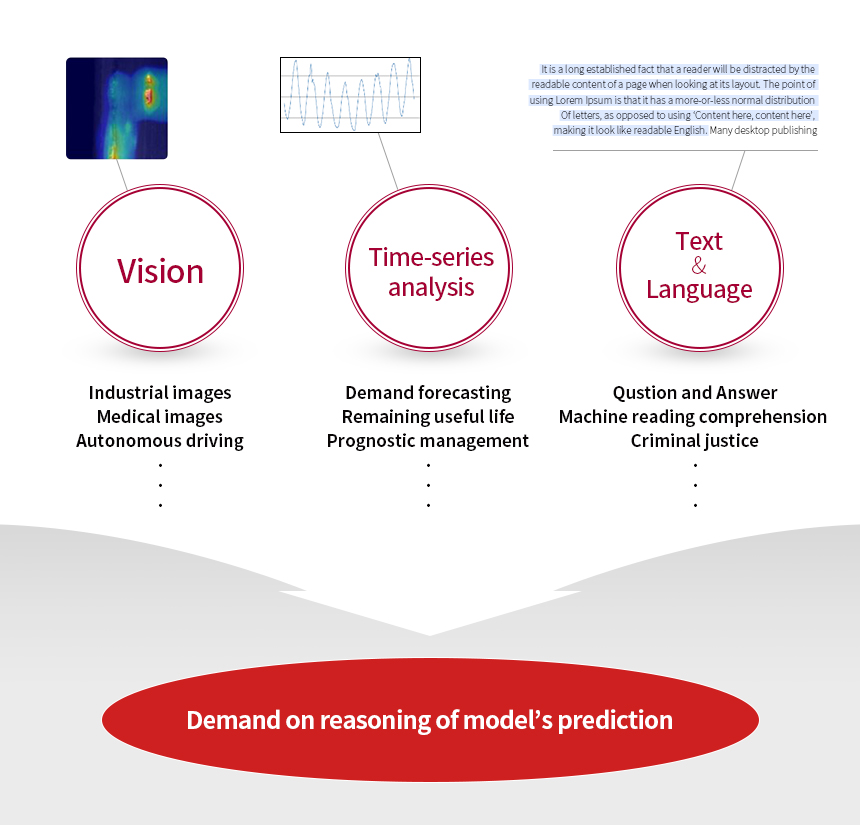
“We are expanding the joint research with the University of Toronto to various fields. Some of our main research projects include explainable AI and transfer learning. We also plan to begin other projects in applied areas, such as the basic research of cause-effect relation extraction and hypernetworks and exploration of new materials. The industry-university collaboration with the University of Toronto will focus on more fundamental technology research from now on. We strive to discover influential tasks that can be derived from all technologies. Performing these tasks while expanding our own project and acquiring leadership to navigate industry-university collaboration research are my current goals.”
There are three researchers under LG AI Research Canada. One of them is a Canadian citizenship holder who has been recruited in Canada. Although few in number, they achieved outstanding performances in a short period of time. This year alone, they submitted four papers to world-renowned AI journals, including IEEE and AAAI. The previous year, they filed two patents related to continual learning and explainable AI. They also participated in the Continual Learning Computer Vision Challenge of CVPR2020 as a joint research team with the University of Toronto and won first place.
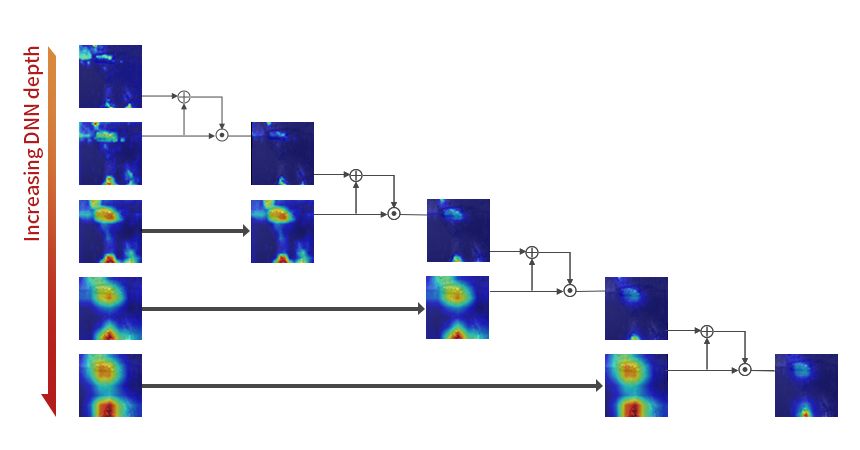
Papers participated in by Researcher Jongseong Jang. 1 paper on continual learning and 3 papers on explainable AI were issued in IEEE and AAAI this year.
“They’re all outcomes of the industry-university collaboration, so I cannot say it’s our accomplishment alone. We led the collaboration in a direction that made greater outcomes, and it is possible to write multiple papers for a single research. There’s quite a lot of work allotted to us per head since we are pretty understaffed as you can see, but we plan to build a larger team by recruiting new members and offering internship programs. Since research is our main duty, we are looking for competent candidates who are self-regulated and capable of working as a team. Working with us will surely provide opportunities to work and grow with the world’s leading researchers.”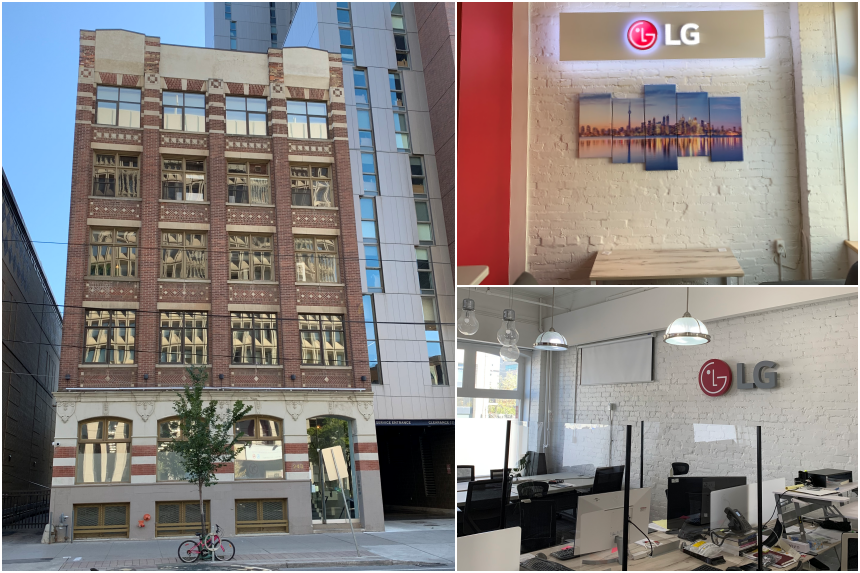
LG office in Toronto, Canada. It is located near the University of Toronto.
There was nothing prepared between LG and the University of Toronto, such as industry-university collaboration, establishment of human network, or creation of global hub. There is still a long way to go as the collaboration is still in the early stages, but Jang believes all this is an opportunity for different experiences and growth. The trial and error, hard work, and achievements that he and his co-workers at LG AI Research Canada are going through and accumulating will become firm fundamentals for future LG AI researchers who will be arriving here in the future.
“The most important thing is that LG AI Research Canada plays a critical role in nurturing LG AI researchers as global leaders of the AI field. To realize this, we are focusing on expanding our outcomes quantitatively and qualitatively. We plan to increase exchanges with the University of Toronto, which is at the center of AI research, as well as other researchers in Canada. We will also continuously recruit competent researchers and discover promising technologies and topics for research. I wish to bridge the world with LG AI Research for us to lead the future of AI research.”
See open positions on LG AI Research Canada (Link)