 Dahm Lee
2025.11.24
Dahm Lee
2025.11.24
[AI Ethics Seminar 2025 EP.2] Beyond bias, the journey to fair AI
|
The Journey Toward Trustworthy AI: Introducing LG AI Research’s “AI Ethics Seminar” |
Conflicting perspectives on AI have coexisted from the days when AI was viewed as a vague future technology to its deep integration into our daily lives today. Some emphasize AI's innovative potential and advocate for its active adoption and utilization, while others voice concerns, pointing to AI's potential side effects and the risks of uncontrolled use. While it's impossible to determine which side is right, one thing is certain: no one can accurately predict the future AI will bring.
AI itself is neither inherently good nor evil. Yet instances where its use leads to unpleasant or unethical outcomes are not uncommon. This makes it essential to deepen our understanding of AI's risks and ethical considerations, and continually deliberate on how to use AI responsibly. In this seminar, we will focus on one of the most fundamental—and often overlooked—issues: “AI bias.”.
1. Definition of AI bias
AI bias refers to the phenomenon where human societal prejudices or biases are embedded in an AI system's training data or algorithms, causing its judgments or outcomes to skew in a particular direction[1].
This poses practical problems not only from an ethical standpoint, but also because biased outputs may disadvantage specific individuals or groups. For instance, some AI systems have been shown to produce systematically incorrect judgements for a specific group on the same issue, or to experience sharp declines in performance for a particular user group. Furthermore, AI models trained on biased data may even reproduce discriminatory expressions or hate speech targeting specific groups.
Thus, AI bias can produce harmful outcomes disadvantageous to specific groups, regardless of the system’s design intentions. Because many people believe AI to be inherently objective and neutral, these biases pose an even greater risk. Therefore, we must clearly recognize that AI outputs, much like human judgments, can be distorted and biased, and accurately assess the scope and extent of their influence.
Recently, research on AI bias has been actively underway. The following examples illustrate how these issues manifest in real-world systems.
Key examples of AI bias
-
Facial recognition accuracy bias: Researchers from MIT and Stanford found that commercial facial recognition AI systems exhibit error rates as high as 34.7% for dark-skinned women, compared to only 0.8% for white men[2].
-
Reflecting occupational bias: When occupation-related keywords were input into image generation models, high-income professions (lawyers, politicians, etc.) tended to be depicted with lighter skin tones, while lower-income roles (cleaners, fast-food workers, etc.) were portrayed with darker skin tones. This demonstrates that image-generating AI already directly mirrors societal biases regarding occupational groups.
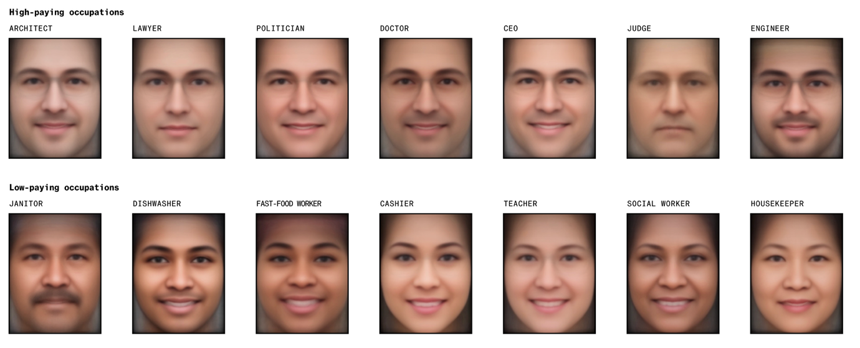
Image 1. Results of generating an “average face” for a specific occupation group using a text-to-image model[3].
-
Discriminatory/Stereotypical language use: Various models have been documented to produce discriminatory or stereotypically biased language related to gender, race, religion, etc[4]. Language models also displayed tendencies such as defaulting to masculine pronouns when translating gender-neutral language or reinforcing stereotypical associations between gender and profession (“man-programmer” and “woman-nurse.”
-
Biases in real-world systems: The UK government's AI system for detecting welfare fraud produced biased results based on demographic characteristics like age and nationality[5], Amazon's AI hiring system, meanwhile, consistently gave lower scores to female applicants and was eventually discontinued[6]. In the medical domain, diagnostic AI systems analyzing X-ray images showed significant performance disparities depending on the patient's race or gender[7]. In the speech recognition domain, research from Stanford University found that for the same sentence, the recognition error rates for Black speakers reached up to 35%, significantly higher than the 19% error rate for white speakers[8].
These cases demonstrate that AI bias can generate wide-ranging performance gaps and social impacts, affecting both fairness and trust in real-world applications.
2. Awareness and challenges regarding AI bias
As publicized cases of racial, gender-based, and other forms of discrimination in AI systems have come to light, societal awareness about AI bias has significantly increased compared to the past. Consequently, companies such as Google and IBM are introducing AI fairness assessment procedures and AI ethics committees. Despite such progress, however, AI bias still faces significant obstacles in becoming a fully mainstream and consistently prioritized agenda.
-
Challenges in data collection: Meaningful bias assessment requires access to sensitive demographic information (such as race, gender, and age). Yet legal, regulatory, and institutional constraints often limit or prohibit the collection of such data, making it difficult to obtain the information needed for accurate evaluation.
-
Challenges in measurement and improvement: Unlike standard model performance metrics such as accuracy or F1 score, fairness and harmfulness are subjective concepts lacking clear definitions and measurement standards, making them much harder to quantify. Furthermore, the process of mitigating bias is technically demanding and more challenging than ordinary performance-optimization tasks.
-
Procedural/priority issues: Bias evaluation typically occurs late in AI development pipeline, reducing the feasibility of implementing improvements. Also, performance gains or release schedules often take precedence, pushing bias issues down the priority list. As bias mitigation does not directly translate to immediate business KPIs and may potentially reduce performance or increase costs, it is frequently deprioritized.
Despite these obstacles, the long-held belief that “algorithms are inherently objective” is steadily fading. As awareness continues to expand across academia, industry, and the public, AI bias is expected to become an increasingly central topic of discussion.
3. Causes of AI bias
3-1. Bias in training data
The most common source of AI bias is bias in the training data. Because AI systems learn patterns directly from the data they are given, their performance and behavior are heavily shaped by the quality and representativeness of that data. As the saying “garbage in, garbage out” suggests, biased or incomplete data inevitably leads to biased outcomes.
-
Data collection/sampling bias: When data collected for model training is skewed toward specific groups or cases, the model will naturally reproduce those characteristics. Amazon's Recruiter AI famously exhibited gender bias because the existing employee data used for training was already imbalanced, causing the system to favor male candidates.
-
Lack of representativeness (data imbalance): Bias also occurs when certain groups are overrepresented or underrepresented in the training data. In speech recognition, for example, the speaker distribution in the Common Voice dataset showed a significant bias: 83% of the voices were from male speakers, while only about 15% were from female speakers, resulting in markedly lower recognition performance for female speakers[9]. Similarly, speakers with strong regional or non-native accents were underrepresented, resulting in degarded recognition performance for these groups as well.
-
Labeling bias: Since AI models treat labeled data as the "ground truth," if human subjectivity or bias is involved in the labeling process itself, there is a high possibility that the biases themselves are absorbed by the model and reproduced in its outputs.
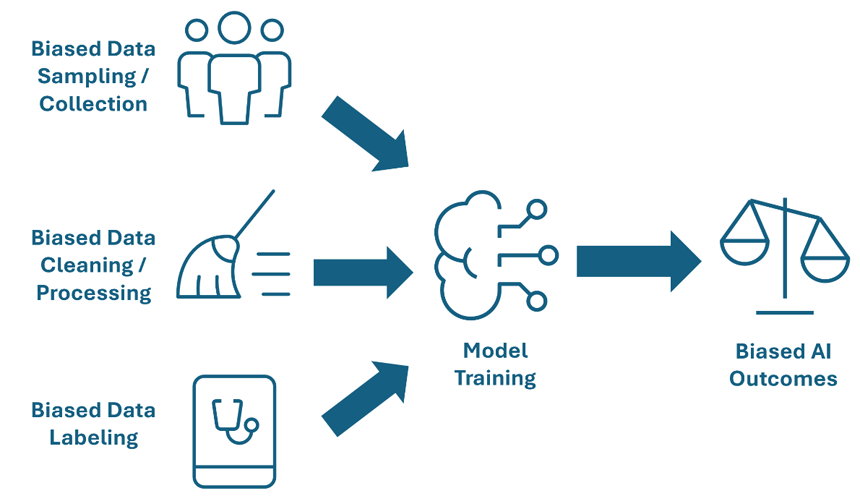
Image 2. How bias in training data leads to AI bias[10]
Training-data bias significantly shapes the fairness and reliability of AI systems. Ensuring diversity, balance, and quality during the data collection stage—and applying corrective measures when biases are identified—is essential to reducing downstream bias.
3-2. Bias in models and algorithms
While data is the factor that most significantly influences AI bias, biases can also originate from the model architecture or the algorithms used during training.
-
Implicit assumptions and objective function bias: AI systems are fundamentally designed to optimize based on a predefined objective function (loss function), so implicit assumptions or biases that humans may not recognize can be introduced during the training or design process. If overlooked biases are embedded, they can shape the model’s behavior in unintended ways, depending on what the model was designed to maximize or optimize. A prime example is social media content recommendation algorithms. In their pursuit of maximizing user engagement, they may expose users to more provocative or extreme content, inadvertently creating a negative content bias.
-
Confirmation bias: When models are trained on biased data, they may reinforce and amplify the inherent bias within that data by reproducing it. Because AI generalizes from observed correlations, it may treat skewed correlations as universal truths, thereby magnifying harmful trends rather than correcting them.
These algorithmic biases can ultimately disadvantage specific groups just as severely as data-driven biases. Therefore, addressing AI bias requires careful examination not only of the training data, but also of the model’s objectives, decision-making logic, and optimization criteria from the earliest stages of system design.
4. Risks of biased AI
When AI makes judgments based on biased data, various issues can arise across different domains. The potential negative consequences of biased AI can be summarized as follows:
-
Deepening discrimination and inequity: Biased AI can amplify and deepen existing unequal structures and injustices rather than alleviating them. Because AI systems often present their outputs as objective or neutral, they may even be used—intentionally or unintentionally—to justify discriminatory decisions. Particularly in high-stakes domains like hiring, lending, and insurance underwriting, where decisions can directly impact people's lives, biased AI judgments can have particularly severe impacts on individuals’ lives and oportunities, requiring careful attention.
-
Errors and harm caused by AI performance bias: When AI systems, such as facial recognition or speech recognition models, show degraded performance for particular demographic groups, these errors can translate into direct harm, such as misidentification, misclassification, or system malfunctions. The stakes are even higher in medical AI: biased diagnostic systems can lead to inaccurate assessments or delayed treatment, producing potentially irreversible consequences. This makes consistent accuracy and performance across all user groups a critical consideration.
-
Fostering social division and conflict: If AI decisions consistently disadvantage specific social groups, members of these groups may experience heightened frustration, alienation, and distrust, viewing such outcomes as forms of structural discrimination. This may escalate into broader social conflict. Moreover, if AI repeatedly expose users to biased information, it can influence public perception and opinion-forming processes, thereby deepening societal bias.
-
Reputational damage for AI-related companies/organizations: When social issues such as gender or racial discrimination arise due to AI bias, the organizations responsible for developing or deploying the system may suffer substantial reputational harm. In severe cases, they may also face legal challenges or regulatory penalties . An IBM report also warned, “When AI makes a mistake due to bias, the offending organization suffers damage to its brand and reputation. At the same time, the people in those groups and society as a whole can experience harm without even realizing it”[11] In this sense, AI bias is directly linked to corporate social responsibility and organizational credibility.
-
Declining public trust in AI: As awareness of AI bias grows, public confidence in AI technologies may erode. If people perceive AI systems as biased or unfair, they may distrust or reject their adoption, to broader skepticism and resistance toward AI technology itself in society. The development of a sustainable AI ecosystem requires ongoing efforts toward transparency and fairness.
5. Discussion towards “fair” AI
5-1. Is completely unbiased AI possible?
Basically, the prevailing consensus in both academia and industry is that creating completely unbiased AI is extremely difficult—and in practice, virtually impossible. Several reasons underpin this view.
-
Reflecting reality and human imperfection: Because AI systems learn from real-world data, and because humans themselves are inherently biased and imperfect, it is generally believed that perfectly unbiased AI is unachievable as long as learning depends on real-world data[12].
-
The complexity of defining “fairness”: In real-world contexts, fairness is highly contextual and often subjective. Measures of fairness frequently conflict with one another, and improving one often leads to worsening another. This makes the pursuit of a single, universally fair standard technically and philosophically challenging.
Therefore, the goal should not be to develop completely bias-free AI, but rather to minimize harmful bias and manage unavoidable imperfections in line with ethical principles and societal expectations. Continuous monitoring, evaluation, and improvement are therefore essential for progress toward fairer AI.
5-2. Is AI's output biased, or does it reflect reality?
One of the most thought-provoking debates surrounding AI bias centers on the question: “Is AI actually biased, or is reality itself unfair?” This reflects two contrasting perspectives on whether AI should mirror existing society or serve as a tool to shape a better one.
-
AI as an objective mirror of reality: This view argues that as human society itself is already unfair and biased, AI systems trained on real-world data inevitably inherit those biases. The core logic is that AI's role is to show reality as it is, and attempts to correct AI outputs risk distorting an accurate reflection of reality.
-
AI as a tool for building a better future: Proponents of this view argue that societal inequities are the result of historical biases and discrimination, and that allowing AI to replicate these patterns under the justification of “reflecting reality” only entrenches existing structural inequalities. Therefore, AI should be designed to correct, not replicate, unfairness in reality.
What’s clear is that perfectly unbiased AI is unattainable at present. Thus, the priority now must be risk management: recognizing that some level of bias is inevitable while distinguishing between forms of bias that may be tolerable and forms that pose significant harm. Establishing consensus around “acceptable” versus “unacceptable” bias is essential for responsible AI deployment.
5-3. Pros and cons of unbiased AI
Pursuing unbiased AI is an ideal goal, but practical constraints and trade-offs also exist.
-
Pros
-
Providing equal performance to all users: Reducing bias can minimize performance variations between demographic groups, delivering consistent and equal results. In this process, overall model performance or data may also improve.
-
Ensuring equal opportunity and preventing discrimination: Bias mitigation helps ensure that all users receive fair treatment and opportunities, reducing the risk of discriminatory effects and protecting vulnerable populations.
-
Reducing legal/financial risks and enhancing trust: Preventing biased outcomes reduces the likelihood of public backlash, lawsuits, or regulatory penalties. It also enhances public confidence that AI systems are fair, thereby supporting broader societal acceptance of AI technologies.
-
Cons
-
Potential Performance trade-offs: Bias mitigation can sometimes reduce predictive accuracy or impact performance for certain tasks or use cases.
-
Technical difficulty and cost: Establishing criteria for judging bias is inherently challenging, and improving and implementing bias-mitigation strategies involves significant technical difficulty and costs.
-
Risk of reverse discrimination: Overcorrecting bias may inadvertently disadvantage groups that were not originally marginalized.
Ultimately, while completely bias-free AI may be unattainable at the moment, the core challenge is to set clear standards, maintain responsible development practices, and commit to ongoing refinement. Through continuous improvement and thoughtful design, AI can move toward greater fairness, accountability, and trustworthiness.
6. Future research and development directions on AI bias
As awareness of the existence and risks of AI bias spreads, the focus is shifting from merely identifying problems to establishing systematic methods for aseessing, mitigating, and preventing bias. Future research on AI bias will unfold along two main dimensions: technical approaches and social approaches.
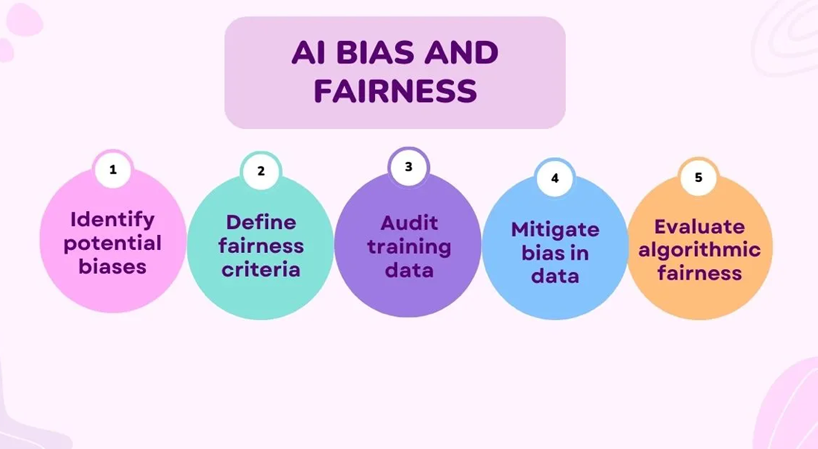
Image 3. Key processes for reducing AI bias and improve fairness[13]
-
Technical aspects
-
Advancing evaluation/measurement/detection technologies: Existing fairness metrics and benchmarks are limited. Future work must develop more advanced quantitative and qualitative evaluation frameworks that reflect models’ internal mechanisms, contextual nuances, and real-world behavior.
-
Expanding Research on de-biasing algorithms and learning methodologies: Promising approaches—such as data reweighting, contrastive learning, fairness-constrained optimization, and other structural techniques—require active and continued research to meaningfully reduce AI bias throughout the training pipeline.
-
Building diverse and fair data and evaluation sets: Ensuring fairness begins with data. Ongoing efforts must prioritize collecting and curating datasets that accurately reflect demographic and linguistic diversity across various attributes such as race, gender, age, religion, and language variety.
-
Promoting interdisciplinary research and governance: Addressing AI bias requires collaboration not only among engineers and data scientists, but also ethicists, sociologists, legal scholars, policy experts, and domain specialists. Such cross-disciplinary cooperation is essential for developing governance frameworks and establishing institutional foundations for responsible AI.
-
Domain-specific bias research: Bias manifests differently across fields such as healthcare, finance, public administration, and education. Targeted research that accounts for the unique data characteristics and decision contexts within each domain is critical.
-
Enhancing user education and participation: AI fairness extends beyond technical issues, depending on user understanding and societal norms. Therefore, ethical AI literacy education and participatory evaluation systems must be established to enable both general users and developers to recognize AI biases and approach AI outputs with appropriate critical awareness.
How LG AI Research is working toward fair AI
AI bias is not merely a technical malfunction; it is fundamentally a matter of social responsibility, transparency, and trust. While achieving perfectly unbiased AI may be unrealistic at present, continuous and systematic efforts to reduce bias remain essential. Our goal must extend beyond improving performance alone; we must ensure that AI develops in a way that supports fairness, accountability, and long-term societal benefit. Technology should function not as a force that perpetuates inequality but as one that helps correct it.
The Data & Analytics team at LG AI Research is working to implement responsible AI by taking two main approaches to mitigate bias in AI.
-
Development of Guardrail model: This model identifies potentially harmful content in both user prompts and AI-generated responses, acting as a first-line safety filter. It blocks inappropriate or harmful requests and adjusts model outputs to ensure they do not contain biased, offensive, or otherwise unsafe content.
-
Analysis and improvement of training data: We conduct comprehensive analyses to detect sources of bias within training data, examining factors such as content, distribution, diversity, length, and format. When bias is identified, we apply targeted mitigation strategies—such as supplementing data, rebalancing samples, or modifying dataset composition—to reduce its influence on the model.
We are confident that these ongoing efforts represent meaningful steps toward reducing bias in AI and contribute to building fairer, more transparent, and more trustworthy AI systems at LG AI Research.
AI Ethics Seminar 2025 Series
#1. [AI Ethics Seminar 2025 EP.1] How AI Is Changing Human Critical Thinking
- 참고
[1] James Holdsworth. 2024. “What is AI bias?”. IBM. https://www.ibm.com/think/topics/ai-bias.
[2] Larry Hardesty. 2018. “Study finds gender and skin-type bias in commercial artificial-intelligence systems”. MIT News. https://news.mit.edu/2018/study-finds-gender-skin-type-bias-artificial-intelligence-systems-0212#:~:text=In%20the%20researchers%E2%80%99%20experiments%2C%20the,percent%20in%20the%20other%20two.
[3] Leonardo Nicoletti & Dina Bass. 2023. “Humans are biased. Generative AI is even worse”. Bloomberg Technology. https://www.bloomberg.com/graphics/2023-generative-ai-bias/.
[4] Gehman et al. 2020. RealToxicityPrompts: Evaluating Neural Toxic Degeneration in Language Models. In Findings of the Association for Computational Linguistics: EMNLP 2020, pages 3356?3369. Association for Computational Linguistics
[5] Robert Booth. 2024. “Revealed: bias found in AI system used to detect UK benefits fraud”. The Guardian. https://www.theguardian.com/society/2024/dec/06/revealed-bias-found-in-ai-system-used-to-detect-uk-benefits.
[6] Jeffrey Dastin. 2018. “Insight - Amazon scraps secret AI recruiting tool that showed bias against women”. Reuters. https://www.reuters.com/article/world/insight-amazon-scraps-secret-ai-recruiting-tool-that-showed-bias-against-women-idUSKCN1MK0AG/?utm_source=chatgpt.com.
[7] Anne Trafton. 2024. “Study reveals why AI models that analyze medical images can be biased”. MIT News. https://news.mit.edu/2024/study-reveals-why-ai-analyzed-medical-images-can-be-biased-0628.
[8] A. Koenecke et al. 2020. Racial disparities in automated speech recognition. Proc. Natl. Acad. Sci. U.S.A. 117 (14) 7684-7689. https://doi.org/10.1073/pnas.1915768117.
[9] Maison, L., & Esteve, Y. 2023. Some voices are too common: Building fair speech recognition systems using the Common Voice dataset. Interspeech.
[10] Fima Furman. 2024. “Data Curation Practices to Minimize Bias in Medical AI”. Towards Data Science. https://towardsdatascience.com/data-curation-practices-to-minimize-bias-in-medical-ai-379bf6983de2/
[11] James Holdsworth. “What is AI bias?”. IBM. https://www.ibm.com/think/topics/ai-bias
[12] Tony Wood. 2025. “The Myth of the Unbiassed AI”. Tonywood.co. https://tonywood.co/blog/the-myth-of-the-unbiased-ai
[13] Md Shahriare Hossain Arafat. 2024. “AI Bias and Fairness”. Medium. https://medium.com/@Shahriare/ai-bias-and-fairness-58c277bc511f