 Juseung Yun
2026.05.19
Juseung Yun
2026.05.19
Solving Bio-Challenges: Juseung Yun, the Mind Behind EXAONE Path
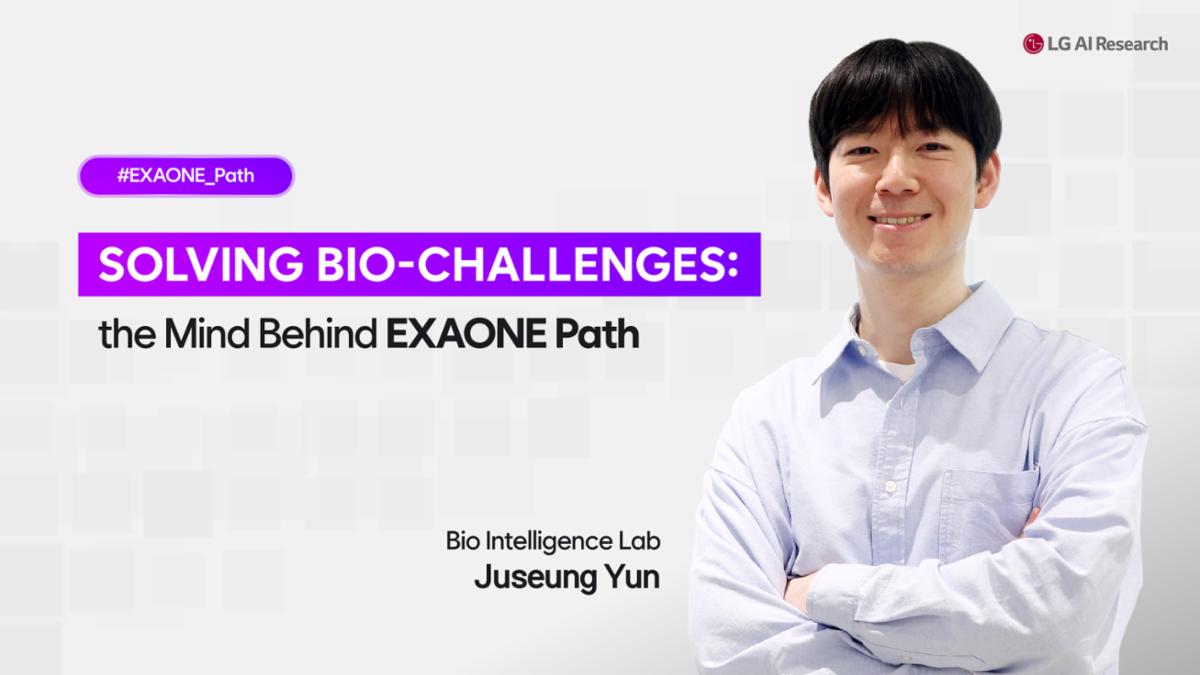
Artificial Intelligence is reshaping the world, yet the most demanding challenge remains in the field of healthcare. We sat down with Juseung Yun at Bio Intelligence Lab, LG AI Research where he is setting new standards for precision medicine by tracing the footprints of cancer within vast pathology datasets. We invite you to explore his journey of developing 'EXAONE Path,' a pathology foundation model born from a mission to "build a model that changes someone’s tomorrow."
AI Researchers Tackling the Challenges of Bio
The Bio Intelligence Lab, where Juseung works, is the laboratory dedicated to solving complex problems in biology and medicine through AI. Currently, four specialized tech cells—Cancer Research, Protein Design, Causal Inference, and Foundation Models (FM)—collaborate closely. Within the FM Tech Cell, Juseung leads the development of EXAONE Path, a core engine for pathology image analysis, focusing on enhancing the precision of future medical systems.
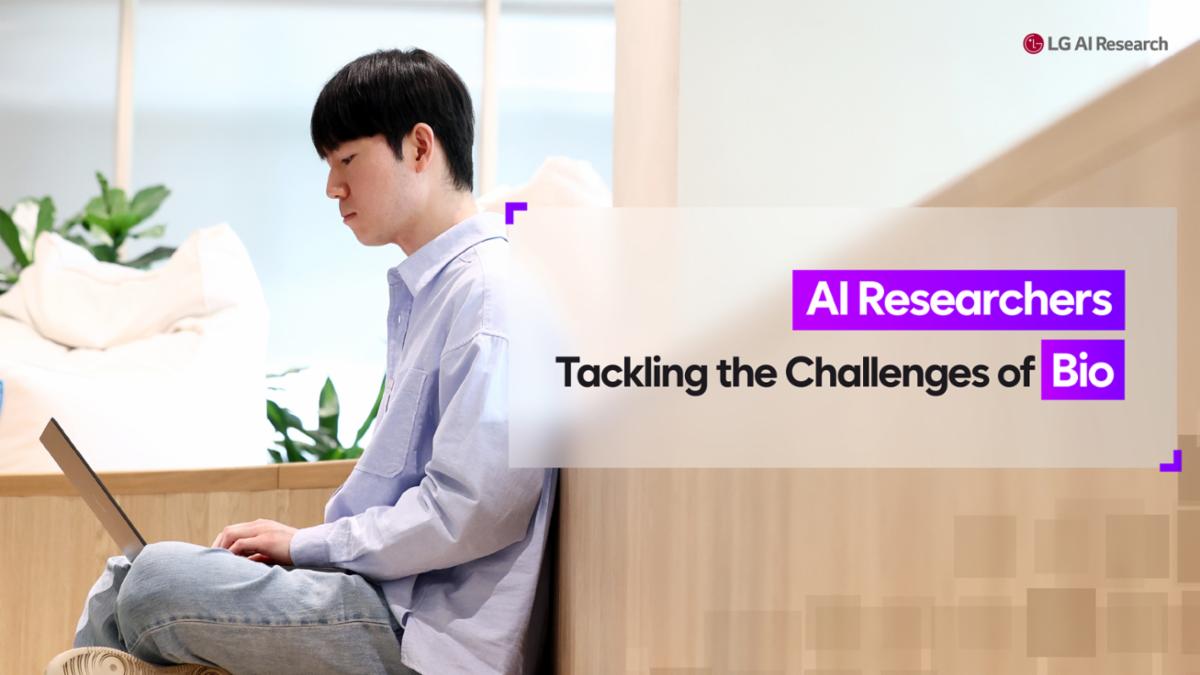
Image 1. Juseung Yun at Bio Intelligence Lab, LG AI Research
From Image Analysis to Bio AI
Juseung’s AI journey began in a Statistical Inference Lab during his Master’s study, before deep learning became mainstream. At that time, the heart of AI research was Computer Vision rather than the text models we see today. Naturally, he developed a deep expertise in handling image data.
"Back then, Large Language Models (LLMs) weren't the dominant trend; Computer Vision was the core of deep learning. The experience I gained then in image data has become a robust foundation for developing pathology models like EXAONE Path today."
While researching hyperparameter tuning and efficient model design during his graduate studies, an invitation for an internship at LG AI Research from a senior colleague marked his first foray into corporate research.
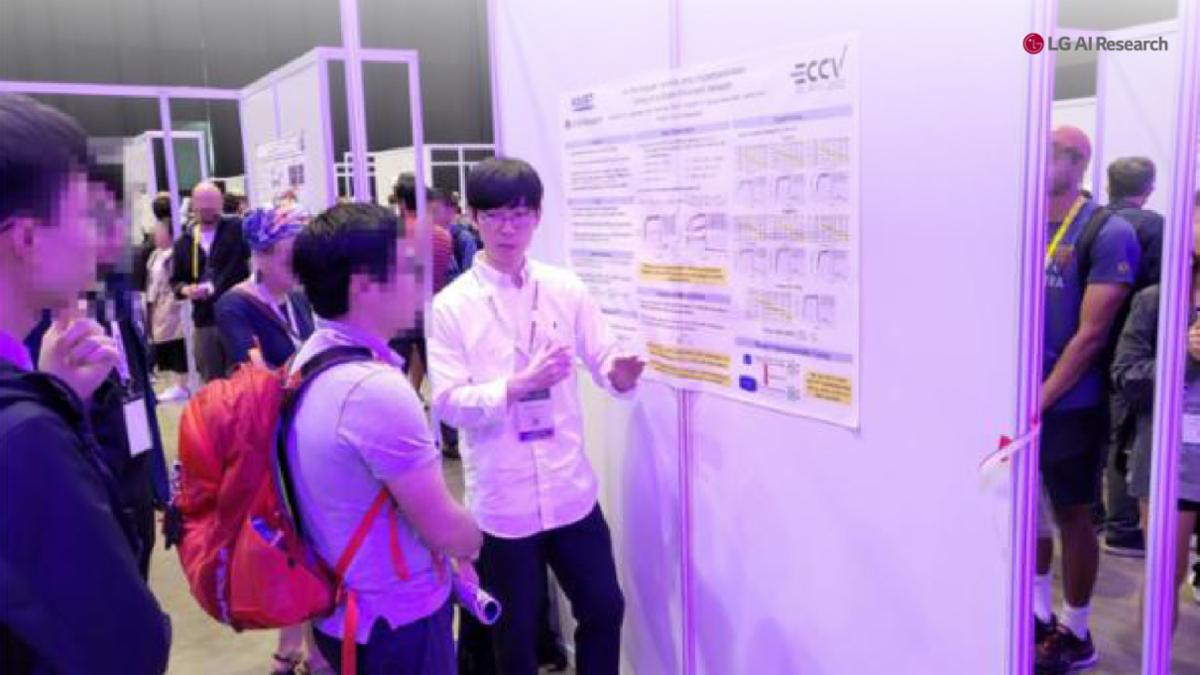
Image 2. Juseung Yun's poster presentation at ECCV 2022 during his internship.
"The internship exceeded my expectations. I was surrounded by brilliant researchers and could feel the group’s strong commitment and support for AI. I became convinced that this was the place where I could grow within Korea’s top AI research organization."
The Genesis of EXAONE Path
Early in his career at the lab, Juseung focused on research that aggregated results from existing models. Since pathology images are too massive to process at once, he researched methods to extract features using patch-level foundation models and then combine them using an aggregator. However, he soon realized the limitations of relying on external models for the specific needs of medical fields.

Image 3. Bio Intelligence Lab weekly meeting
"As research progressed, I felt that aggregator models alone couldn't solve the specific medical problems we wanted to tackle. Instead of relying on others' models, we decided to build LG AI Research’s own foundation model. That was the start of EXAONE Path."
What sets EXAONE Path apart is its overwhelming efficiency. Despite having significantly fewer parameters (135M) and a smaller data scale compared to competitors like Virchow2-G (1.9B), H-optimus-0 (1.1B), and UNI2-h (681M), it delivers world-class performance. This is the result of densely extracting pathological knowledge through sophisticated metric learning and encoder structures. Its prowess has been proven by ranking 1st in internal datasets and 2nd in the global public benchmark (Patho-bench).
Expanding into Multi-omics
Because medical data is difficult to acquire, Juseung focused on 'how to use it' rather than just 'how much.' This led to EXAONE Path 2.5, a foundation model that integrates not only pathology images but also RNA, CNV, SNP, and methylation data. It is designed to learn the relationships between images and multi-omics, as well as the interactions among different multi-omics data. This methodology has been key to evolving EXAONE Path from a simple model into a practical diagnostic tool.
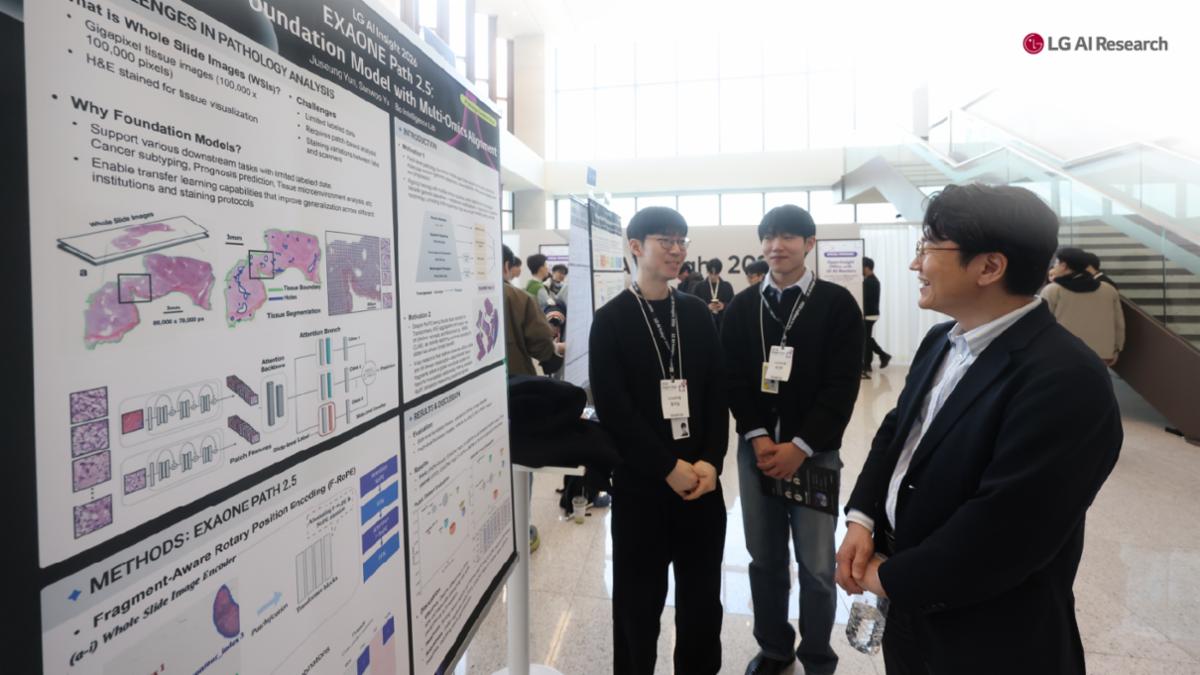
Image 4. Juseung Yun presenting the EXAONE Path poster at LG AI Insight 2026
The Ultimate Partner in Bio Research
The applications for EXAONE Path are broader than one might imagine. From classifying cancer subtypes to interpreting tumor microenvironments, it captures quantitative patterns that pathologists might miss. It also plays a crucial role in predicting which patient groups will respond best to specific treatments.
"My goal is for EXAONE Path to move beyond the lab and become a core AI that supports decision-making across clinical sites and drug development."
Juseung recalls the unveiling of EXAONE Path 1.0 as his most rewarding moment. Although it wasn't yet an "overwhelming" SOTA (State-of-the-Art) model, the team chose to share its potential and direction with the research community first.
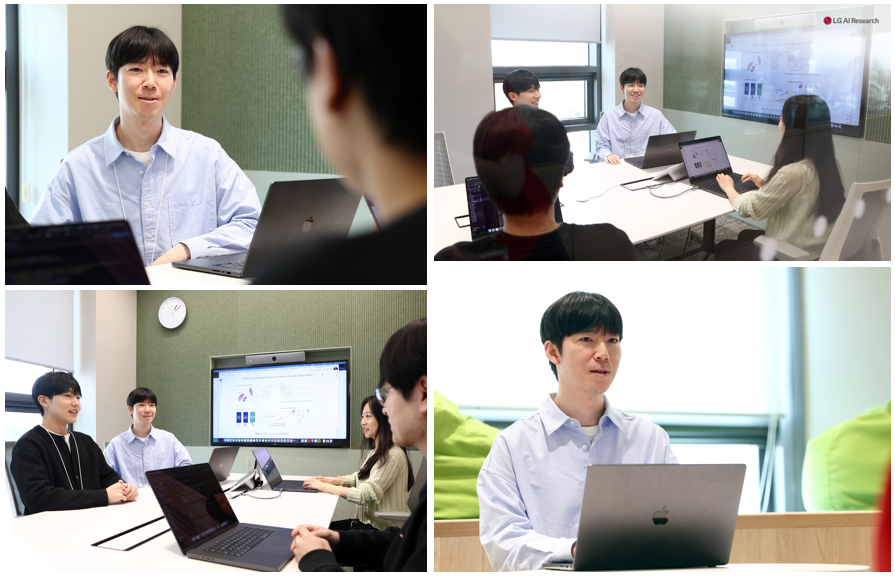
Image 5. Bio Intelligence Lab members
"If we had delayed the release because it wasn't the absolute highest performer yet, the project might not have continued as it has today. That decision was a vital starting point that opened up commercial possibilities."
Bio AI: Solving Challenges as an 'Agent'
In Juseung’s vision, future AI is not just an analytical tool but a 'core engine' where protein design, disease mechanism understanding, and multi-omics interpretation are organically linked. He particularly highlights 'Agent-based AI'—if AI can assist researchers in navigating papers, forming hypotheses, and setting experimental directions, the speed and depth of bio-research will be transformed.
[Insight] Research & Daily Life
-
Current Tech Interest: "Definitely LLMs. But rather than the LLM itself, I’m more interested in how to apply the reasoning methods or multimodal approaches derived from them to pathology analysis."
-
The Virtue of 'Imagination': Juseung believes a bit of "delusional thinking" helps when tackling problems without clear answers. He often finds flashes of new ideas while letting his imagination run wild—though he never forgets to validate those ideas against reality.
-
The 'Early Bird' Routine: Following a recent move, he has become an early bird, waking up at 5:40 AM. Once an avid gym-goer (4 times a week), he is currently looking for the perfect timing to resume his fitness routine in his new life pattern.
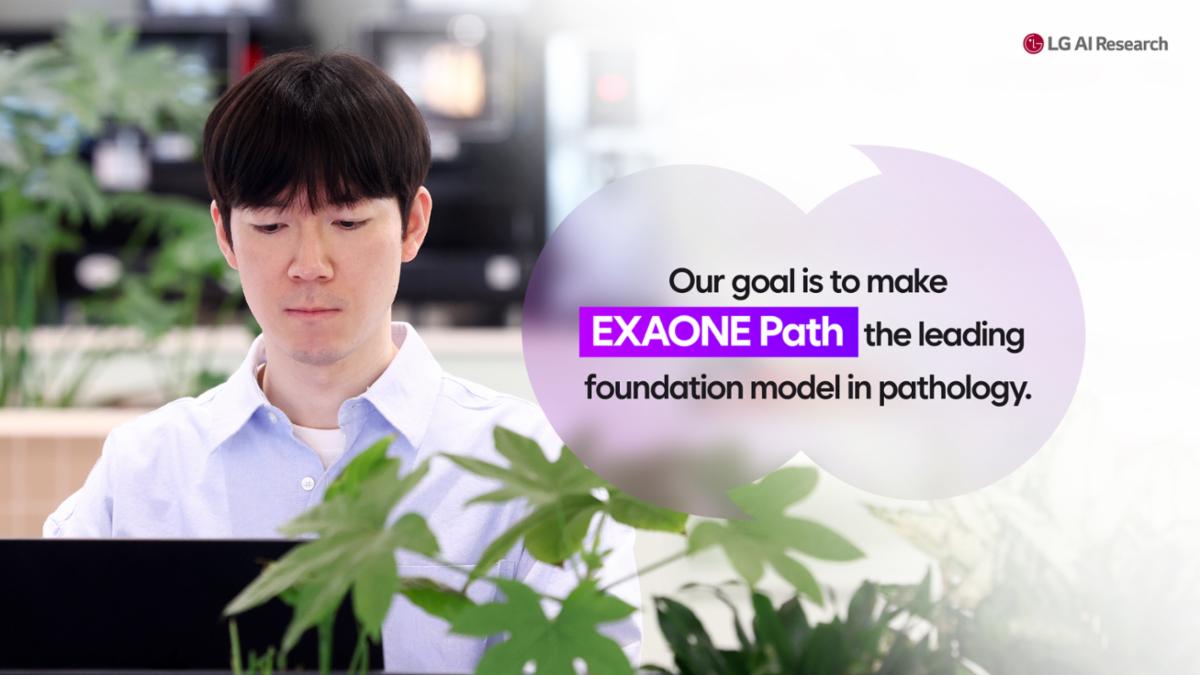
Image 6. "Our goal is to make EXAONE Path the leading foundation model in pathology"
[A Teaser for the 'Me' 10 Years Ago]
"You’ll end up researching bio and medical fields. So, study your biology well in advance." > This whimsical yet confident advice to his past self has become the most accurate "pass" toward the EXAONE Path of today.
[A Promise to the 'Me' 10 Years Later]
"I hope EXAONE Path is being used beyond the lab in actual hospitals and drug development sites. Because that was the reason I started this in the first place."
The journey of Juseung Yun and EXAONE Path is now in full swing. In ten years, he dreams of this model becoming an essential infrastructure that raises the standard of diagnosis and opens new paths for treatment worldwide.
LG AI Research shares this vision. Beyond technical superiority, we strive to be a reliable partner that provides answers to humanity's most difficult puzzle: 'Life.' Until our lab’s algorithms become the definitive answer that changes patients' lives, the precise designs and challenges of LG AI Research will never cease.