AI Scientist & AI Victor: Two Geniuses Discuss 'The Future of AI' - Part 1
|
Two symbolic figures of the AI era—Honglak Lee, CSAI (Chief Scientist of AI) and core leader at LG AI Research, and Sedol Lee 9-dan, the living legend of Go—met to deeply discuss the present and future of artificial intelligence. |
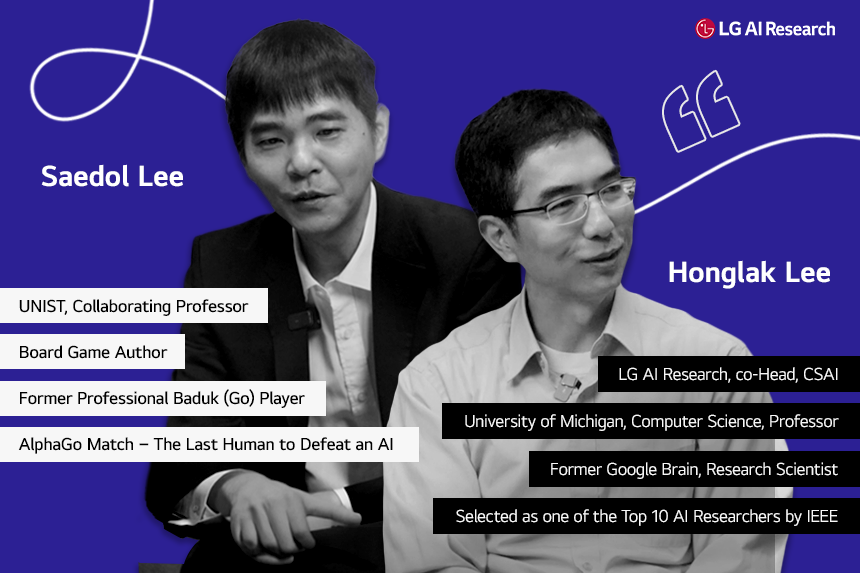
Image 1. Prof. Saedol Lee and Honglak Lee CSAI & co-Head, LG AI Research
Before and After the AlphaGo Match
Honglak Lee: Did you have any previous connection with LG?
Saedol Lee: Yes, I remember it was around age 15. At that time, I was a young promising talent, receiving sponsorship. I also recall wearing a smartwatch and a shirt with the LG logo during the AlphaGo match in 2016.
Saedol Lee: Did you follow the AlphaGo match closely?
Honglak Lee: I followed it intensely. I really hoped that you would win, representing humanity. On the other hand, I also thought that if Google dared to issue such a challenge, there must be something behind it.
Saedol Lee: I actually retired at the end of 2019. That was just over three years after AlphaGo came out. It's frightening how the meaning of something I dedicated 30 years to can be lost in an instant. The Go community may have been the fastest, or perhaps I was the fastest, to encounter this, but similar phenomena are likely to occur across all industries now. Speaking positively, I don't regret the decision to retire at the end of 2019. When the times change, there's no need to fear if we move forward by collaborating with AI rather than sticking to the past.
Saedol Lee: How is the situation these days? How has AI technology developed since AlphaGo?
Honglak Lee: I believe that AlphaGo demonstrated the great potential of AI and was one of the major landmark events. When a new AI algorithm first emerges, there is always the expectation: 'We will change the world with this algorithm!' Both academia and industry eagerly develop new methods and applications. It is true that in the past, new algorithms often hit a wall after initial great expectations and development.
However, the current GPT algorithm, based on the Transformer architecture, sees performance increase endlessly even when you continuously feed it data. We can convert virtually all the data we possess into what is called 'tokens.' By simply putting this into the Transformer and training it, incredibly powerful models are being created. The Transformer architecture has significant advantages. There's what we call the 'Scaling Law,' which is still advancing without apparent limits. We have hopes that this could lead us to AGI (Artificial General Intelligence) and even ASI (Artificial Superintelligence). This is why major tech companies and various nations continue to invest heavily.
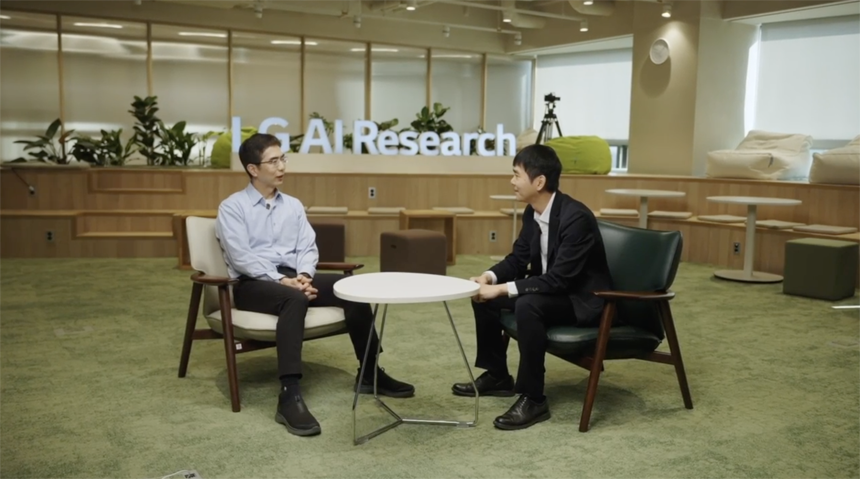
Image 2. Honglak Lee CSAI, LG AI Research & Prof. Saedol Lee in discussion
Current Status of South Korea's AI Technology
Saedol Lee: I'm curious: if we rate the US at 10, then what level would you place South Korea's capability?
Honglak Lee: I think it would be around 7.
Saedol Lee: 7? The US is 10, and Korea is 7?
Honglak Lee: Yes.
Saedol Lee: That seems quite high...
Honglak Lee: When we consider where else, besides the US and China, is creating good AI models, the fact is that Korea is not significantly lagging. In terms of the quantity of GPUs or overall scale, we might seem smaller. However, what the US excels at is trying out incredibly creative ideas, focusing investment on the ones that show promise, which admittedly requires astronomical amounts of money to do everything. If you look at China, they are following suit much more efficiently, minimizing trial and error with far fewer resources.
Saedol Lee: So the probability of failure is somewhat reduced.
Honglak Lee: That's right.
Saedol Lee: And we can follow along with even fewer resources.
Honglak Lee: I believe we are following well. I think our biggest bottleneck has been GPUs—computing resources. Now, through the national foundation model project, which LG is involved in, we are receiving support from the government. I believe this will be a great opportunity over the next two or three years to effectively fill the gap we have and create synergy.
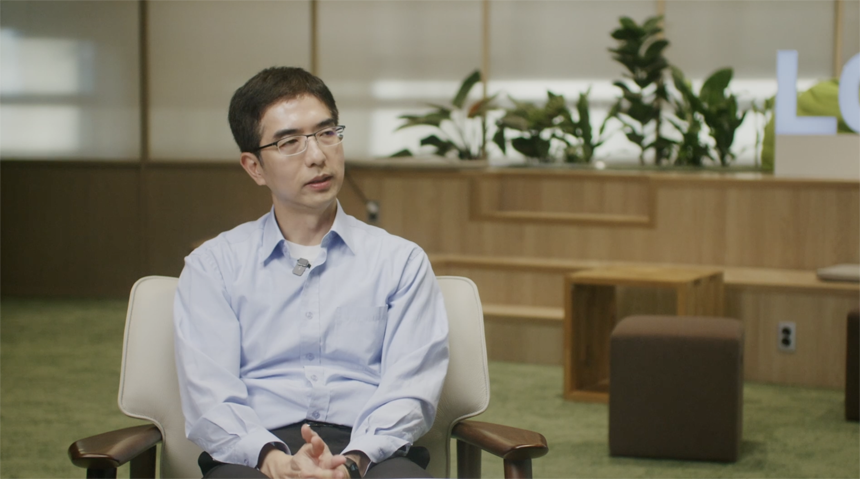
Image 3. Honglak Lee CSAI & co-Head, LG AI Research
Saedol Lee: We definitely have a lot to watch out for in China, don't we? I think we should especially pay attention to Physical AI. Since South Korea is a strong manufacturing country, I'm concerned that lagging behind in industrial robots and Physical AI, in general, could create significant difficulties. What are your thoughts?
Honglak Lee: What China is doing well right now is in the hardware sector; specifically, they are making robots cheaply and using those to train them well, essentially creating robots with basic intelligence. For Korea, we must designate Physical AI as a crucial long-term direction. We need to focus on how to successfully create smart AI, integrate it into robots effectively, and utilize it well across South Korea's manufacturing and other industrial sectors. These are the areas we must develop over the mid-to-long term.
Saedol Lee: This is truly a sensitive question: We have so many regulations in Korea, don't we? Are there any specific regulations you wish could be changed?
Honglak Lee: Well, truthfully, I don't feel that regulations are a major bottleneck or an insurmountable obstacle to the research and development that the LG AI Research is currently undertaking.
What I do see as very positive is the recent government support being provided for GPUs, which was previously our biggest constraint, through various ongoing projects. While Korea certainly has a decent level of AI talent and is managing data creation fairly well, we have historically faced significant shortages in terms of computing power. If we can successfully build this computing infrastructure, much like how we laid down expressways in the past, I believe it will serve as a great catalyst not just for the industry but also for the entire academic and research community.
Additionally, I think it's vital for South Korea to establish a robust AI ecosystem. For instance, if Korea doesn't develop its own large-scale models, we will inevitably have to rely on external models—like the US-based ChatGPT or other major tech APIs. In such cases, we would essentially be handing all our data over to foreign companies. This reliance could limit the data we accumulate and the high-quality models we create internally when a thriving ecosystem is in place. Especially given that Korea's NPU (Neural Processing Unit) companies and startups are performing remarkably well, fostering them will play a critical role in building South Korea's AI ecosystem. We need to achieve business success through these efforts and thereby establish a sustainable, virtuous cycle.
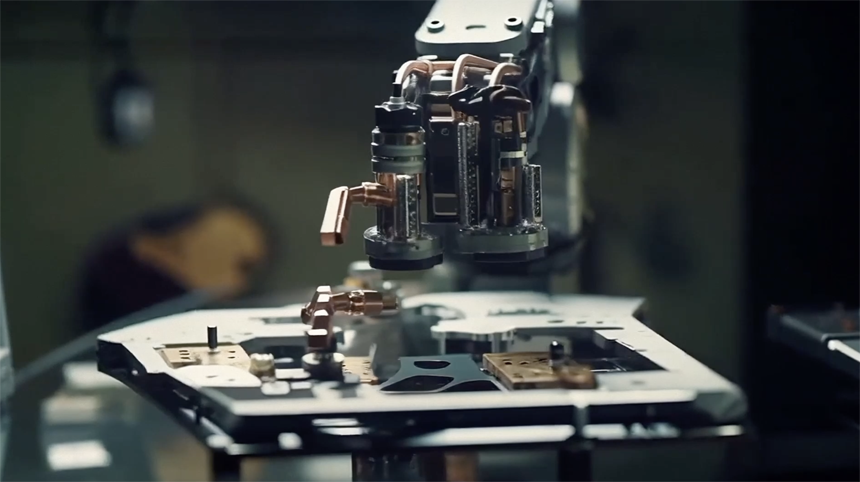
Image 4. Physical AI - AI that directly performs actions in real-world environments
by integrating its decision-making capabilities with physical devices like robot sensors.
How AI Will Change Human Life
Saedol Lee: How do you anticipate AI technology advancement will enrich and benefit our lives?
Honglak Lee: Primarily, it will greatly help in boosting the productivity of both individuals and companies. Beyond this productivity, however, I believe it will lead to significant breakthroughs in solving humanity's grand challenges, such as those related to disease, health, and human longevity. Furthermore, if AI enables us to solve problems that humanity has struggled with for so long across various scientific domains, I think there will be many beneficial outcomes.
Saedol Lee: Demis Hassabis, who created AlphaGo, even won a Nobel Prize for creating AlphaFold, right? In the game of Go, there's a thought experiment: if a Go master from 100 or 200 years ago were to play me, who would win? I would likely win. After all, technology has evolved, even subtly, and I would win because I have studied that evolution.
But it wouldn't be because my pure cognitive ability is higher than theirs. Therefore, I anticipate that by collaborating with AI, our human cognitive ability itself might be elevated. The Go community is currently hoping for this—that through collaboration with AI, the difference will become so vast that people will question, 'Is a human really playing this?' I believe that the overall human intellect can be raised through this collaboration with AI, making our thought process fundamentally different.
Honglak Lee: I share a similar view. Before AI, success depended entirely on leveraging one's own knowledge, skills, and specialized abilities. Now, we must better contemplate how we can collaborate most effectively with AI. For example, when taking exams, there was a belief that it was better not to rely on textbooks or notes, or that fundamental skills should be mastered entirely by oneself. However, from another perspective, since such excellent tools are available through AI, it might be beneficial to tackle challenging assignments by freely using these tools and aiming to produce the absolute best result possible.

Image 5. Saedol Lee, a Professor, UNIST
Saedol Lee: Ultimately, I think it comes down to this: if one collaborates with AI to create things based on what one excels at, it will happen naturally.
Honglak Lee: Continuing to discover what only you can do well, contemplating it, and building up your skills are extremely important.
To be continued in Part 2.
▶ Watch Part 1 of 'AI Scientist & AI Victor: Two Geniuses Discuss the Future of AI'
▶ Watch AI Scientist & AI Victor: Two Geniuses Discuss 'The Future of AI' - Part 2