AI Scientist & AI Victor: Two Geniuses Discuss 'The Future of AI' - Part 2
|
Two giants symbolizing the AI era—Honglak Lee, CSAI (Chief Scientist of AI), a core leader at the LG AI Research, and Saedol Lee 9-dan, the living legend of the Go world—gathered to discuss the present and future of AI in depth. |
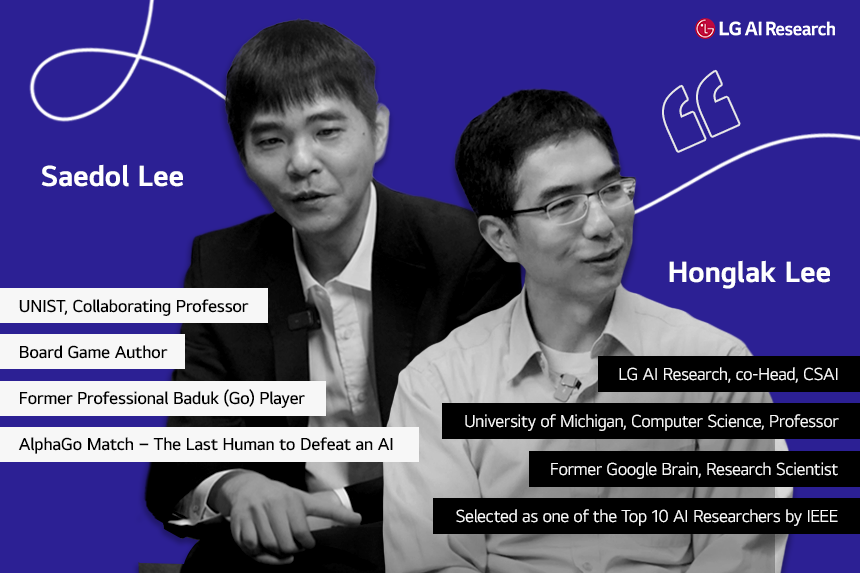
Image 1. Prof. Saedol Lee and Honglak Lee CSAI & co-Head, LG AI Research
AI-driven Future
Saedol Lee: Since I lecture at a university, I see a great deal of confusion among today's people in their 20s. I remember how enthusiastic the twenties were when smartphones came out and the online age opened up. But somehow, with the advent of the AI era, young adults, from early to late twenties, seem to be very confused. What direction should they be heading in?
Honglak Lee: I think the current generation of university students is almost native to utilizing AI tools like ChatGPT. However, I am concerned that by heavily relying on generative AI tools, they may be putting less effort into the process of self-reflection while learning and developing their thinking abilities. In my generation, since we didn't have good AI tools, we often had to do everything ourselves.
For example, if we had a difficult assignment, we would agonize over it for days and nights. We practiced expressing our own language and thoughts a lot. Frankly, the efficiency wasn't high. But that inefficient process, in a way, served as training. It gave us opportunities to cultivate critical thinking skills—evaluating whether the writing matched our intended style, even if it wasn't perfectly written, and identifying areas for improvement.
Saedol Lee: The older generation can apply AI based on what they have already done and accumulated. For those in their early twenties or early thirties, however, they haven't had the time to accumulate that foundation yet. This makes it challenging for them to integrate and utilize AI effectively with their limited experience. I think that's part of the issue.
This is slightly off-topic, but I'm actually not artistic at all.
Honglak Lee: I can't draw well either.
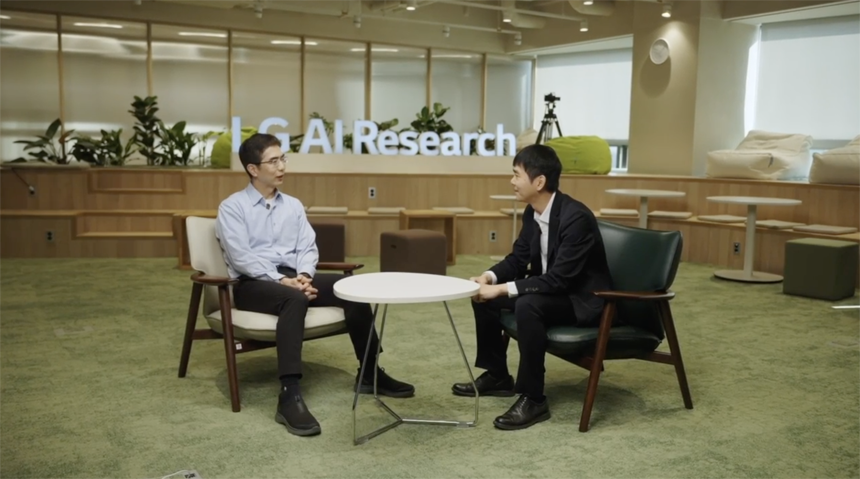
Image 2. Honglak Lee CSAI, LG AI Research & Prof. Saedol Lee in discussion
Saedol Lee: But now, using AI, I can create the images I imagine, right? Things I thought, "I'll never be able to do this in my whole life," are now becoming possible with the advent of the AI era. As a result, the range of things I can do has expanded significantly. As this range broadens, could there also be a widening gap between people?
Honglak Lee : I believe that a gap will inevitably widen depending on how effectively individuals utilize the technology. Therefore, it is necessary to focus on AI education—to train people to skillfully use AI, and more importantly, to integrate and combine AI capabilities to create something of greater value.
Saedol Lee : Since basic tasks can be handled by utilizing AI to some extent, the range of things one can do has truly broadened.
Honglak Lee: In any case, the importance of the power of thinking has actually become greater than before. The ideal talent we look for now, or in the future, is not someone who merely copies the answers given by AI. We consider people who can collaborate with AI and utilize AI tools to produce far superior results as true talent.
Saedol Lee: Ultimately, the key will be to start integrating and utilizing AI from now on, sharing various ideas, and moving forward together. A strong community for this will be vital.
Honglak Lee: Yes, having such a community would be immensely helpful.
Creative in Questioning
Saedol Lee: I actually think the most important thing in the AI era is to ask questions creatively, make judgments independently, and communicate through that process. When people ask where they get stuck, they say they don't know what it means to ask a question creatively. They can receive an answer and judge it proactively to some extent. But the core starts with figuring out, "What exactly is creative questioning?"
Honglak Lee: It’s indeed not easy to creatively define a problem and then pose it well to the AI. You should approach it as if you are brainstorming with the AI—what we call ‘What if’ in English. Instead of trying to formulate the perfect question from the start, it's crucial to keep experimenting.
Saedol Lee: So, it would be great to just try out the ideas that come up naturally during the conversation.
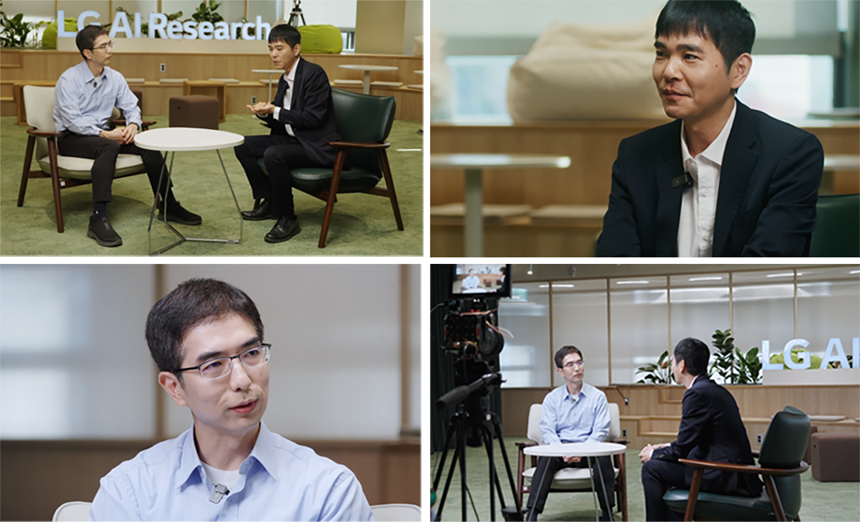
Image 3. Honglak Lee CSAI, LG AI Research & Prof. Saedol Lee in discussion
Honglak Lee: You can start with a very rough idea, and as you refine it, a truly great idea might emerge. I think there are many tasks we don't assign to AI simply because we don't know what to ask it to do. Therefore, knowing what to ask is actually part of the learning process. It’s important to share and disseminate best practices. Especially the kind of community you mentioned will be of great help.
Saedol Lee: Ultimately, we need to utilize AI to create something. I'm actually teaching a class where students design and produce board games. In the past, board game production was entirely human-driven, but that is no longer the case. Now, it involves asking questions to the AI, receiving answers, and making judgments based on that.
Honglak Lee: I share a similar view. Gaining experience in creating things through AI is very helpful. That could be a program or an application. Since we are entering an era of Vibe Coding,' where you explain something verbally and the AI codes it, these tasks have become much easier. However, one important point is that AI is still imperfect. Therefore, it would be beneficial to practice looking at the AI critically and cultivating your own ideas or the power of thinking about how best to refine and improve the AI’s output.
Saedol Lee: Critical thinking! We need the experience of deeply exploring and wrestling with a single problem. This can be done alone, but it can also be done by utilizing AI. Since we have a reliable collaborator in AI, having the attitude of wanting to create something amazing with the AI would be beneficial. And crucially, the ability to judge the AI's results! The ability to think critically about how to make it better is important. It’s not about blindly accepting; it’s about challenging the result, correcting the flaws, and this feedback ability will become increasingly vital.
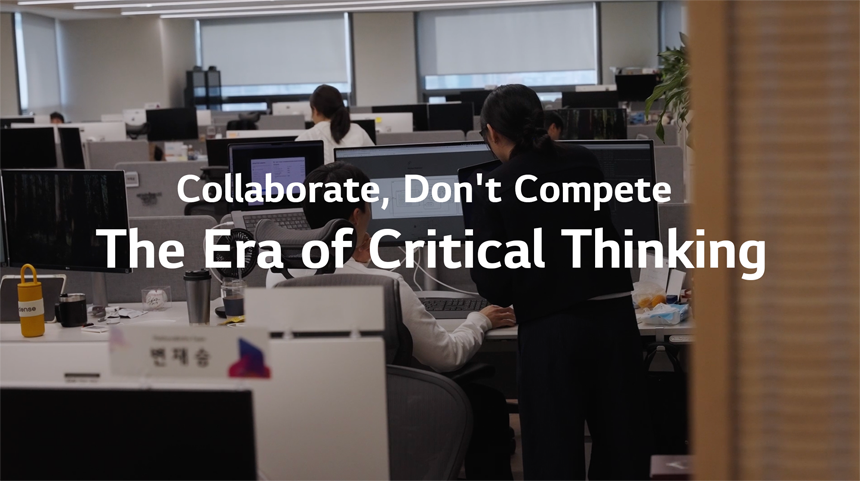
Image 4. The Era of Critical Thinking
Expert AI Pioneered by LG
Saedol Lee: This is actually the most crucial question. How far has LG's AI advanced, and what is its direction now?
Honglak Lee: The ultimate goal and ideal vision of the LG AI Research is to excel at developing Expert AI. We are researching AI that helps experts dramatically increase their productivity and open new breakthroughs or horizons. We also aim for AI that enables even non-experts to achieve much higher productivity through specialized AI assistance.
As an example, we can consider Forecasting AI. Forecasting AI can forecast product demand or raw material prices; for a company like LG Energy Solution, being able to accurately predict the price of lithium allows for better decisions on when to purchase the material and how to schedule production. If we can accurately predict financial products or stock prices, we can use that predictive model to create a financial agent. In fact, an agent that excels at these predictions can play a significant role in making business decisions.
Saedol Lee: That sounds incredible.
Honglak Lee: Yes, that’s right.
Saedol Lee: Of course, it will continue to develop, but what is the current level, and what is the target level and timeline for achieving that goal?
Honglak Lee: We are currently pursuing two main strategic directions to create Expert AI. Firstly, we are working closely with LG affiliates across various domains to use AI to solve specialized tasks and drive tangible business outcomes. Secondly, we are focused on the broader AI Transformation (AX) of the entire LG Group. Our direction is to develop Expert AI that can take on an increasingly significant role in the company's workflows and operations.
From an AI model perspective, particularly with the EXAONE model developed by LG, we are developing top-tier AI models that are recognized within the top 10 globally, both domestically and internationally. Furthermore, we are not just focused on creating the EXAONE model; we are pursuing many projects aimed at effectively applying the AI we develop to various businesses across LG’s affiliates.
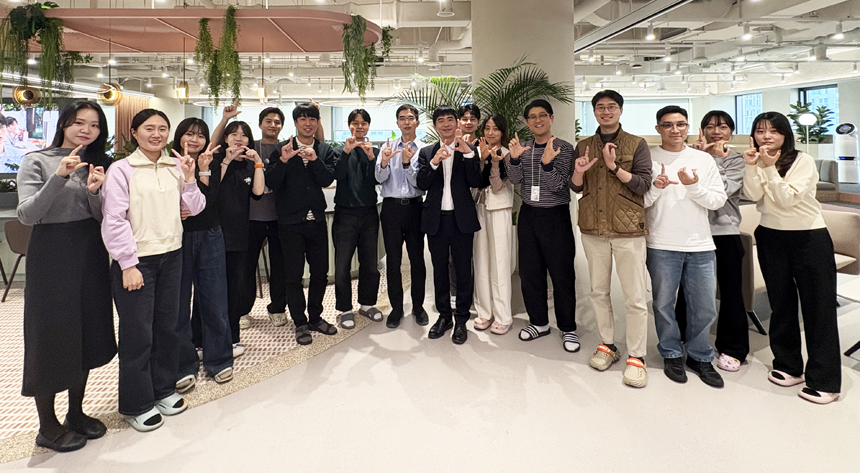
Image 5. Honglak Lee CSAI & Prof. Saedol Lee at LG AI Research
AI Era: The Journey Unfolds Now
As the discussion concluded, Saedol Lee posed a critical question regarding the present and future of the AI pursued by the LG AI Research. In response, Honglak Lee stated that the organization's ultimate goal is to excel at creating Expert AI, clarifying that this refers to AI that boosts the productivity of professionals and helps open new horizons. He also explained that this technology is being effectively applied across various affiliate businesses.
The in-depth conversation between Saedol Lee 9-dan and Honglak Lee clearly illustrates the attitude and direction humanity must adopt in the turbulent era of AI. The core message presented by the two geniuses is that we must embrace AI not as an object of fear or competition, but as a reliable collaborator that will lead human thought and innovation to the next stage.
Ultimately, by developing our uniquely human abilities—critical thinking and creative questioning—and combining forces with AI, rather than just relying on the efficiency AI provides, we can truly lead the future and open new frontiers. The journey to becoming the true winner in the AI era continues right now, this very moment.
▶ Watch AI Scientist & AI Victor: Two Geniuses Discuss 'The Future of AI' - Part 1
▶ Watch AI Scientist & AI Victor: Two Geniuses Discuss 'The Future of AI' - Part 2