 Yeonjung Hong
2025.12.31
Yeonjung Hong
2025.12.31
[AI Ethics Seminar 2025 EP.5] Knowledge, Competence, and Education in the AI Era
|
The Journey Toward Trustworthy AI: Introducing LG AI Research’s “AI Ethics Seminar” |
The question posed by San Francisco's satirical ad
San Francisco is currently filled with AI advertisements throughout the city. From the large electronic billboards greeting you upon arrival at the airport to the posters on downtown building exteriors and bus stops, the message “AI can do this, too” is repeatedly displayed. The promise that AI can boost productivity, expand creativity, and overcome human limitations is no longer unfamiliar.
Among these, the advertising campaign named “Replacement.AI” was particularly eye-catching. The ad features AI doing children's homework, reading books to them, and even stating with a wink emoji, “Romances her. Deepfakes her. Don’t worry, it’s totally legal!” While it soon became clear the campaign satirized AI omnipotence through exaggerated scenarios, its message leaves an impression that's hard to dismiss.
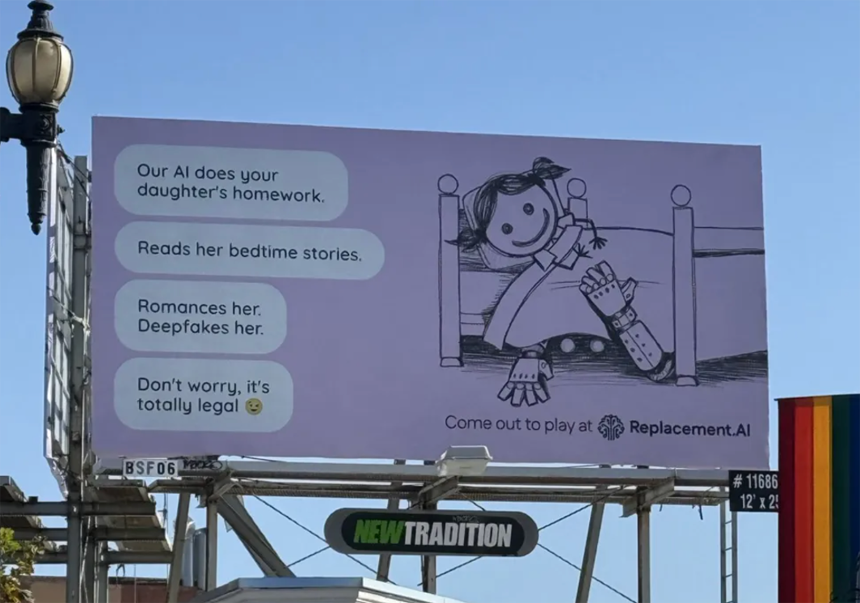
Image 1. ‘Replacement.AI’ advertising campaign
The reason is that despite being blatant satire, this advertisement simultaneously possesses the conditions to be sufficiently “plausible.” The notion that AI can replace humans in diverse roles is no longer confined to science fiction. We are already witnessing scenes in daily life where AI supplements human judgment, labor, and even aspects of relationships. Ultimately, the question this advertisement poses is clear. Will AI replace humans, and how must human roles and value be redefined in that process? This goes beyond the potential of AI technology; it is a challenge the entire society living in the AI era must grapple with together.
The anxiety created by the omnipotent AI narrative
This question is not limited to a single advertisement. We repeatedly encounter similar narratives in our daily lives. News about AI creating videos superior to humans has become commonplace, and reports of AI models surpassing skilled human capabilities, such as passing bar exams or coding tests, appear constantly. This narrative of AI omnipotence spreads the perception that as AI becomes capable of doing more and more, humans are increasingly losing their place.
The question “If AI now replaces human capabilities, what should humans do?” extends beyond individual career concerns to encompass education, organizations, and society as a whole. To answer this question, we must reexamine the definition of “competence” that we have long taken for granted.
If competence means the ability to calculate faster, remember more accurately, and produce outputs more efficiently, then the advancement of AI inevitably poses a threat to humans. However, we have now reached a point where we must reexamine whether the existing criteria for competence remain valid in today's environment.
What does it mean to “know?”
We use the expression “know” relatively easily in everyday life. When we remember a fact, know the correct answer to a problem, or can handle a specific task proficiently, we say we “know” it. The education system has also operated on this basis for a long time. Exams have assessed how accurately and quickly one could reproduce the correct answers, and organizations have used how efficiently one could solve a given problem as a measure of ability.
In this process, “knowing” gradually became reduced to a results-oriented focus. Why one decided something in a certain way, or what premises led to that conclusion, became secondary concerns. The core issue was whether one got the right answer or achieved results. Consequently, within this structure, “knowing” came to be equated with “being able to do.”
However, the emergence of generative AI is fundamentally disrupting this equation. AI already provides answers faster and more reliably than humans in many areas. At this point, we must reexamine what it means to say we “know.”
"Technê" and "Epistêmê": Two different kinds of knowledge
The two concepts of knowledge distinguished by ancient Greek philosophers provide crucial clues for understanding contemporary discourse. One is “Technê.” Technê refers to technical knowledge, as in the skill to create, predict, and control. Translated into modern language, it aligns closely with concepts like know-how, efficiency, and proficiency. This form of knowledge, Technê, became the central value of post-industrial society.
The other is “Epistêmê.” Epistêmê is knowledge closer to understanding than production, closer to meaning than results. It connects to an attitude that asks why certain phenomena occur, what is right and wrong, and what interpretations are possible. This is not merely the acquisition of skills, but rather an ability to understand and judge the world.
The problem is that modern education and organized society have placed excessive emphasis on Technê among these two forms of knowledge. Skills that are measurable and easily evaluated mostly fell within the domain of Technê. Epistêmê, on the other hand, has been regarded as secondary or a lofty hobby because it is abstract, time-consuming, and lacks clear-cut answers.
The optical illusion created by outsourcing “Technê”
Generative AI is demonstrating remarkable achievements precisely in this realm of Technê. AI trained on vast datasets performs functions like calculation, summarization, generation, and prediction far faster and more consistently than humans. Tasks such as drafting reports, generating code, and proposing design concepts have now become roles AI naturally assumes. This phenomenon can be described as the “outsourcing of Technê.”
The sense of crisis many people feel during this process arises not because human capabilities have suddenly deteriorated, but because the standards of competence we have relied on are shifting. Even though the rules of the game have changed, we continue to evaluate ourselves and others by the old standards. The better AI performs Technê, the more easily humans fall into the illusion of appearing relatively incompetent.
However, this does not mean that human capabilities have disappeared. Rather, as Technê is outsourced, the domain of Epistêmê, which was previously treated as secondary, is rising to the forefront once more. Human roles are being reconfigured in new forms: the ability to ask what problems should be solved, rather than how to solve them; the ability to interpret what meaning results hold, rather than how quickly they can be produced.
The specific meaning of the ability to ask “why.”
In the age of AI, what specific meaning does the ability to ask "why" have in real-world work and decision-making?
First, the ability to ask “why” is the ability to define problems. AI excels at solving given problems quickly and efficiently, but it does not decide for itself which problems are important or what should be defined as a problem. For example, when asked to improve a specific metric, it is up to humans to ask why that metric is important and whether other metrics need to be considered together. This is why the ability to define problems is becoming increasingly more important than the ability to solve them.
Second, the ability to ask “why” is the ability to establish judgment criteria. AI can present statistically plausible options, but it cannot independently determine which choice aligns with an organization's values and social context. The decision on which criteria to prioritize, like efficiency versus fairness, short-term results versus long-term trust, lies not with technology but with people. At this point, the explainability of “why this criterion was chosen” directly leads to the question of accountability.
Third, the ability to ask “why” is the ability to read context. Even with the same data and results, their meaning can vary greatly depending on the context in which they are placed. AI learns from past patterns, but it struggles to fully grasp new social situations or subtle cultural shifts. Therefore, rather than accepting results at face value, the role of interpreting what these results mean within the current context remains with humans.
Redefining education and leadership
Such changes prompt us to rethink education and organizational leadership. For a long time, the core role of education was considered to be the transmission of knowledge. The framework where teachers were the ones who knew the correct answers and learners were the ones who acquired them was long accepted as natural. Similarly, within organizations, experienced leaders have traditionally been the ones to provide the answers, while members have taken on the role of implementing them.
However, in an era where finding the right answer is possible at low cost, this division of roles is increasingly losing its persuasiveness. AI already rapidly provides information corresponding to the “right answer” in many fields. Now, the value of education and leadership depends not on what one knows, but on how one thinks.
A prime example illustrating this shift is Khan Academy's AI tutor, Khanmigo. Khanmigo is designed not to provide immediate answers even when learners directly ask for the correct answer. Instead, it prompts questions like “How far have you thought this through?” or “What do you think the next step should be?” to guide learners in self-checking their thought processes. This is an example where AI, despite knowing the correct answer better, deliberately chooses a “non-teaching approach.”
This case clearly illustrates the role teachers and leaders must assume in the AI era. What matters is not how many answers one knows, but whether one can examine the premises and flow of thought together. Teachers and leaders now serve less as knowledge transmitters and more as facilitators, helping learners and members recognize and adjust the structure of their own thinking. While this may appear inefficient in the short term, it builds far more robust judgment capabilities in the long run. Precisely in an era where AI provides the correct answers, the role of designing thinking becomes even more crucial.
AI's black box and ethical accountability
As AI increasingly becomes involved in decision-making in a wider range of fields, ethical concerns are becoming more essential than optional. A particular problem is that while AI's results may seem plausible, understanding and explaining its internal processes is becoming increasingly difficult. This is the so-called "black box problem."
This lack of transparency can lead to several risks. Biases inherent in the training data may be reproduced, and hallucinations, where the system confidently presents information that is factually incorrect, can occur. Furthermore, when it is unclear what data is being collected, how it is being used, and how long it is retained, users can easily develop distrust.
Image 2. LG AI Research’s LG Accountability Report on AI Ethics
At this point, what is important is not only technical completeness. Rather, the question of “who is responsible for these results, and how” emerges as a central issue. The concept of “accountability” emphasized in the LG Accountability Report on AI Ethics, which is authored and published annually by LG AI Research, originates precisely from this line of concern. This refers to a principle that goes beyond meeting legal requirements, requiring that AI be able to explain both the results it produces and the processes behind them.
Accountability is not merely a procedure for finding someone to blame when problems arise. Rather, it is closer to establishing structures that identify risks in advance, clarify decision-making criteria, and can restrict or adjust the use of technology when necessary. In other words, ethics is not an ornament attached to technology, but rather, a matter of designing the very way technology is used.
New conditions of competence
Summarizing these discussions, competence in the AI era is defined under different conditions than in the past. Merely producing results faster and more accurately is insufficient. Rather, what matters is the ability to regulate speed. It requires the ability to judge when to accept AI's suggestions as is, and when to pause and question them again.
Moreover, new competence is deeply connected to an attitude that embraces accountability. It is not merely about presenting results, but also being able to explain why certain choices were made, what risks were considered, and why other alternatives were excluded. This goes beyond individual capability, and is a core element in building trust within organizations and society.
Above all, what matters most is an attitude that does not become intoxicated by the capabilities of the tool. The performance of AI will continue to improve in the future. However, improved performance does not automatically guarantee correctness or legitimacy. The ability to understand the limitations and conditions of technology, and to make judgments within those boundaries, is the expertise that will be increasingly demanded going forward.
A world where understanding and responsibility become competitive advantages
Unlike the past, we now live in an environment where answers come remarkably easily. With a single search or a brief prompt, we can obtain plausible answers and analyses in mere seconds. Yet as answers become more commonplace, the value of understanding actually increases. Rather than blindly accepting results, the ability to interpret their meaning and context, and to take responsibility for those outcomes, becomes the new competitive edge.
Our future coexisting with AI will depend less on how advanced the technology becomes, and more on what questions we accumulate. A society that does not stop at consuming answers, but builds understanding. I believe that in this direction, the role of humans will not disappear, but rather become clearer.
How much time do we spend today “asking questions” rather than “finding answers”?
AI Ethics Seminar 2025 Series
#1. [AI Ethics Seminar 2025 EP.1] How AI Is Changing Human Critical Thinking
#2. [2025 AI Ethics Seminar EP.2] Beyond bias, the journey to fair AI
#3. [2025 AI Ethics Seminar EP.3] Agentic AI Threat Modeling and Guardrail Implementation Strategy
#4. [2025 AI Ethics Seminar EP.4] From Tool to Colleague: AI UX Design that Extends Judgment
- 참고
[1] Barmann, J. C. (2025, October 27). Fake, satirical startup “Replacement.AI” puts up haunting billboards in SF, NYC. SFist. https://sfist.com/2025/10/27/fake-satirical-startup-replacement-ai-puts-up-haunting-billboards-in-sfs-castro-nyc/ (SFist)
[2] Duede, E. (2023). Deep learning opacity in scientific discovery. Philosophy of Science, 90(5). https://doi.org/10.1017/psa.2023.8 (Cambridge University Press & Assessment)
[3] IBM. (n.d.). What are AI hallucinations? IBM Think. https://www.ibm.com/think/topics/ai-hallucinations (IBM)
[4] Khan Academy. (n.d.). Khanmigo is your always-available teaching assistant. https://www.khanmigo.ai/ (khanmigo.ai)
[5] Landymore, F. (2025, October 25). Bystanders horrified by slightly-too-honest AI billboard. Futurism. https://futurism.com/artificial-intelligence/bystanders-horrified-ai-billboard (futurism.com)
[6] Parry, R. (2024). Episteme and techne. In E. N. Zalta & U. Nodelman (Eds.), The Stanford encyclopedia of philosophy (Winter 2024 ed.). Metaphysics Research Lab, Stanford University. https://plato.stanford.edu/archives/win2024/entries/episteme-techne/ (plato.stanford.edu)
[7] Accountability Report on AI Ethics (2024). https://www.lgresearch.ai/news/view?seq=531